What happened
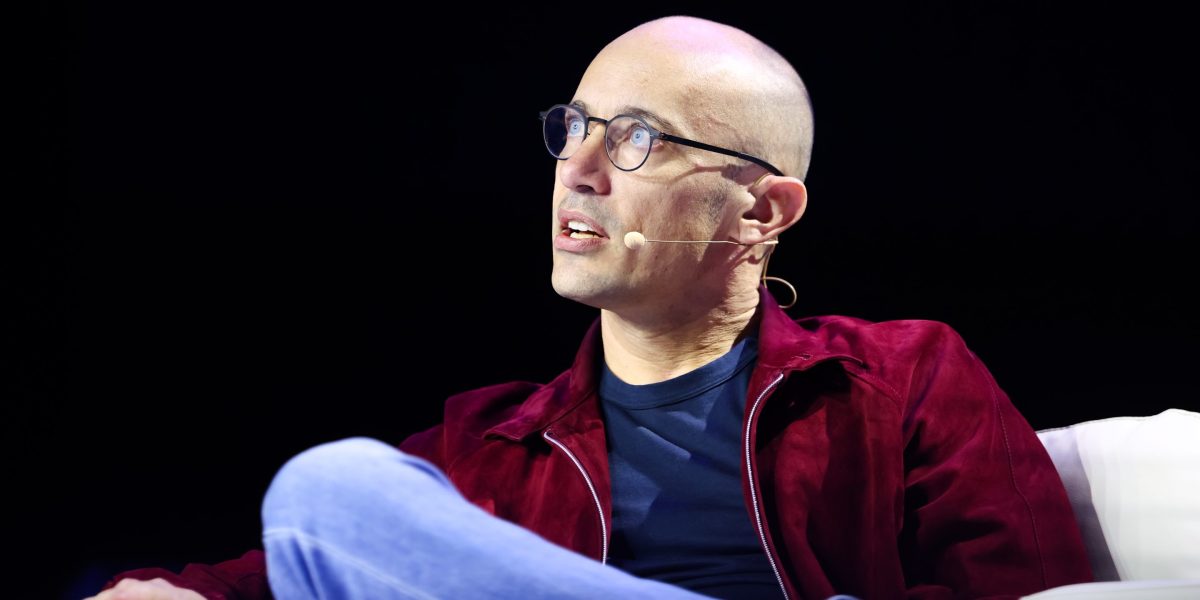
Shopify CEO Tobias Lütke said on The Knowledge Project podcast that employees toss "slop grenades" — unexamined AI emails and code — at each other, forcing colleagues to review and fix the output.
Why it matters
This reverses Lütke's earlier stance that AI use was "a baseline expectation", suggesting the productivity gain can be offset by colleagues' cleanup time, which researchers call "workslop".
What to watch
A BetterUp Labs and Stanford's Social Media Lab survey of 962 American full-time desk workers found 38% received workslop and spent 3.4 hours per month revising it; watch whether that cleanup cost keeps rising, given it was up from two hours last year.
WHO IT HITSDesk workers who review colleagues' AI-assisted emails and code are absorbing extra revision time — the survey pegs it at 3.4 hours per month — while managers setting AI-use expectations face a harder trade-off between output volume and quality.
Summaries like this, in your inbox every morning.
Lütke's comments mark a shift from his earlier position, when he told employees that using AI was "a baseline expectation" and that they should first prove they couldn't get what they wanted done with AI before asking for more resources. He now says that letting AI "go nuts" creates more headaches for the people receiving and reviewing the work.
The phenomenon has a name among researchers: "workslop," polished-looking AI output that needs revision. A BetterUp Labs and Stanford's Social Media Lab survey of 962 American full-time desk workers found that 52.7% reported sending workslop to colleagues, and that it was more common where organizations encouraged AI use. Beyond the time cost, the survey found relationships suffer — employees viewed colleagues who sent it as less competent and less friendly, and over a third of recipients wanted to avoid working with them in the future.
Duolingo CEO Luis Von Ahn has similarly backtracked on his "AI-first" push, telling Fast Company in May that AI demos well in writing but doesn't match the creativity of Duolingo's people at scale. The open question is whether the cleanup burden keeps growing as AI adoption spreads — the survey's estimate of 3.4 hours per month is already up from two hours the year before, suggesting the cost may compound unless companies set clearer norms about reviewing AI output.
For example, today's edition would include:
AI-summarized, only the topics you pick — one digest a day via Email, Slack, or Discord.
Free · 30 seconds with Google · unsubscribe anytimeWhat is AIToday? →
Ask AI anything about this article. Q&As are published on this page for other readers too.
ByteDance's second AI-agent phone replaces forced automation with a permission-based approach, but the first m…

Technical details of 2026 flagship chips are surfacing, and the biggest changes in Apple's A20 Pro and MediaTe…
Marvell announced new collaborations with GlobalFoundries, Microsoft and Utimaco — expanding SiGe chip product…

TWOSTONE&Sons announced two subsidiaries to support corporate AI implementation, backing clients from manageme…

OpenAI launched Astra for Law, wrapping GPT-6 Astra in a legal search index covering US case law, statutes, re…

Anthropic detailed three metrics — AI-led R&D, oversight of autonomous AI agents, and compute allocation — dis…