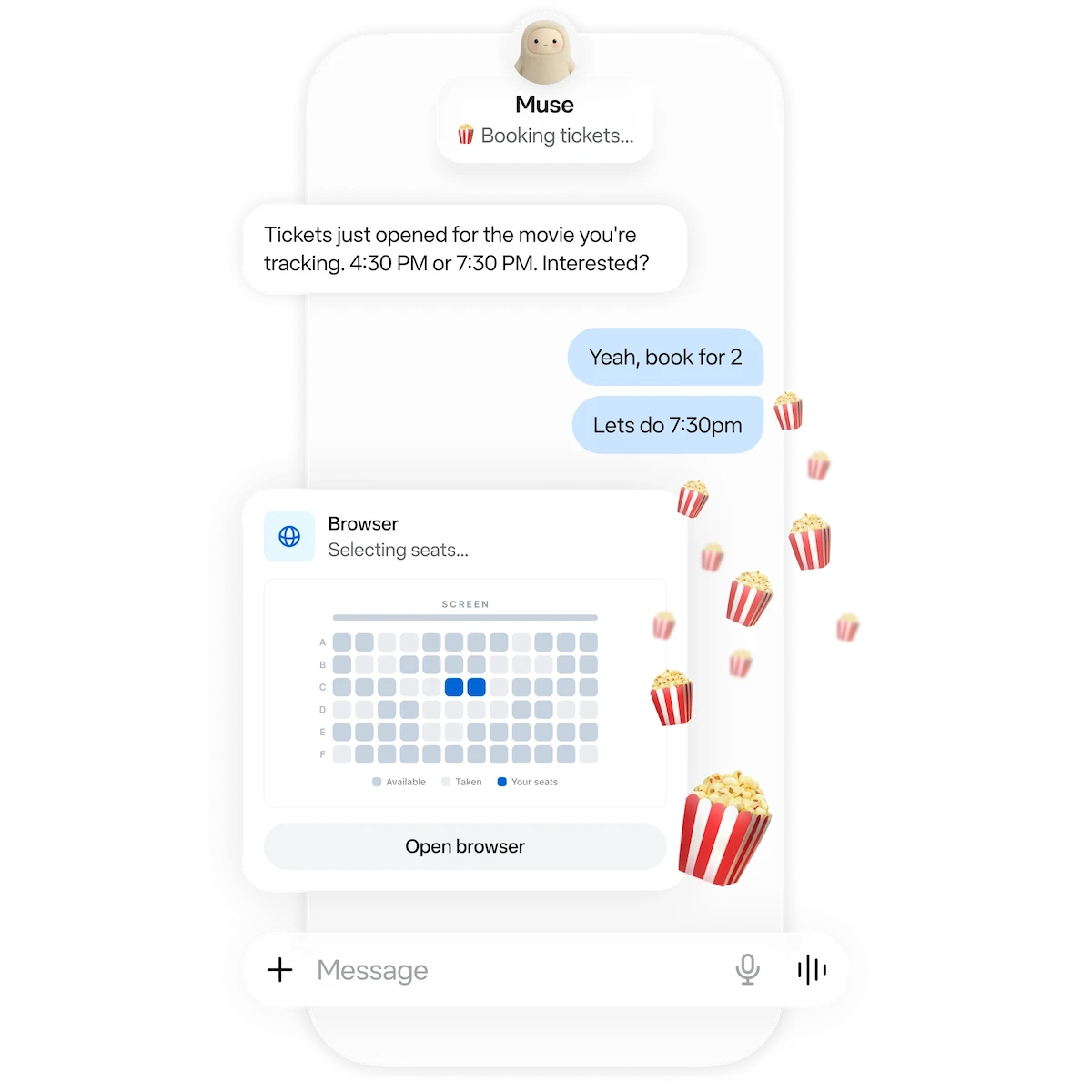
What happened
Amazon blocked Meta's Muse assistant while Shopify allowed it, the first sign of battle lines over how AI agents access online stores. Amazon wants to keep control of shoppers it sells to advertisers; Shopify earns from storefront software, fulfillment and financing.
Why it matters
Gatekeepers and merchants appear to be splitting into opposing camps over AI shopping agents, which could shape how shoppers discover and buy online. Airlines and other loyalty-driven businesses may treat bots differently, since they don't rely on impulse purchases.
What to watch
The dividing line hinges on whether a company's money comes from selling shopper attention or from merchants. A Delta rebooking attempt via Muse ran into a bot-blocker, suggesting access rules are already inconsistent.
WHO IT HITSRetailers that sell advertising against shopper attention and e-commerce enablers that serve merchants face opposing incentives on letting AI shopping agents in, and airlines or other loyalty-focused businesses may have to decide case by case.
Summaries like this, in your inbox every morning.
AI agents have arrived, and the question now is whether internet gatekeepers will let them in the door. The split between Amazon and Shopify is the first visible sorting: Amazon's priority is keeping shoppers in its own environment, where their attention can be sold to advertisers and they can be pitched add-on purchases. Shopify's primary relationship is with merchants, and it earns from licensing storefront software, fulfillment services, and financing — so letting an outside assistant reach those storefronts does not threaten its core business the same way.
A less obvious case sits outside retail. Companies that care a lot about customer loyalty but do not depend on impulse purchases, such as airlines, may face a different calculus. One sign of how unsettled this remains: an attempt to rebook a Delta flight via Muse ran into a bot-blocker, suggesting access is being decided piecemeal rather than by any shared rule.
What happens next likely hinges on which side of the merchant-versus-attention divide each company sits on. For retailers whose revenue leans on advertising and impulse buys, blocking agents may look like self-protection; for enablers paid by merchants, welcoming them may be the safer bet. The outcome for shoppers and for AI assistant makers is likely to stay uneven for now.
For example, today's edition would include:
AI-summarized, only the topics you pick — one digest a day via Email, LINE, or Slack.
Free · 30 seconds with Google · unsubscribe anytimeWhat is AIToday? →
Ask AI anything about this article. Q&As are published on this page for other readers too.
Rosenblatt initiated coverage of Sandisk with a Buy rating and a $2,400 price target

A New York Times columnist gave control of everyday tasks to Meta's AI agent and came away impressed

Visa's Sara Craven told PYMNTS that just 11% of small- to medium-sized businesses qualify as agent-ready, vers…

Wells Fargo and other bank stocks fell as Meta's Muse added fuel to AI fears, Barron's reported

SanDisk now sells much of its output through multiyear New Business Models contracts with eight Datacenter and…
Applied Materials trades near US$444.57 at about 38.1x earnings, below the semiconductor sector average of rou…