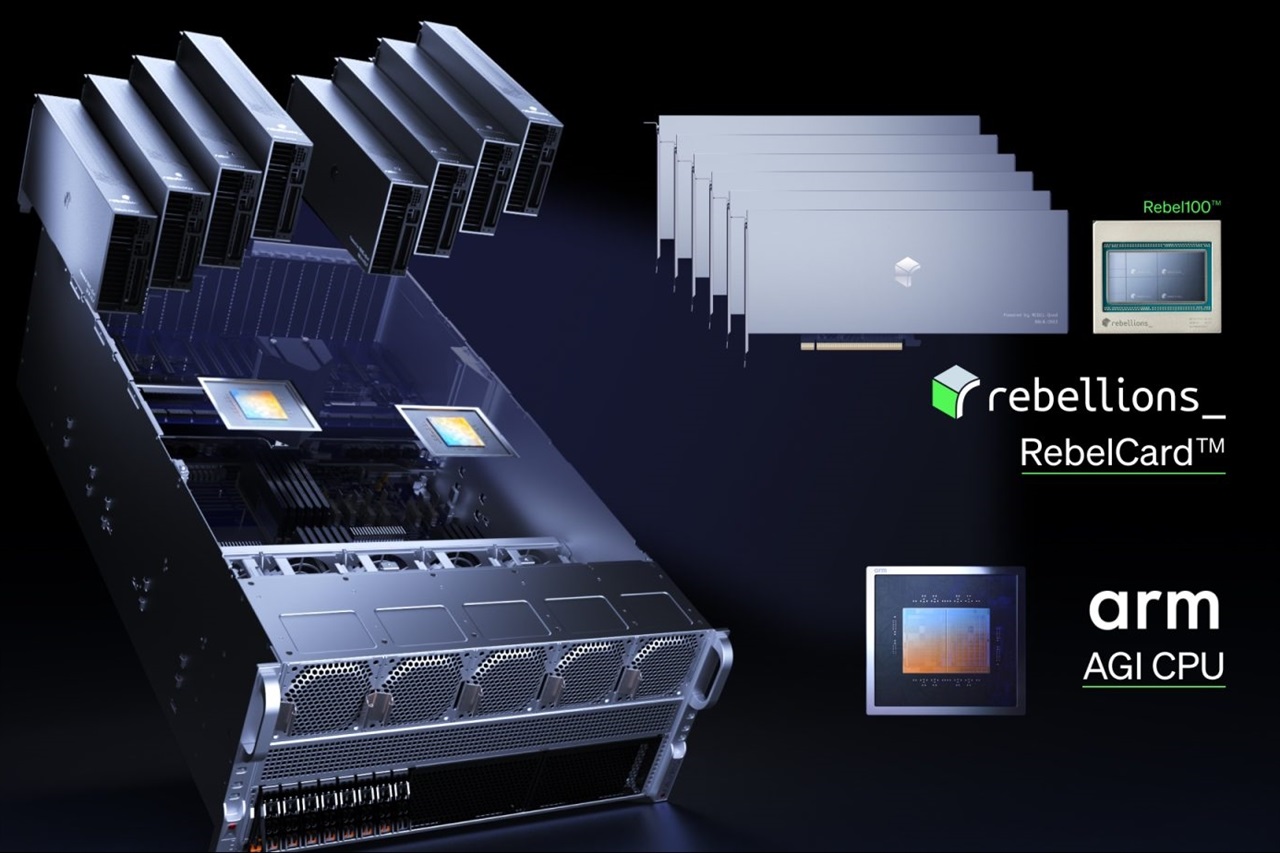
South Korean chip designer Rebellions is preparing to ship its Rebel100 accelerator in the second half of 2026, targeting a shift in AI infrastructure investment toward inference workloads as AI agents and commercial services become more widespread. The company's timing reflects confidence that spending on inference hardware will outpace training hardware as AI moves from development to production use.
Summaries like this, in your inbox every morning.
Sign up free →What happened
South Korean AI chip designer Rebellions plans to begin shipping its next-generation Rebel100 accelerator in the second half of 2026.
Why it matters
The company is betting that wider use of AI agents and commercial AI services will shift more infrastructure spending from model training to inference—the step where AI produces answers for users. This reflects a broader market expectation that demand for AI inference hardware will grow.
What to watch
Rebel100 availability in the second half of 2026; whether the shift from training-focused to inference-focused spending actually materializes as Rebellions expects.
South Korean AI chip designer Rebellions is preparing for a significant market shift by planning to ship its next-generation Rebel100 accelerator in the second half of 2026. The company's strategy is grounded in the expectation that the AI infrastructure market will experience a fundamental reallocation of spending. Rather than the current emphasis on training large language and reasoning models—which demands enormous computational resources—Rebellions anticipates that broader deployment of AI agents and commercial AI services will create sustained, high-volume demand for inference hardware. Inference is the operational phase where deployed AI models generate responses to user queries, a process that runs continuously once a service is live. By positioning the Rebel100 for launch in the latter half of 2026, Rebellions is banking that this transition from training-centric to inference-centric infrastructure spending will materialize within the next 12–18 months, giving the company a window to capture demand from organizations scaling their AI operations from experimental to production stages.
Rebellions' move to launch the Rebel100 in the second half of 2026 signals confidence in a maturing AI infrastructure market. The company's strategic bet hinges on a fundamental shift in how organizations allocate capital: away from the expensive process of training large AI models and toward the continuous, high-volume inference workloads required to serve AI agents and commercial services at scale. This distinction matters because inference, though less compute-intensive per unit than training, runs constantly and at high volume once a model is deployed—making it a potentially larger long-term market. Rebellions' timing suggests the company expects this inflection point to arrive within the next year, driven by the proliferation of AI agent applications and the commercialization of AI services across industries.
AI-summarized, only the topics you pick — one digest a day via Email, Slack, or Discord.
Free · takes 30 seconds · unsubscribe anytime
No comments yet. Be the first to share your thoughts!
Log in to join the discussion


Get curated AI news from 200+ sources delivered daily to your inbox. Free to use.
Get Started FreeFree · takes 30 seconds · unsubscribe anytime
