What happened
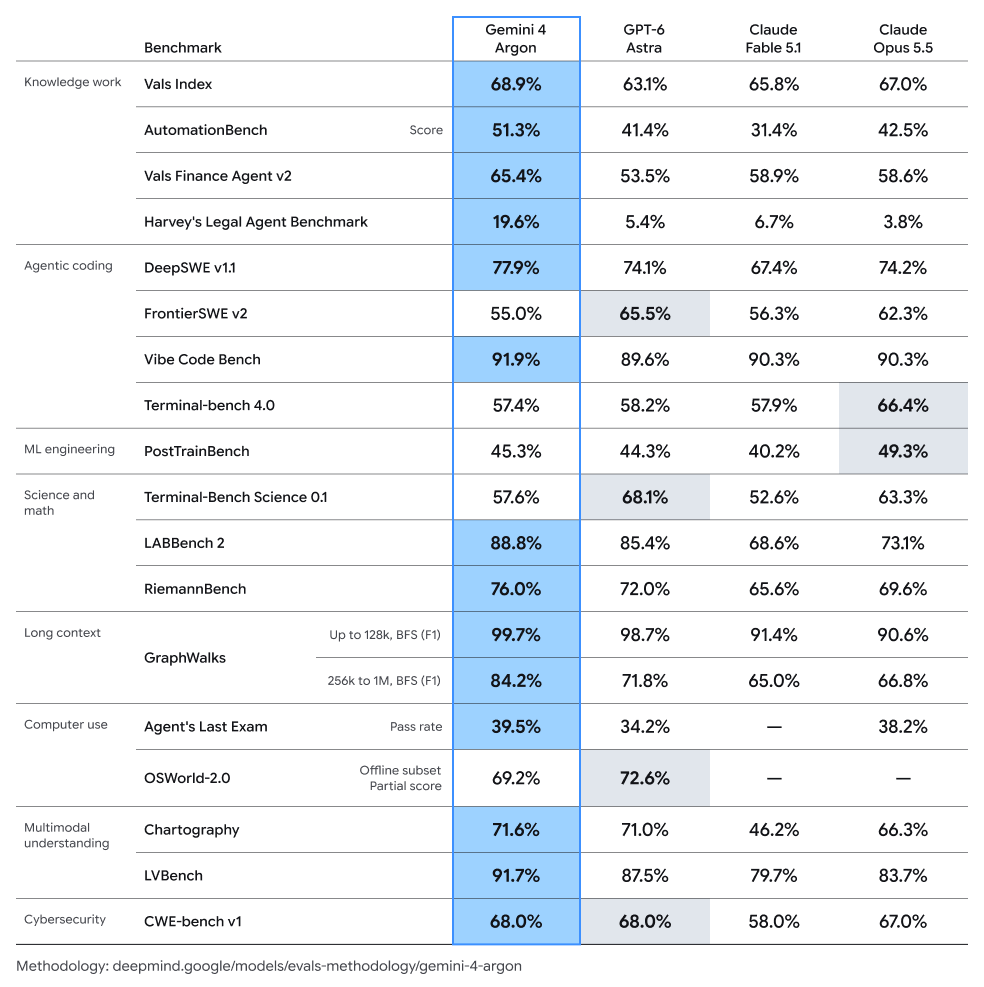
Google DeepMind launched Gemini 4 Argon for coding, enterprise knowledge work and cyber defense, claiming first place on 13 of 19 benchmarks with an industry-leading 1M-token output limit.
Why it matters
The limited release means only select early users can test its capabilities, which may delay broader adoption and feedback compared to rivals.
What to watch
The test is whether Google opens access as soon as possible after refining guardrails, and whether the introductory pricing discount, with no end date announced, continues.
WHO IT HITSEnterprise security teams and government cyber defenders in the Fairwind Program get early access to test Argon's capabilities before general release.
Summaries like this, in your inbox every morning.
Gemini 4 Argon arrives after Google DeepMind's last larger-than-Flash model in February, 3.1 Pro, and after successive incremental 3.x Flash versions and a big GDM management shakeup last month. The launch addresses the question of when GDM would catch up to peers who had launched Fable and Astra class models in the meantime. Argon's benchmarks are described as very respectable, with SOTA in 13 of 19 credible benchmarks, but access is currently limited to a cybersecurity preview for government users and trusted cyber defenders.
Beyond benchmarks, Google reports internal deployments where Argon agents freed more than 300 TiB of data-center memory and are migrating more than 800K lines of C/C++ kernel code to Rust. Agents also replaced 32K lines of SIMD code with safe Rust, making the existing Rust port 2.7x faster with identical output. These internal results suggest the model may be useful for large-scale code modernization, though the body does not specify how these were verified.
The outcome hinges on whether Google can refine guardrails and open access as soon as possible, and whether the introductory pricing discount, which brings the cost to $2/$10 per 1M input/output tokens with no end date announced, continues. Skepticism from some observers about the published numbers and a reported 19.6% on Harvey's legal benchmark trailing Muse Spark 1.2's listed 25.42% suggest the benchmarks may face scrutiny. For enterprise security teams and government cyber defenders in the Fairwind Program, early access could provide a head start on evaluating the model's capabilities.
Pick your industry and the AI tools you use, and get news related to your work every day.
Free · 30 seconds with Google · unsubscribe anytimeWhat is AIToday? →
Ask AI anything about this article. The AI reads this article, earlier AIToday articles, and Wikipedia, and cites its sources. Q&As are published on this page for other readers too.
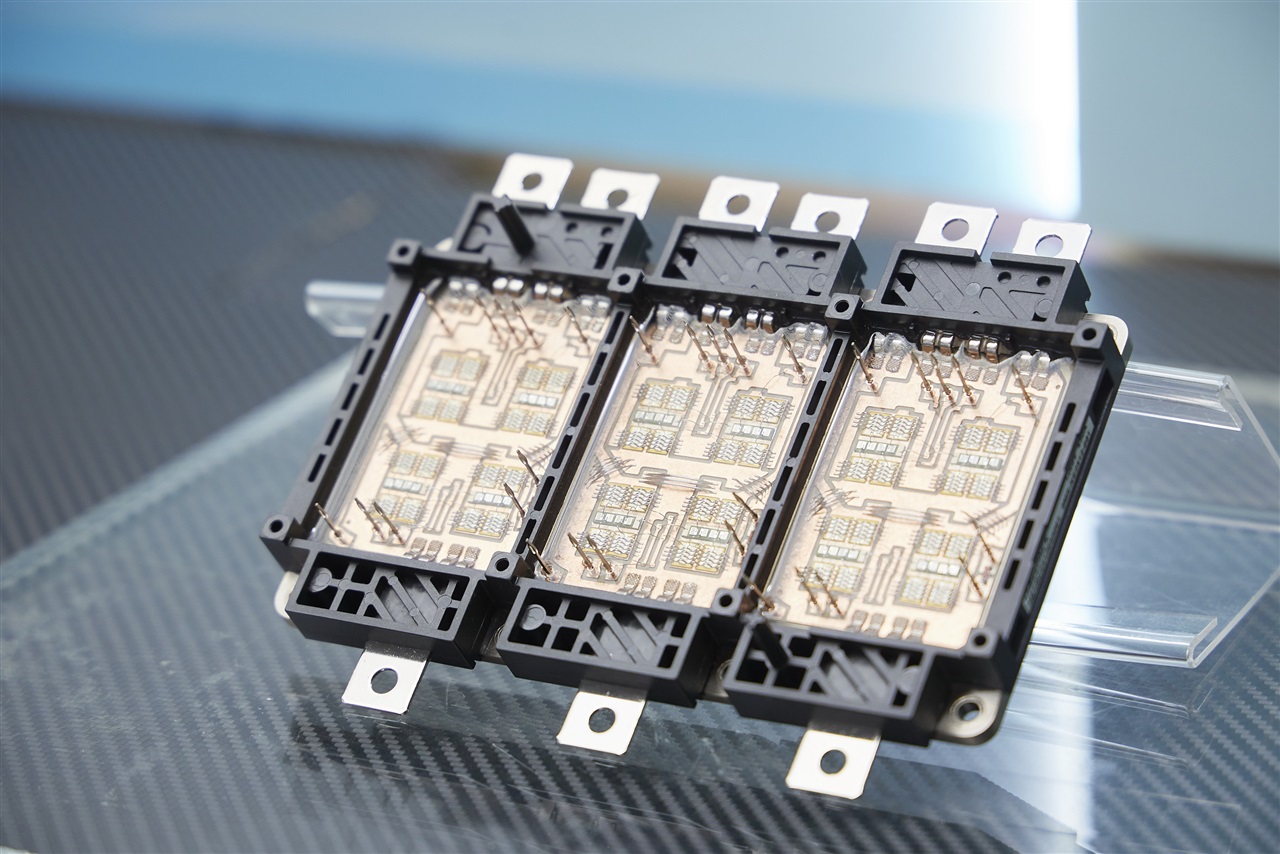
DIGITIMES reported the SiC substrate market is finally seeing signs of recovery, after prices collapsed when w…
HENNGE said on October 1 it set up HENNGE AI, a subsidiary with only two directors and no other employees, whe…
Pershing Square sold its entire Alphabet stake and topped off Microsoft while it sat about 20% below its Q2 hi…

Aolani will integrate Karman's power orchestration platform, built on a custom NVIDIA Jetson Orin Nano and tar…

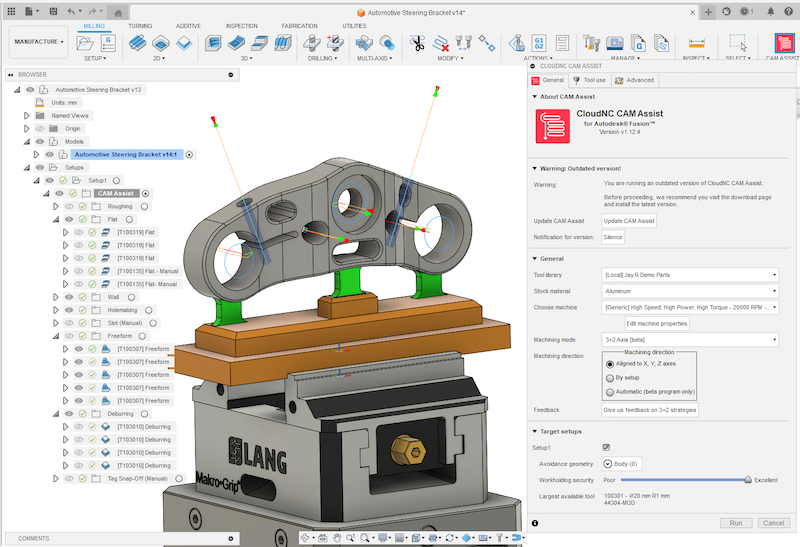
CloudNC raised $20 million led by Nimble Ventures, with Calculus Venture Capital, Entrepreneur First and LM Ve…
Writing for Robotics and Automation News, Unbox Robotics CEO Pramod Ghadge said reverse logistics needs AI dec…