What happened
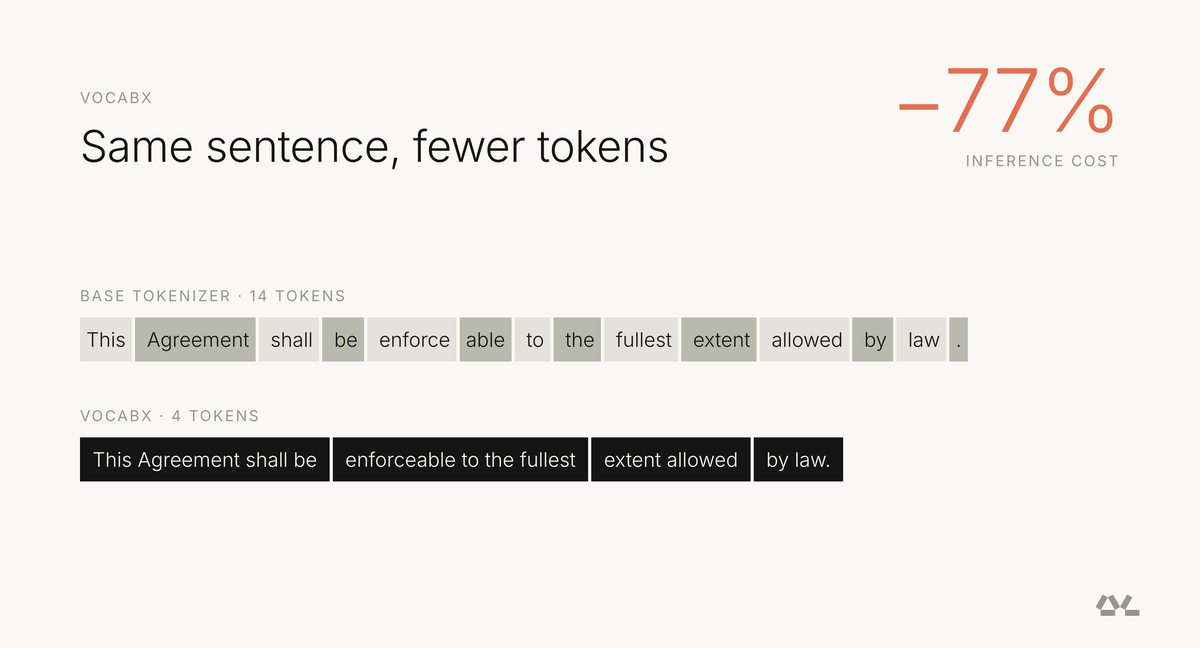
Dharma-AI rebuilt the vocabulary of a production Qwen3-4B Portuguese essay grader with its VocabX method, cutting response length from 350 to 101 tokens and measured inference cost by 77.0%.
Why it matters
The gain comes from the tokenizer, a layer usually inherited and left alone, so domain-specific models can get cheaper before any training change.
WHO IT HITSTeams running small domain-specific models in production, such as grading or contract-review systems, could cut serving cost by reworking the tokenizer rather than the model weights.
Summaries like this, in your inbox every morning.
The starting point for VocabX was a production grader built on Qwen3-4B, a 4-billion-parameter model already trained for the task but still carrying the original Qwen3-4B tokenizer, a vocabulary of 151,669 entries built for many languages and kinds of text. Used for one language and one response format, that vocabulary split the JSON envelope and competency names into many pieces while scoring thousands of entries the task almost never uses. The method's design follows from how inference works: generating a token is memory-bound and costlier than reading one, and in the grader a generated token cost 7.4 times a token read. VocabX therefore rebuilds both how domain words are cut into pieces and which whole spans become single tokens, under a cost criterion rather than a frequency one. It also estimates the gain of candidates absent from the sampling sample, which raised token reduction on a contracts corpus from 44.7% to 52.8%. In the grader, an early vocabulary that fused each competency's grade with the surrounding JSON into one macro token was the most compact option but scored 0.689, below the production grader's 0.703; giving the grade its own token raised the bench score to 0.810 and cut cost by 77.0%, against 73.3% for the fused version. Across five public domains and three model families, VocabX compressed more than the strongest reference method in all fifteen combinations.
Pick your industry and the AI tools you use, and get news related to your work every day.
Free · 30 seconds with Google · unsubscribe anytimeWhat is AIToday? →
Ask AI anything about this article. The AI reads this article, earlier AIToday articles, and Wikipedia, and cites its sources. Q&As are published on this page for other readers too.
China set up National Data Group, a state-owned enterprise headquartered in Xiong'an, Hebei province, with Vic…

Anthropic's draft IPO prospectus disclosed first-half revenue of $16.3 billion alongside an $80.7 billion net…
OpenAI said the PHP vulnerability, fixed the same day, was found using GPT-5.6 Sol through its Patch the Plane…

Klique announced platform support for NVIDIA Nemotron 3.5 Super VL, OpenShell, Dynamo, and NeMo Switchyard, le…
In Q3 2026 results on Oct

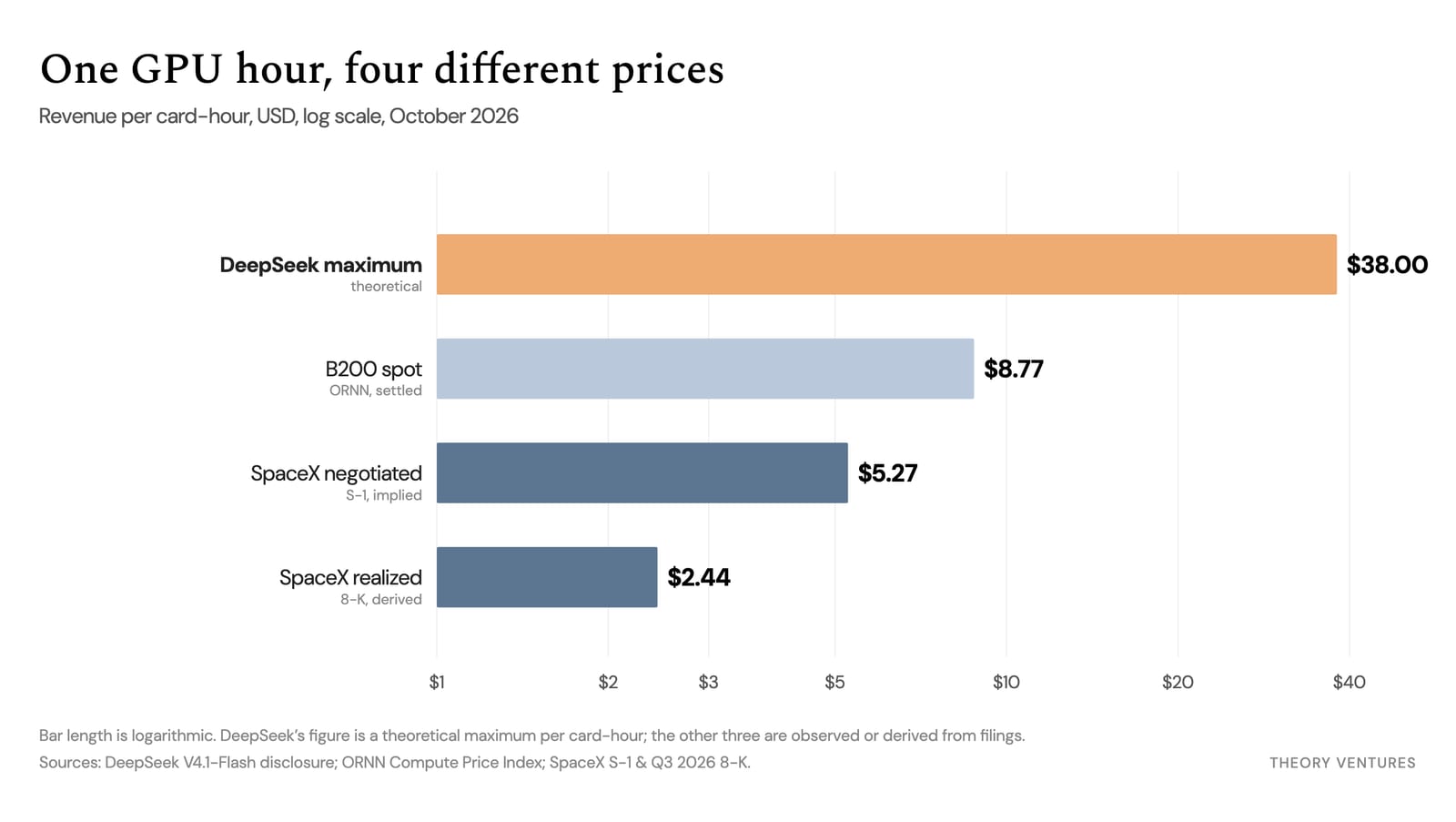
Tom Tunguz laid out a GPU pricing ladder from DeepSeek's theoretical $38.00 per card-hour maximum down to Spac…