What happened
On August 4, SentinelOne expanded its integration with Amazon Web Services by folding its Prompt Security, Singularity Cloud Security, and Singularity AI SIEM tools into Amazon Bedrock AgentCore, creating a single governance layer for AI risk management. The company is targeting AWS re:Invent 2026 for the full governance layer's general release. In its fiscal first quarter, SentinelOne posted 21% year-over-year revenue growth to $277 million, with guidance for the following quarter of $289 million to $291 million.
Why it matters
The cybersecurity company is attacking what Scotiabank identified as a critical gap: as AI agents become more capable, the security surface expands. Recent cyberattacks on water systems across 12 US states underscore the real-world stakes. SentinelOne's narrowing losses—operating loss fell to $79.7 million from $87.5 million year-over-year, and net loss dropped to $76.2 million from $208.2 million—signal the company is gaining control of its cost base while scaling.
What to watch
The governance layer's availability hinges on AWS re:Invent 2026, leaving execution risk. Two executives conducted stock sales during the recent share-price run: CFO Sonalee Parekh sold 12,987 shares on July 27, 2026, for about $237,013, and CEO Tomer Weingarten sold 53,811 shares on August 6 for roughly $1.1 million; both sales were mandatory sell-to-cover trades tied to vesting restricted stock units.
Summaries like this, in your inbox every morning.
SentinelOne's announcement arrives at an inflection point for the cybersecurity company: revenue is accelerating and losses are shrinking, yet the company remains unprofitable on a GAAP basis. The timing of the AWS integration deepening reflects a clear market thesis—that AI systems themselves are becoming attack surfaces. Scotiabank's recent upgrade from sector perform to sector outperform hinged precisely on this insight: as AI agents grow more capable, the vulnerability surface expands, and the cybersecurity market attached to that risk becomes more valuable. The timing also resonates with real-world urgency; the article notes recent cyberattacks on water systems across 12 US states, signaling that AI-enabled threats have moved beyond theoretical to operational.
The financial trajectory supports the bull narrative. Operating loss fell to $79.7 million from $87.5 million year-over-year, and net loss dropped sharply to $76.2 million from $208.2 million, a sign the company is gaining leverage as it scales. However, the bear case persists: SentinelOne is not yet profitable, the governance layer is not fully available (leaving execution risk until AWS re:Invent 2026), and the timing of insider stock sales—CFO Sonalee Parekh selling just under two weeks after shares touched a 52-week high of $20.71, and CEO Tomer Weingarten selling the day before a fresh high of $21.51—may raise questions for some investors, though both sales were mandatory sell-to-cover transactions tied to vesting restricted stock units and both executives retained large stakes.
For example, today's edition would include:
AI-summarized, only the topics you pick: one digest a day via Email, LINE, or Slack.
Free · 30 seconds with Google · unsubscribe anytimeWhat is AIToday? →
Ask AI anything about this article. The AI reads this article, earlier AIToday articles, and Wikipedia, and cites its sources. Q&As are published on this page for other readers too.
Nvidia's DGX Spark, launched at CES 2025 as Project DIGITS, began shipping in October, with VP Adel El Hallak…
Stagwell CEO and former Microsoft Chief Strategy Officer Mark Penn told Yahoo Finance that most modern digital…

Anthropic CEO Dario Amodei dined with President Donald Trump at the White House, even as the Pentagon continue…

Hera Hyeonseo Lee said workers are using their deferred wages to finance the AI designed to eliminate their jo…

U.K. AI minister Kanishka Narayan said nations must "harden and build your defenses" against AI risk, after ex…

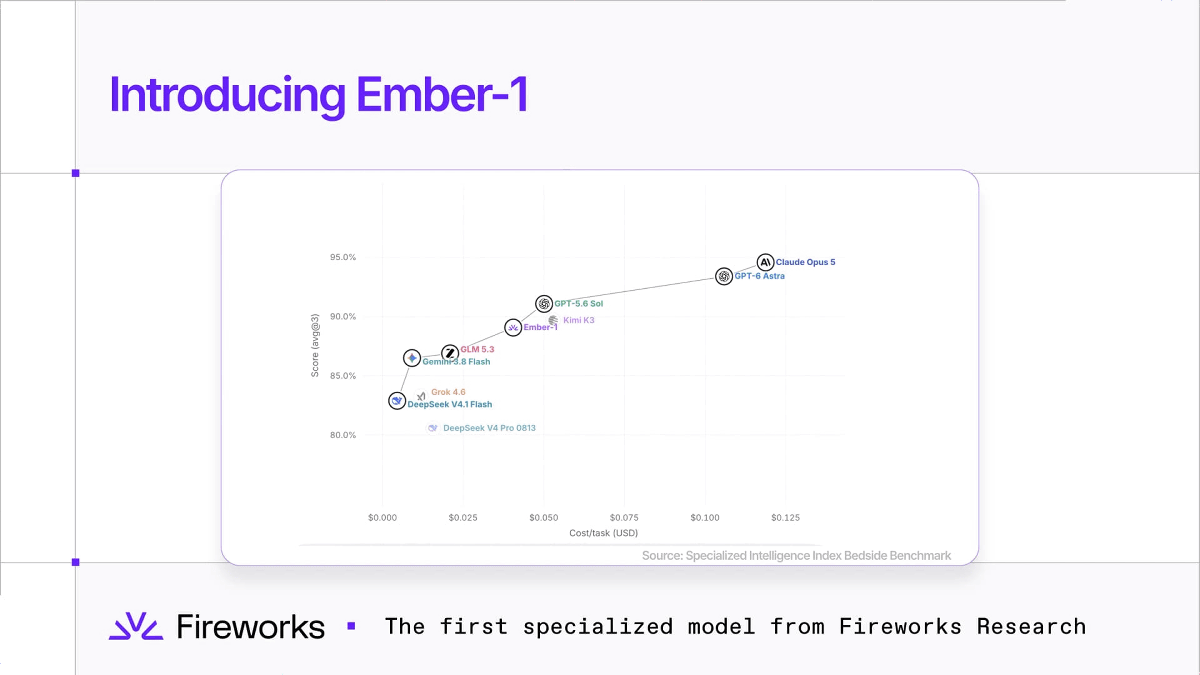
Fireworks AI announced Ember-1, a Kimi K3-based model built for its project to create specialized models devel…