What happened
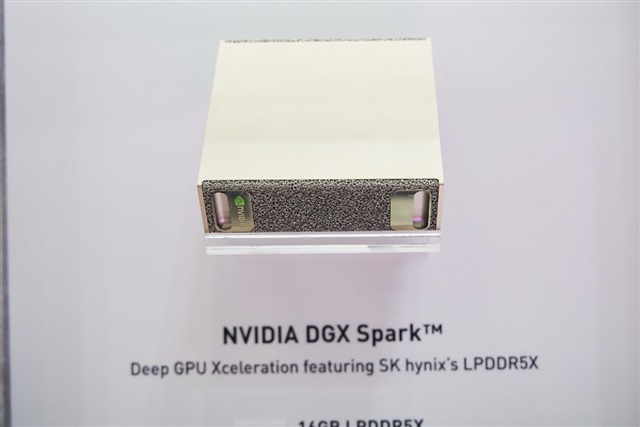
Nvidia's DGX Spark, launched at CES 2025 as Project DIGITS, began shipping in October, with VP Adel El Hallak describing it as quiet and always plugged in.
Why it matters
El Hallak argued local AI can keep data on-device, reduce cloud reliance, and offer more usable tokens for tasks like document summarization and coding assistance.
What to watch
Whether local AI goes mainstream hinges on less friction and easier agent frameworks, with Dell, HP, Lenovo, Asus, MSI, and Microsoft planning RTX Spark laptops in autumn 2026.
WHO IT HITSDevelopers, researchers, and data scientists are the initial target for DGX Spark, with consumers and small businesses potentially affected as RTX Spark laptops arrive in autumn 2026.
Summaries like this, in your inbox every morning.
Nvidia introduced DGX Spark at CES 2025 as Project DIGITS, renamed it in March, and began shipping it in October. The compact AI computer runs Linux, weighs about 2.6 pounds, and measures 150 x 150 x 50.5mm. In October 2025, CEO Jensen Huang traveled to SpaceX's Starship base in Texas to personally deliver one of the first systems to Elon Musk, a gesture underscoring the strategic importance Nvidia attaches to the device.
The current model for most mainstream AI services remains heavily cloud-dependent, with prompts and files sent to data centers, often incurring subscription or usage-based charges. El Hallak argued that local AI could shift this by keeping data on-device. Perplexity's recent Portable Computer launch, which integrates local models and agent tools on supported devices like DGX Spark, illustrates how software support may make local AI more useful. A hybrid approach could let sensitive files stay local while cloud models handle selected requests.
Nvidia's next step may be RTX Spark notebooks, which support Windows 11 and can include up to 128GB of unified memory. El Hallak said local AI will move fully into the mainstream once models run locally with less friction and easier agent frameworks are added. As AI agents become more involved in calendars, email, documents, and financial data, where processing happens becomes a question of privacy, control, latency, and cost. The outcome for Nvidia hinges on whether consumers and businesses prioritize these factors over the raw capability of frontier cloud models.
For example, today's edition would include:
AI-summarized, only the topics you pick: one digest a day via Email, LINE, or Slack.
Free · 30 seconds with Google · unsubscribe anytimeWhat is AIToday? →
Ask AI anything about this article. The AI reads this article, earlier AIToday articles, and Wikipedia, and cites its sources. Q&As are published on this page for other readers too.
Stagwell CEO and former Microsoft Chief Strategy Officer Mark Penn told Yahoo Finance that most modern digital…

Anthropic CEO Dario Amodei dined with President Donald Trump at the White House, even as the Pentagon continue…

Google said its Gemini 3.8 Live voice model now has a Live Avatar feature, and that Live Avatar-equipped Gemin…

Hera Hyeonseo Lee said workers are using their deferred wages to finance the AI designed to eliminate their jo…

On the 2,000-question typed-decisions benchmark, Supersonic Labs' free Julia 1 scored 73.15% vs

Fireworks AI announced Ember-1, a Kimi K3-based model built for its project to create specialized models devel…