
What happened
OpenAI is rolling out its textGrain watermarking to ChatGPT and Codex users in the European Union over the coming weeks, and API customers worldwide can opt in starting today.
Why it matters
The watermarking is meant to meet the requirements of the EU's AI Act, but OpenAI notes that textGrain does not guarantee reliable detection and does not verify accuracy or prove human authorship.
What to watch
Approved researchers and expert organizations can apply starting today for detector access, granted case-by-case, and OpenAI is not making the detector publicly available at launch given the risk of missed watermarks and false positives.
WHO IT HITSCompliance and product teams at companies using OpenAI's ChatGPT, Codex, or API for text generation, particularly those serving EU users, may need to decide whether to enable or account for watermarked output.
Summaries like this, in your inbox every morning.
OpenAI's decision to roll out text watermarking in the European Union only at first is a measured step, not a global default. The company says this regional approach gives it room to learn from real-world use and feedback. Elsewhere, API customers worldwide can opt in to watermarked text outputs for select models starting today, letting them decide how watermarking fits their transparency obligations.
OpenAI also says its textGrain watermarking matched or exceeded other approaches like Google DeepMind's SynthID for text. It included scores from AI benchmarks showing similar performance from watermarked and unwatermarked text. Yet the company cautions that textGrain does not guarantee reliable detection, and that text watermarks do not verify accuracy, determine who owns the text, measure how much a human contributed, or prove human authorship.
Access to a watermark detector is being offered to approved researchers and expert organizations on a case-by-case basis, and OpenAI is not making it publicly available at launch given the risk of missed watermarks and false positives. How much this regional rollout builds trust in AI-generated text may hinge on whether those detection limits prove manageable in practice.
Pick your industry and the AI tools you use, and get news related to your work every day.
Free · 30 seconds with Google · unsubscribe anytimeWhat is AIToday? →
Ask AI anything about this article. The AI reads this article, earlier AIToday articles, and Wikipedia, and cites its sources. Q&As are published on this page for other readers too.
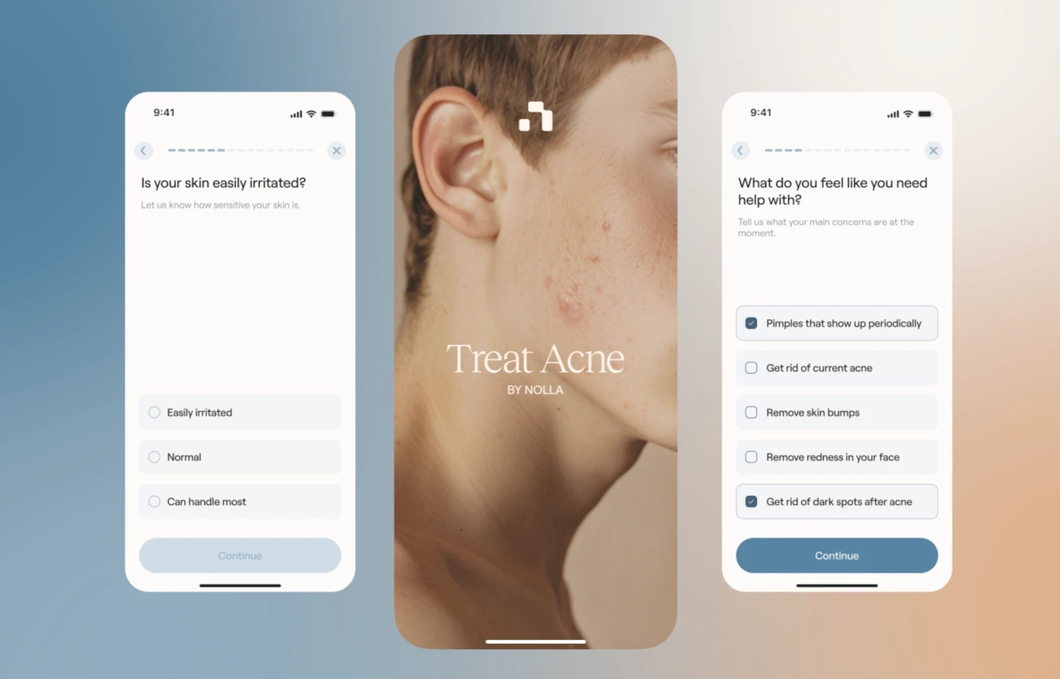
Utah cleared Nolla Health's pilot letting its AI prescribe topical acne creams after a face scan, with no huma…
Ghost AI raised $11 million, led by Andreessen Horowitz with Abstract, Audacious Ventures, Nova and SV Angel…

Moonshot AI closed its final private round at about a $50 billion valuation and is aiming for a Hong Kong IPO…
A Stanford, Carnegie Mellon, UC Berkeley, and Microsoft Research team ran 6,800+ math, coding, and science tas…

Reflection announced Beam, a 501B-parameter open-weight model with 23B active parameters, claiming parity with…
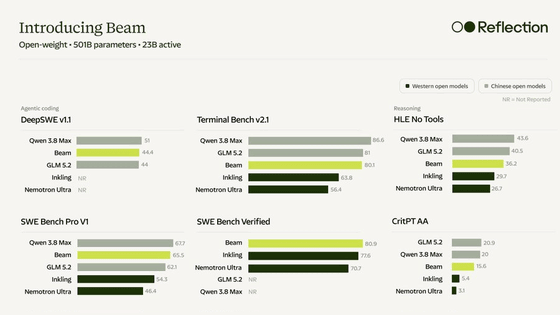
Reflection AI launched Beam, a 501 billion-parameter open-source LLM