What happened
OpenAI will roll out invisible text watermarks to all ChatGPT and Codex plan users in the EU within weeks, and published a report on its detector, textGrain. Developers using OpenAI's API can enable it on some models, but it is off by default.
Why it matters
The watermark works by subtly changing word choices to leave patterns invisible to human readers but detectable by tools, and OpenAI says it will not identify users or significantly change model performance.
What to watch
Watermarking is not foolproof—replacing 10% of words with synonyms drops detection from 92% to 66%, and 25% drops it to 17%. Access to the detector is initially limited to approved researchers and institutions.
WHO IT HITSThis affects EU-based ChatGPT and Codex users on any paid plan, as well as developers using OpenAI's API who may choose to enable watermarking on some models. Approved researchers and institutions will be the first to access the textGrain detector.
Summaries like this, in your inbox every morning.
OpenAI's decision to watermark text from ChatGPT and Codex is a direct response to the EU AI Act. The company will roll the feature out to all plan users in the EU within weeks, while developers using OpenAI's API can enable it on some models—though it remains off by default. OpenAI has said it has no plans to make text watermarking default worldwide at this time.
The watermark works by subtly altering the model's word choices to embed a pattern invisible to human readers but detectable by tools. Because it is built into the words themselves, it survives copy-pasting. OpenAI claims it will not identify users and has little effect on model performance. Alongside the announcement, OpenAI published a report on textGrain, its detector for watermarked text.
However, the method has clear limits. Swapping synonyms sharply reduces detection: unedited text is detected 92% of the time, but replacing 10% of words drops that to 66%, and replacing 25% drops it to 17%. OpenAI also says short texts, math answers, and translated text are harder to detect. Because of these constraints, access to the detector is initially limited to approved researchers and institutions. OpenAI warns that the absence of a watermark does not prove human authorship, and that a watermark shows AI involvement but cannot measure how much human judgment, editing, or creativity went into the final text. How well the system performs in real-world use—and whether it can be easily evaded—will determine its value for compliance and detection.
Pick your industry and the AI tools you use, and get news related to your work every day.
Free · 30 seconds with Google · unsubscribe anytimeWhat is AIToday? →
Ask AI anything about this article. The AI reads this article, earlier AIToday articles, and Wikipedia, and cites its sources. Q&As are published on this page for other readers too.
Ghost AI raised $11 million, led by Andreessen Horowitz with Abstract, Audacious Ventures, Nova and SV Angel…

Utah cleared Nolla Health's pilot letting its AI prescribe topical acne creams after a face scan, with no huma…

Moonshot AI closed its final private round at about a $50 billion valuation and is aiming for a Hong Kong IPO…

The Japanese Red Cross Society ran a survey on AI use in disaster relief

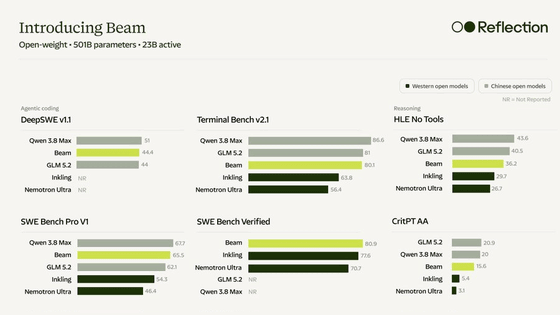
Reflection announced Beam, a 501B-parameter open-weight model with 23B active parameters, claiming parity with…
A Stanford, Carnegie Mellon, UC Berkeley, and Microsoft Research team ran 6,800+ math, coding, and science tas…