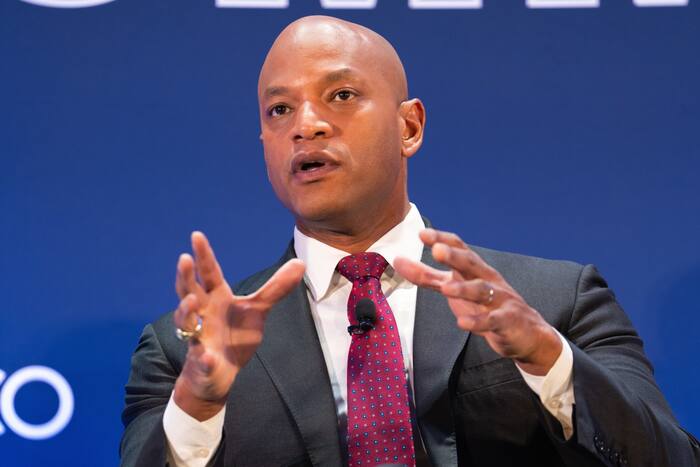
What happened
Maryland Gov. Wes Moore is forming a bipartisan group of governors to develop an AI framework, with Republican Gov. Mike Braun of Indiana as co-chair. He criticized Trump's White House AI meeting as a "billionaire boys club" and Congress for leaving without addressing AI.
Why it matters
Governors from both parties plan to join the effort, which signals states intend to set their own AI standards while Washington stays gridlocked. Moore said his 2024 AI executive order is "antiquated now."
What to watch
Whether the framework produces binding rules or only guidelines is unclear, since states have limited power over a technology that spans the country and the globe. The debate could shape the early stages of the next presidential campaign.
WHO IT HITSState government policy staff and governors' offices are the first to act on this, as the group aims to set AI standards that individual states would enforce. Tech companies operating data centers across multiple states may face a patchwork of rules.
Summaries like this, every morning.
The move comes as tech executives issue increasingly dire warnings that AI could pose an existential threat to humanity, testing governments' ability to respond nimbly. States have been more active than the federal government, but their power is limited when it comes to a technology that spans the country and the globe. In the past month, governors in Maryland, California, Illinois, Oregon and Virginia issued executive orders or took other steps intended to create standards, while Republicans including Spencer Cox of Utah and Greg Abbott of Texas cracked down on data center development. In Washington, action has been much slower. Sen. Bernie Sanders hosted a briefing with lawmakers and experts last month and Sen. Josh Hawley launched an investigation into OpenAI, but there has been little agreement on a legislative response.
At the White House, Trump has dismissed AI fears as a "hoax" and emphasized the need to remain competitive with technology developed in China. He and tech leaders signed a voluntary accord this week that he called "morally binding" and that will include internal and external reviews. Moore argued that federal leadership is needed from both the White House and Congress, and that in its absence governors cannot just sit on their hands.
The debate could play an important role in the early stages of the next presidential campaign. Moore has said he is not running for president and is focused on this year's midterms, when he is on the ballot for reelection in Maryland. Whoever enters the field could face scrutiny for past support for data centers, which were once seen as economic booms for states but have since become broadly unpopular. Whether the governors' framework produces binding rules or only guidelines is likely to hinge on how much authority states can assert over a technology that crosses borders.
Pick your industry and the AI tools you use, and get news related to your work every day.
Free · 30 seconds with Google · unsubscribe anytimeWhat is AIToday? →
Ask AI anything about this article. The AI reads this article, earlier AIToday articles, and Wikipedia, and cites its sources. Q&As are published on this page for other readers too.
Seven senators including Ron Wyden and Elizabeth Warren wrote to Mark Zuckerberg on Oct
Google updated its privacy policy on October 16th, adding an exception that lets data from Gmail, Drive, and G…

Meta moved enforcement of its new business terms from October 30th to November 20th, with spokesperson Daniel…

The Council, with Germany's support, approved a text that generally permits AI companies to use any personal d…

In a federal case in the U.S

OpenAI and NASK's AI Safety Research Center, which serves as the Polish Artificial Intelligence Safety Institu…