
What happened
Scimplify raised $25 million in an all-equity round led by Hitachi Ventures, valuing it at $250 million, and said its annualized revenue run rate reached about $200 million, up from a year earlier.
Why it matters
Scimplify uses its AI platform Scinode to cut materials delivery from 12 to 18 months to as little as two, offering manufacturers an alternative to China-concentrated supply chains.
What to watch
Scimplify plans to expand production to the U.S. and Japan over the next year, deploying around $7.5 million for U.S. expansion.
WHO IT HITSManufacturers in semiconductors, defense and energy that depend on specialty chemicals and critical materials may gain a faster, non-China sourcing option, though Scimplify's production still runs mostly through partner factories in India.
Summaries like this, in your inbox every morning.
Scimplify's raise comes as manufacturers seek alternatives to supply chains concentrated in China. The Bengaluru-based startup, founded in 2023, has built a network of more than 500 partner manufacturing facilities and uses its AI platform, Scinode, to coordinate production routes, quality checks and regulatory steps. That model appears to be translating into rapid commercial traction: the company's annualized revenue run rate has tripled to about $200 million in a year, and its U.S. business has grown sixfold to roughly $60 million.
The funding round, led by Hitachi Ventures with participation from customers Henkel and Teknor Apex, values Scimplify at $250 million after the investment, up from $150 million after a $40 million Series B in March 2025. The company says it has been EBITDA-positive for the past two months and expects to turn profitable after tax this month. It plans to use about $7.5 million of the new capital for U.S. expansion and $2 million to further develop Scinode.
Scimplify's focus on tungsten derivatives from scrap and rare earth materials targets categories where global supply chains remain heavily dependent on China. Energy, electronics and defense now account for about 45% to 50% of its revenue, up from less than 15% a year ago, a shift that suggests demand is being driven by AI-related electronics and energy infrastructure as well as ongoing wars.
Pick your industry and the AI tools you use, and get news related to your work every day.
Free · 30 seconds with Google · unsubscribe anytimeWhat is AIToday? →
Ask AI anything about this article. The AI reads this article, earlier AIToday articles, and Wikipedia, and cites its sources. Q&As are published on this page for other readers too.
Uvi, or Naboo Research Ltd., raised $7.5 million in seed funding led by CT Innovations for a context layer it…

ScaleFlux's Pichai Balaji said AI factories stall because data movement is slow, with DRAM 37 to 40 times slow…

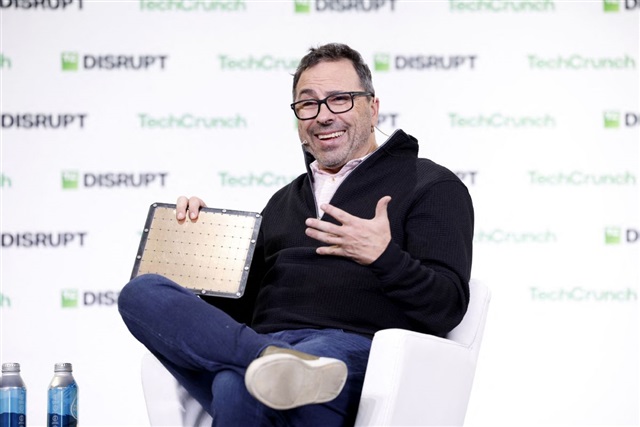
Cerebras Systems co-founder and CEO Andrew Feldman said at TechCrunch Disrupt 2026 that Cerebras' shortage of…
Asia Vital Components (AVC) unveiled new liquid-cooling solutions, including direct liquid cooling (DLC) and a…
Digital Hollywood University announced on October 14 that it will introduce Anthropic's Claude across the whol…

Jessica Herrin, who built Stella & Dot into a business that sold more than $2 billion in products, raised $5 m…