What happened
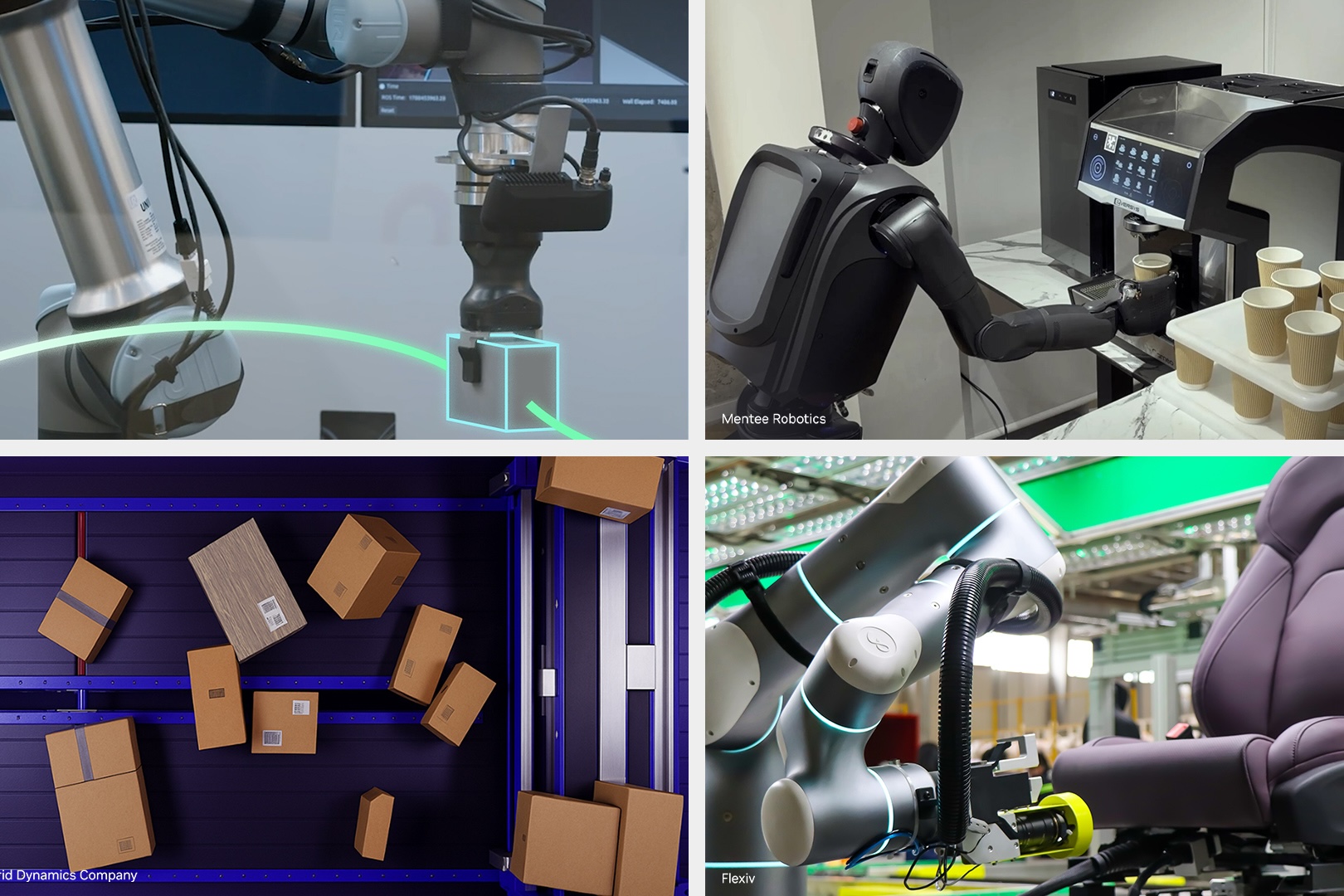
NVIDIA released NVIDIA Isaac ROS 5.0, an open-source robotics development environment that now integrates AI agent capabilities directly into the ROS developer ecosystem, per the company.
Why it matters
Developers can reportedly get AI agent help automating repetitive work and understanding complex codebases, which NVIDIA says speeds the move from idea to a working application.
What to watch
Adoption hinges on the robotics companies already building it into their platforms. The body names Universal Robots and ROBOTIS, and the release supports ROS Lyrical and Ubuntu 24.04.
WHO IT HITSRobotics software developers and ROS-focused engineering teams get AI agent assistance inside their existing tooling, and companies like Universal Robots and ROBOTIS are named as already integrating the release. Shipment quality on NVIDIA Jetson edge hardware will show whether the speed-up claim holds.
Summaries like this, in your inbox every morning.
Isaac ROS 5.0 is NVIDIA's latest version of its open-source robotics development environment, and the headline change is structural: AI agent capabilities are now integrated directly into the ROS developer ecosystem rather than bolted on. According to the body, that integration lets developers use AI agents to automate repetitive tasks and to understand complex codebases, which NVIDIA says shortens the path from an idea to an application that actually runs.
The release also touches performance and packaging, not just agents. The FoundationPose pose estimation model is sped up, pick-and-place work is turned into reusable skills, and the whole thing is built for real-time execution on the NVIDIA Jetson edge AI platform. Setup and manipulation arrive as new NVIDIA Isaac skills that package development tasks into reusable workflows, and agent-ready documentation is meant to help AI agents understand Isaac ROS tools and workflows so a developer's intent turns into working software faster. It supports the latest ROS Lyrical and Ubuntu 24.04.
Adoption already looks real rather than announced: Universal Robots and ROBOTIS are among the robotics companies that have built it into their own platforms, and it is available free and open source through GitHub. For robotics teams, the practical question is whether agent help and reuse actually cut the time from prototype to deployed application on Jetson hardware, and how quickly the rest of the ROS ecosystem follows the named integrators. That outcome hinges on whether developers treat the new agent and skill workflows as their default, which the body does not yet settle.
Pick your industry and the AI tools you use, and get news related to your work every day.
Free · 30 seconds with Google · unsubscribe anytimeWhat is AIToday? →
Ask AI anything about this article. The AI reads this article, earlier AIToday articles, and Wikipedia, and cites its sources. Q&As are published on this page for other readers too.
Google is paying about 100 digital publishers for content used in AI Overviews, AI Mode, and Gemini, with paym…
A Qiita walkthrough trained a five-label car-damage classifier on Gemini Enterprise Agent Platform AutoML usin…

Lauren Tan says she shipped about 2,000 pull requests a month to production on the SpaceX AI Grok Bot team

At its September 29, 2026 DevDay, OpenAI announced more than 20 items, including dots, an agent running on GPT…

A student made granite-code:8b and granite3.2:8b write a TORCS racing AI in 13 parts, checked by Python test s…

Alibaba's Qwen team open-sourced Qwen-Image-2.1 on September 20, 2026 — a 7B model generating 2048×2048 images…

