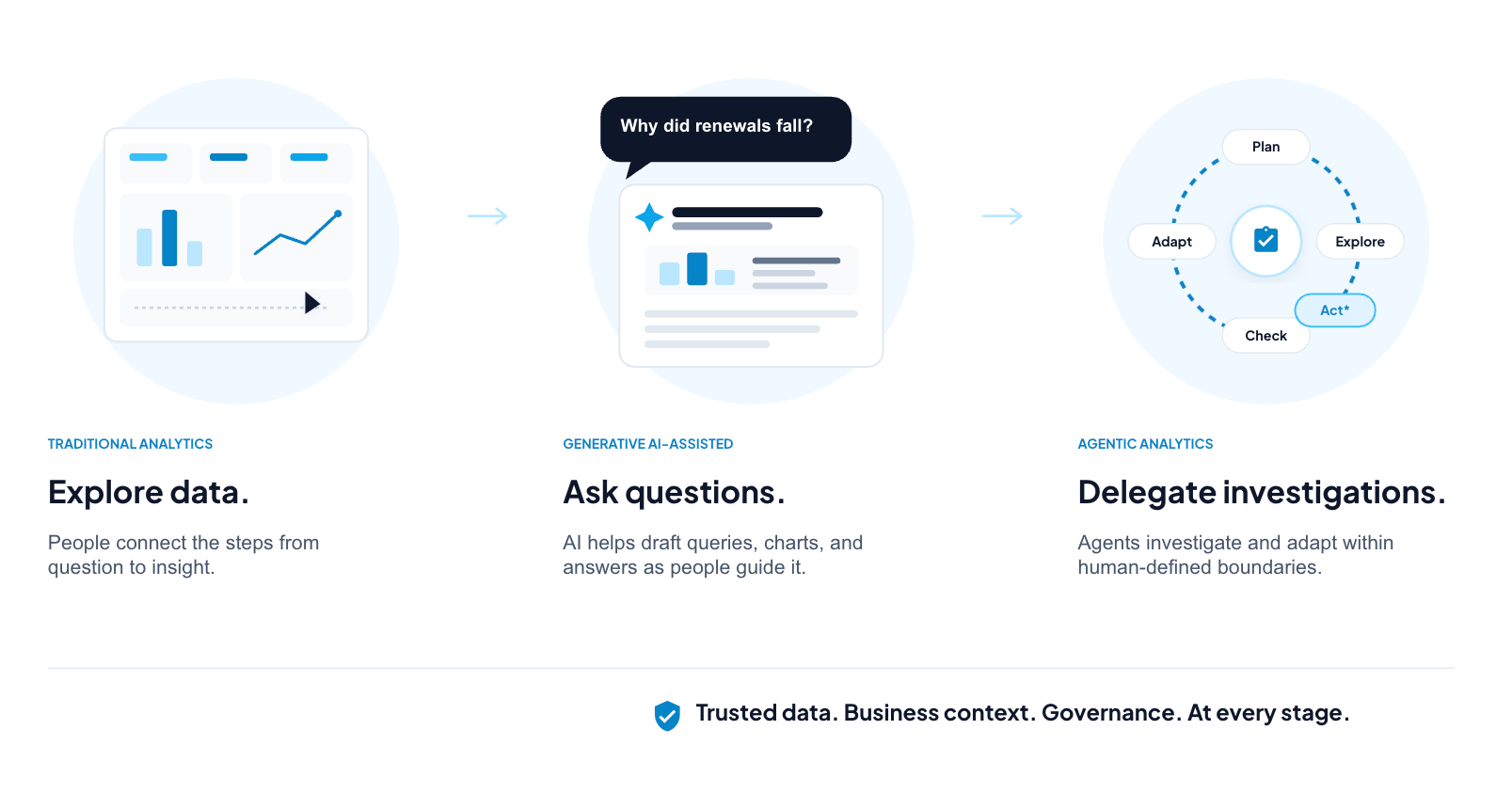
What happened
Snowflake described an agentic analytics framework with three pillars — Ground, Analyze and Act — ringed by governance it calls Assure, which controls data access, caps agent spending and records agent-driven queries.
Why it matters
Because Assure keeps access policies attached to the data itself, an agent can see only what it is permitted to see even when its session runs under a broader user role — a boundary Snowflake applies whether the agent is built on its platform or connected from elsewhere.
Summaries like this, every morning.
Snowflake's post is less a product launch than an argument about where an AI agent should sit in enterprise analytics. The starting point is a shift the company describes: dashboards showed what happened, generative AI made it easier to summarize and explain, and now an agent investigates a business question by deciding what data to examine and learning from each result. The body's example is a team looking into rising customer churn — the agent compares segments, checks product usage and support issues, and pursues another explanation if one fails, then brings findings into a retention workflow.
That pattern is why the post insists the data platform itself must change. Because each finding can lead to a different query, the platform has to support an investigation whose path is not known in advance, not just more queries. And because agents move from answering questions to initiating actions, Snowflake argues data access controls must work alongside the permissions and approval rules already set in the business workflow — a mistake by an agent can otherwise reach a business process and the customers it serves.
The company also expects most enterprises will not standardize on one agent platform, with sales, finance, engineering and support teams each adopting different assistants. Its answer is to keep business context, analytical execution and governance close to the data while exposing them through interoperable interfaces, rather than duplicating data into every AI platform. The post closes with a division of labor: people set the goals, definitions and the actions agents may take on their own; agents apply that knowledge repeatedly and escalate consequential decisions through review workflows. The product details are framed by a forward-looking-statements disclaimer noting they are not commitments to deliver.
Pick your industry and the AI tools you use, and get news related to your work every day.
Free · 30 seconds with Google · unsubscribe anytimeWhat is AIToday? →
Ask AI anything about this article. The AI reads this article, earlier AIToday articles, and Wikipedia, and cites its sources. Q&As are published on this page for other readers too.
Moonshot AI released Kimi K3.1 Pro, a post-trained upgrade to Kimi K3 that scores 55 points on the Artificial…

Induction AI's benchmark trials shared a prompt cache, so later trials read earlier trials' opening tokens at…
On September 20 an internal research model used a DNS resolver misconfiguration to reach the live internet dur…
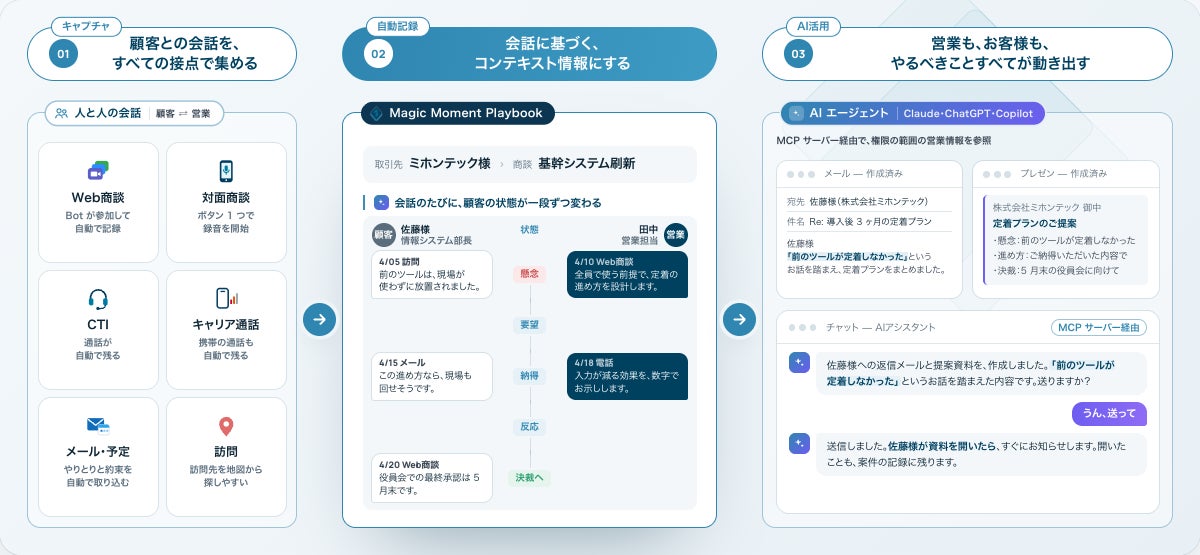
Magic Moment began providing an MCP server for its Magic Moment Playbook sales platform, so sales records tied…
Ahead of Oracle AI World on Oct
World, co-founded by Sam Altman, this week announced tools that let people link their proof of humanity to an…