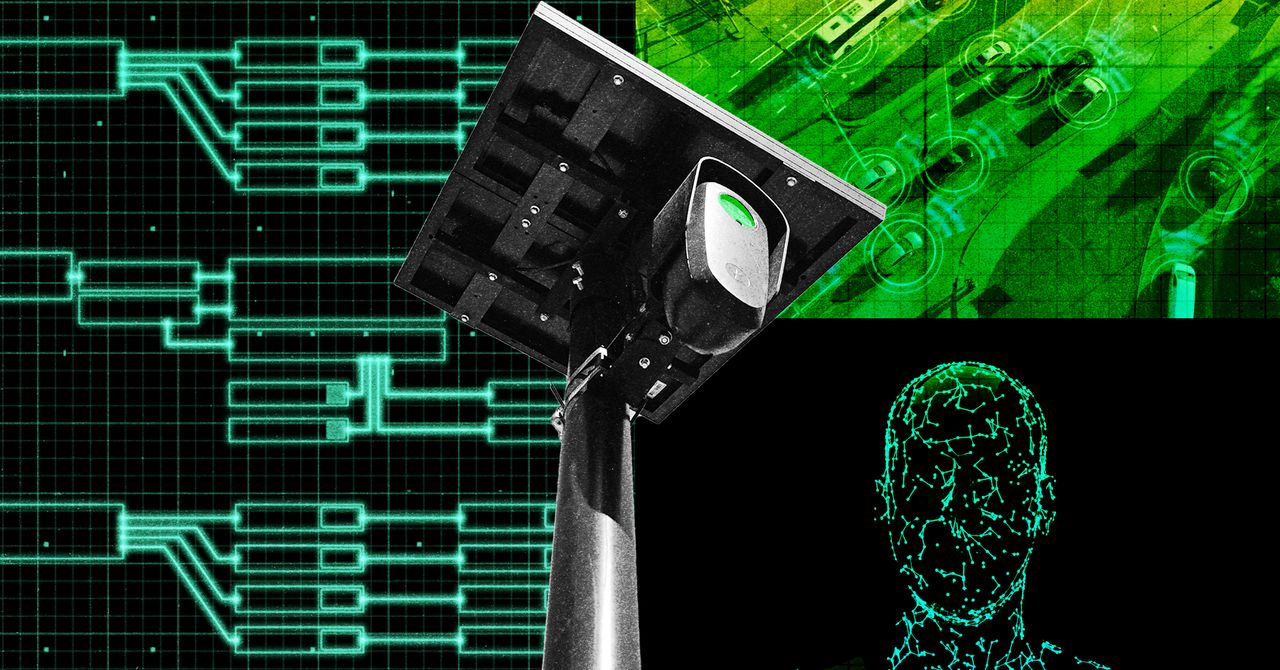
What happened
Flock Safety has built an AI system called OS Investigate that can identify drivers and track vehicles by movement patterns alone, drawing on a network of cameras logging movements in more than 6,000 communities. The tool ships with 69 prewritten prompts officers can use or customize, giving the AI access to plate scans, arrest records, case files, 911 dispatch logs, ballistics results, and commercial databases containing Social Security numbers, phone numbers, relatives, and associates.
Why it matters
Flock has long told the public its technology "cannot recognize, identify, or track individuals," but OS Investigate directly contradicts that claim. The system enables police to cast suspicion on drivers based solely on where and how often they drive—without a known vehicle, name, or crime—raising what privacy and legal experts say are serious constitutional concerns about warrantless access to vast movement records.
What to watch
Flock says OS Investigate is still in development and being tested with a small group of law enforcement partners, with capabilities that may change before broader release. The tool arrives as the company faces bipartisan political pressure, documented cases of officer misuse of its platform, and vandalism of its cameras across multiple cities.
Summaries like this, in your inbox every morning.
Flock Safety's OS Investigate represents a fundamental shift in how the company's surveillance infrastructure can be weaponized. For years, Flock maintained a public position that its technology was narrowly designed for case-based investigations—checking license plates against wanted-vehicle lists and ignoring the rest. The AI tool inverts that model entirely. Instead of starting with a known vehicle or suspect, an officer can now begin with only a location, a timeframe, and a behavioral pattern, and the system returns a ranked list of people who fit that profile. The 19 prompts describing pattern-hunting rather than record-lookup searches exemplify this inversion: an officer searching for vehicles visiting three or more retail locations in three days, or multiple banks in a week, is not investigating a known crime but generating suspicion based on ordinary civilian movement.
The tool's reach extends far beyond what license-plate readers traditionally access. By connecting to arrest records, dispatch logs, ballistics databases, and commercial data containing Social Security numbers and family relationships, OS Investigate transforms vehicle movement into a comprehensive dossier pipeline. A single vehicle can surface up to 20 "associates"—other cars appearing next to it at the same cameras within a two-minute window three or more times. This capability, grounded in algorithmic ranking rather than human judgment about relevance, illustrates the scale of the privacy risk: the system does the surveillance work of continuously watching entire populations, then surfaces people for scrutiny based on criteria an officer might not even fully understand.
Flock's framing of OS Investigate as "still in development" and in use only with a "small group of law enforcement partners" may be technically accurate, but it obscures the fact that the underlying camera network already logs 20 billion plate scans a month across more than 6,000 communities. The infrastructure for mass movement tracking is already deployed. The AI tool is simply the interface that makes querying it easier—and less cognitively demanding—for officers without technical expertise. This convergence comes at a moment of vulnerability for Flock: the company faces bipartisan political pressure, documented cases of officer misuse, and physical vandalism of its cameras in multiple cities.
Pick your industry and the AI tools you use, and get news related to your work every day.
Free · 30 seconds with Google · unsubscribe anytimeWhat is AIToday? →
Ask AI anything about this article. The AI reads this article, earlier AIToday articles, and Wikipedia, and cites its sources. Q&As are published on this page for other readers too.
Researchers at Microsoft published a paper titled "Adoption and Impact of Command-Line AI Coding Agents: A Stu…
Meta released open weights for Muse Spark Open, an 816B-parameter model built for coding and long-running agen…

In a Zenn article, EC自動化工房 laid out a pre-generation cleanup step for product masters, adding notation rules t…

OpenAI announced GPT-6 Sol / Luna in September 2026, and the notable change was not the top model's performanc…
Three one-line requests and three requests with written completion criteria to Claude Code produced functional…
A five-person team running a Claude Code-based development setup split each decision record's reason into 推奨理由…

