What happened
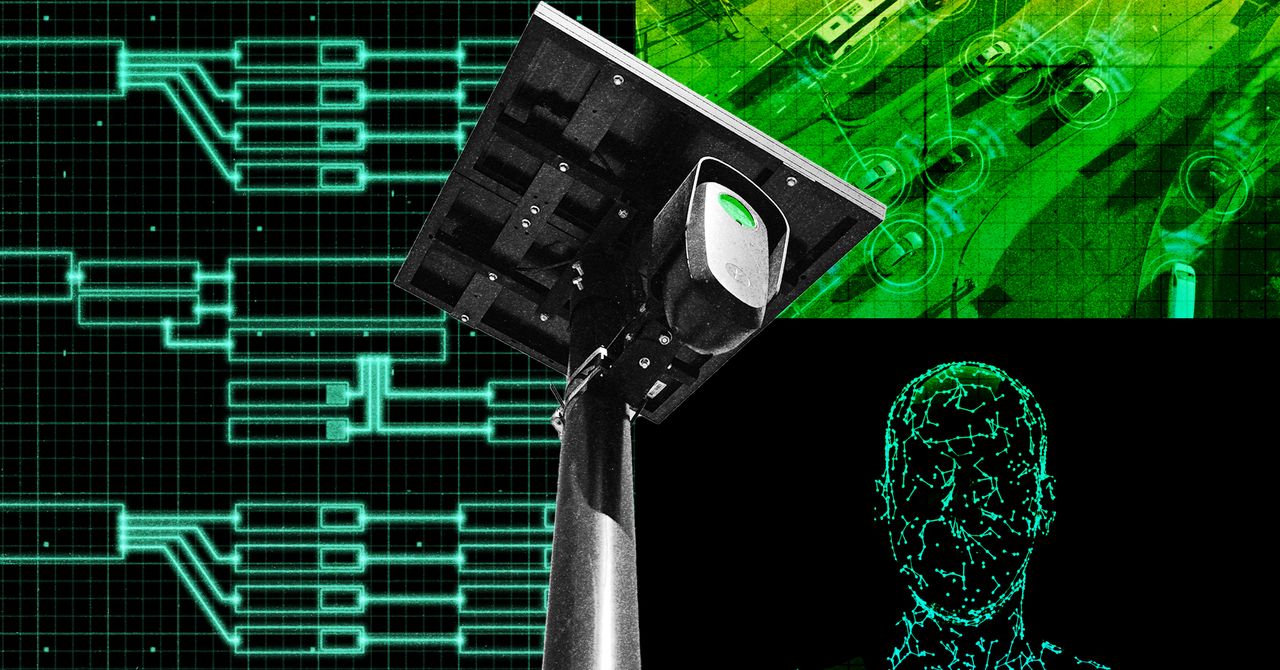
Flock Safety, which has long said its surveillance cameras cannot identify individuals, has built an AI system called OS Investigate that identifies drivers and tracks vehicles by their movement patterns. The tool can search across plate scans, arrest records, 911 dispatch logs, and commercial databases holding Social Security numbers, phone numbers, and home addresses. It ships with 69 prewritten prompts officers can use or edit, and code reviewed by WIRED shows it can hunt for vehicles based on location, time window, and behavior alone—such as cars visiting multiple banks in a week or multiple gas stations between midnight and 5 am.
Why it matters
Flock has built a business by converting license plate scans into names and addresses on request, but privacy experts say OS Investigate inverts that model: officers no longer need a plate, name, or crime to begin. Instead, they supply a location, timeframe, and pattern of behavior, and the system returns people who fit—casting suspicion based on driving habits rather than evidence of wrongdoing. The tool arrives as Flock faces bipartisan political pressure, a growing record of officer misuse, and camera vandalism across cities.
What to watch
Flock says OS Investigate is in development and being tested with a small group of law enforcement partners, with capabilities that may not reflect what it eventually sells. The company logs 20 billion plate scans a month and was valued at $7.5 billion in its most recent funding round; it counts roughly 140,000 monthly active users.
Summaries like this, in your inbox every morning.
Flock Safety built its business on a straightforward premise: cameras photograph passing cars, convert plates to text, and check them against lists of vehicles police are seeking. The company has long told the public and customers that its technology "cannot recognize, identify, or track individuals" and is built for specific, case-based investigations. OS Investigate represents a fundamental reversal of that model. Rather than starting with a known vehicle or suspect and confirming a match, the system begins with a location, timeframe, and pattern of movement—visiting multiple retail locations in three days, crossing city boundaries, traveling between gas stations at odd hours—and surfaces vehicles and their owners who fit that profile, without any initial lead or criminal allegation.
The system's architecture shows this inversion in technical detail. Where traditional license plate readers check a car against a wanted list, OS Investigate's 69 prewritten prompts ask officers to hunt for behavioral patterns. One prompt instructs the system to list everyone arrested more than twice in two years for any offense, map where they live, retrieve calls for service at their homes, and auto-generate dossiers on the top three individuals. Another asks for vehicles visiting three or more retail locations in a city in three days—a search with no victim, no suspect, no crime. The code includes a filter that excludes buses, work vans, and delivery trucks, leaving ordinary drivers who make the same rounds under surveillance. A single plate can be queried to surface its "top 3 associates"—other vehicles that appear at the same cameras within a two-minute window three or more times.
Flock's statements to WIRED characterize OS Investigate as a tool in development, separate from its core license-plate reader business, designed to help officers organize data they already access. However, privacy experts and a former Pawtucket, Rhode Island police officer who piloted the technology told WIRED the system goes far beyond data organization: it automates the casting of suspicion on drivers based solely on where and how often they travel. The tool arrives amid mounting controversy—bipartisan political pressure, documented cases of officer misuse, and widespread camera vandalism—and the company's valuation of $7.5 billion in its most recent funding round and 20 billion plate scans logged monthly underscore the scale of the network on which the AI operates.
Pick your industry and the AI tools you use, and get news related to your work every day.
Free · 30 seconds with Google · unsubscribe anytimeWhat is AIToday? →
Ask AI anything about this article. The AI reads this article, earlier AIToday articles, and Wikipedia, and cites its sources. Q&As are published on this page for other readers too.
Researchers at Microsoft published a paper titled "Adoption and Impact of Command-Line AI Coding Agents: A Stu…
Meta released open weights for Muse Spark Open, an 816B-parameter model built for coding and long-running agen…

In a Zenn article, EC自動化工房 laid out a pre-generation cleanup step for product masters, adding notation rules t…

OpenAI announced GPT-6 Sol / Luna in September 2026, and the notable change was not the top model's performanc…
Three one-line requests and three requests with written completion criteria to Claude Code produced functional…
A five-person team running a Claude Code-based development setup split each decision record's reason into 推奨理由…

