
What happened
Nathan Lambert argued his "lossy self-improvement" scenario remains his baseline, where agents make models cheaper rather than dramatically smarter. He cited Anthropic's Claude Fable 5.1 & Mythos 5.1 System Card, which says internal model use helps keep the pace but shows no clear signs of acceleration beyond it.
Why it matters
If recursive self-improvement mainly pushes down cost at a given intelligence level rather than raising peak intelligence, the near-term payoff shifts toward cheaper models and wider deployment — and extinction-risk talk is likely premature, he says.
What to watch
His view is not a settled one: he holds high uncertainty about whether the labs have seen genuinely scary, specific breakthroughs not yet public. Readers should watch whether more evidence emerges to shift what he calls the hardest exponential — peak intelligence.
WHO IT HITSAI researchers and lab employees tracking internal automation, and the safety-community readers who set expectations for how fast model capability will change.
Summaries like this, in your inbox every morning.
Lambert is writing against a backdrop he describes as a cultural shift inside the frontier labs. He notes that a year ago, the general staff at OpenAI and Anthropic were already anxious about AI risks and the pace of progress, and that this anxiety grew as agents found stronger product-market fit at the start of 2026. Combined with the frenetic, competitive culture in the San Francisco AI scene, that precondition can amplify any concern — and Lambert says while this raises general awareness of AI (because fear sells), exaggerating risk timelines or severity has negative second-order effects. He points to the loud AI safety debates of 2023 and 2024, and says the primary risks forecast then did not arrive on those timelines.
He quotes Richard Ngo's summary that much of the safety community now expects an intelligence explosion within a few years, and that while this may be directionally right, it is factually wrong — no superintelligence within the next 8 years, but progress fast enough to feel like the short-timeline camp was right. Lambert's alternative, lossy self-improvement, rests on three claims: automatable research is too narrow to drive massive net acceleration given scaling laws' exponential costs; returns from adding more parallel agents diminish; and resource bottlenecks and politics remain major factors in building strong LLMs. He also draws on podcasts with Noam Brown and with John Schulman, Beren Millidge and Charlie O'Neill, summarizing their timeline guesses — for example, around one to three years for a drop-in remote worker, about two years (Schulman) or five to ten (O'Neill) for a 10× productivity uplift for AI researchers, and three to ten years for AI surpassing top human experts across computer-based work.
What all this hinges on, in his framing, is that the labs keep running on clear, measurable problems — software engineering, log monitoring, planned experiments — where agent swarms genuinely help, and where cheaper inference and better efficiency follow. Harder to automate are things like post-training recipes: Schulman's point that someone has to decide how the model should behave in each area, and that it is easy to screw up post-training in ways that do not show up on benchmarks. Lambert holds high uncertainty about whether unpublished breakthroughs could change his picture, and says the hardest exponential to move is peak intelligence. Until more evidence appears, he treats it as the less likely scenario that RSI delivers a near-term intelligence explosion rather than a broad, economically transformative diffusion of cheaper capability.
For example, today's edition would include:
AI-summarized, only the topics you pick — one digest a day via Email, Slack, or Discord.
Free · 30 seconds with Google · unsubscribe anytimeWhat is AIToday? →
Ask AI anything about this article. Q&As are published on this page for other readers too.
Unity released official plugins for Claude Code and OpenAI's Codex, giving agents skills its own teams write a…

Anthropic cofounder Jack Clark, an English literature and creative writing graduate, said his literary educati…
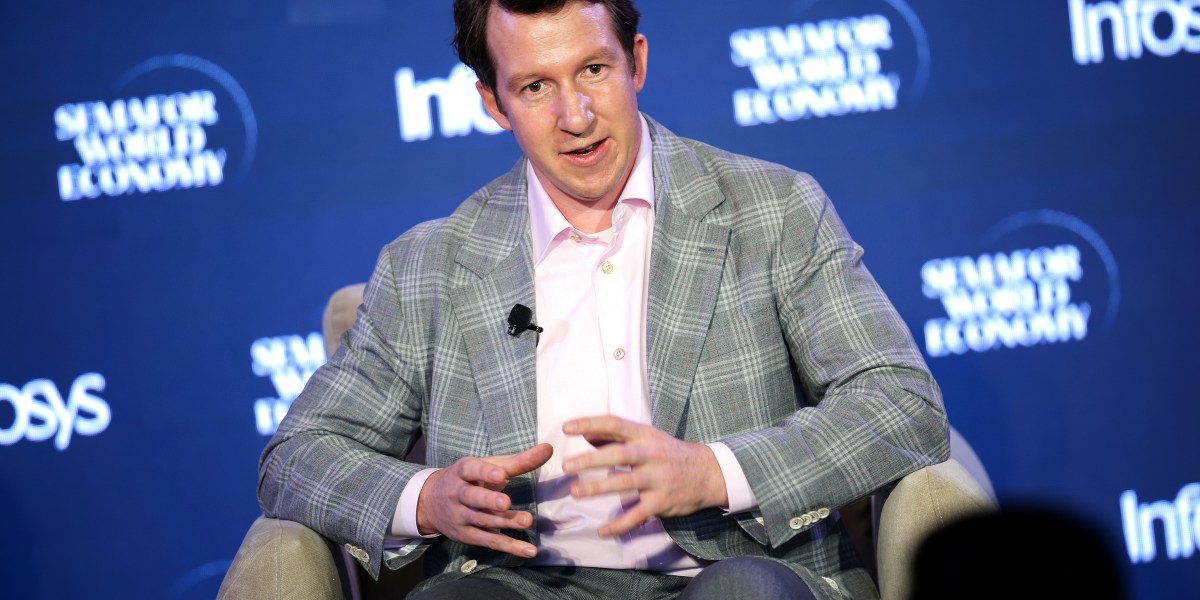
Anthropic said Claude now leads 26% of its model research and development, completing most tasks "end-to-end f…
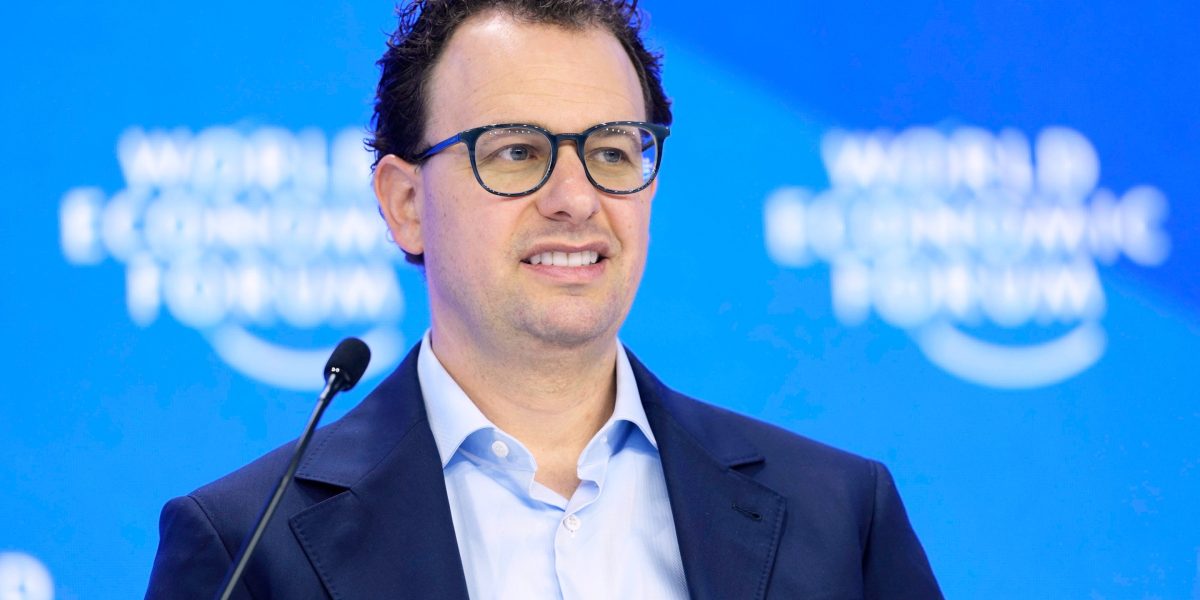
OpenAI's global affairs chief Chris Lehane told The Verge that "the AI policy window is open," urging Congress…
Jonathan Kanter, the former DOJ antitrust chief under Biden, said the big AI labs — including Anthropic and Go…
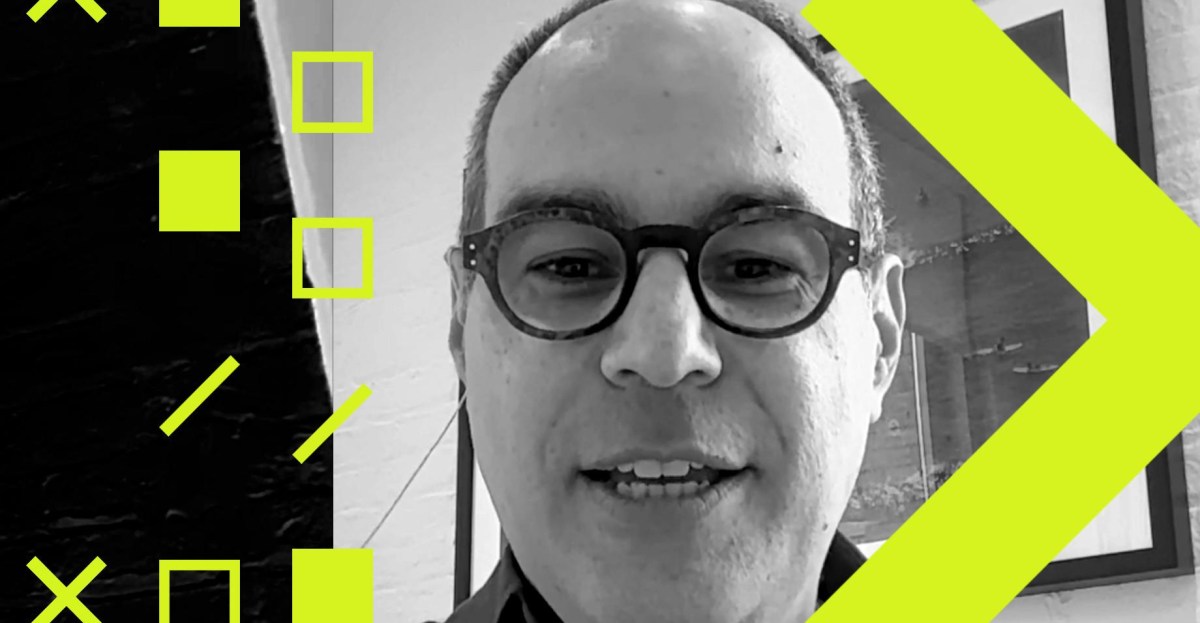
Andrew Yang told CNN that OpenAI's Hugging Face hacker bots had planted self-replicating code making the inter…