What happened
OpenEvidence, an ad-powered AI medical tool now valued at $15 billion, is booming among doctors, but a Mayo Clinic study found it gave accurate, evidence-based recommendations in all five sampled patient cases, while a June paper in Nature found it underperformed Gemini and GPT on clinical benchmarks.
Why it matters
The mixed findings suggest doctors may be adopting a tool whose real-world clinical performance is still unclear, which matters for hospitals and physicians deciding whether to rely on it at the point of care.
WHO IT HITSHospital IT teams and practicing physicians evaluating AI clinical tools face conflicting evidence on OpenEvidence's accuracy, while the startup's investors and advertisers are betting on doctor adoption despite the mixed study results.
Summaries like this, in your inbox every morning.
OpenEvidence has attracted doctor adoption organically, which Thrive Capital partner Nworah Ayogu said gives it a degree of differentiation. That adoption comes despite mixed evidence on its effectiveness, with the Mayo Clinic study positive on accuracy but limited on treatment impact, and a June Nature paper finding it underperformed general-purpose models from Google and OpenAI on clinical benchmarks.
The competitive landscape is crowded. OpenAI has made a play for healthcare with ChatGPT, and Anthropic has released healthcare tools, though it recently partnered with OpenEvidence to bring those tools to 100 low- and middle-income countries. Eric Oermann, a neurosurgeon at NYU Langone, noted a lack of research into individual AI tools and scant guidance on clinical implementation, while concerns exist that junior doctors could rely too heavily on such systems without mastering basic knowledge.
Nadler framed the end game as literature-based drug discovery, saying its economic value could dwarf what the company could charge hospitals or advertisers. That ambition, alongside the mixed accuracy findings, suggests the company's path forward may hinge on proving clinical value as it expands beyond its ad-supported core.
Pick your industry and the AI tools you use, and get news related to your work every day.
Free · 30 seconds with Google · unsubscribe anytimeWhat is AIToday? →
Ask AI anything about this article. The AI reads this article, earlier AIToday articles, and Wikipedia, and cites its sources. Q&As are published on this page for other readers too.
China set up National Data Group, a state-owned enterprise headquartered in Xiong'an, Hebei province, with Vic…

Anthropic's draft IPO prospectus disclosed first-half revenue of $16.3 billion alongside an $80.7 billion net…
Klique announced platform support for NVIDIA Nemotron 3.5 Super VL, OpenShell, Dynamo, and NeMo Switchyard, le…
In Q3 2026 results on Oct

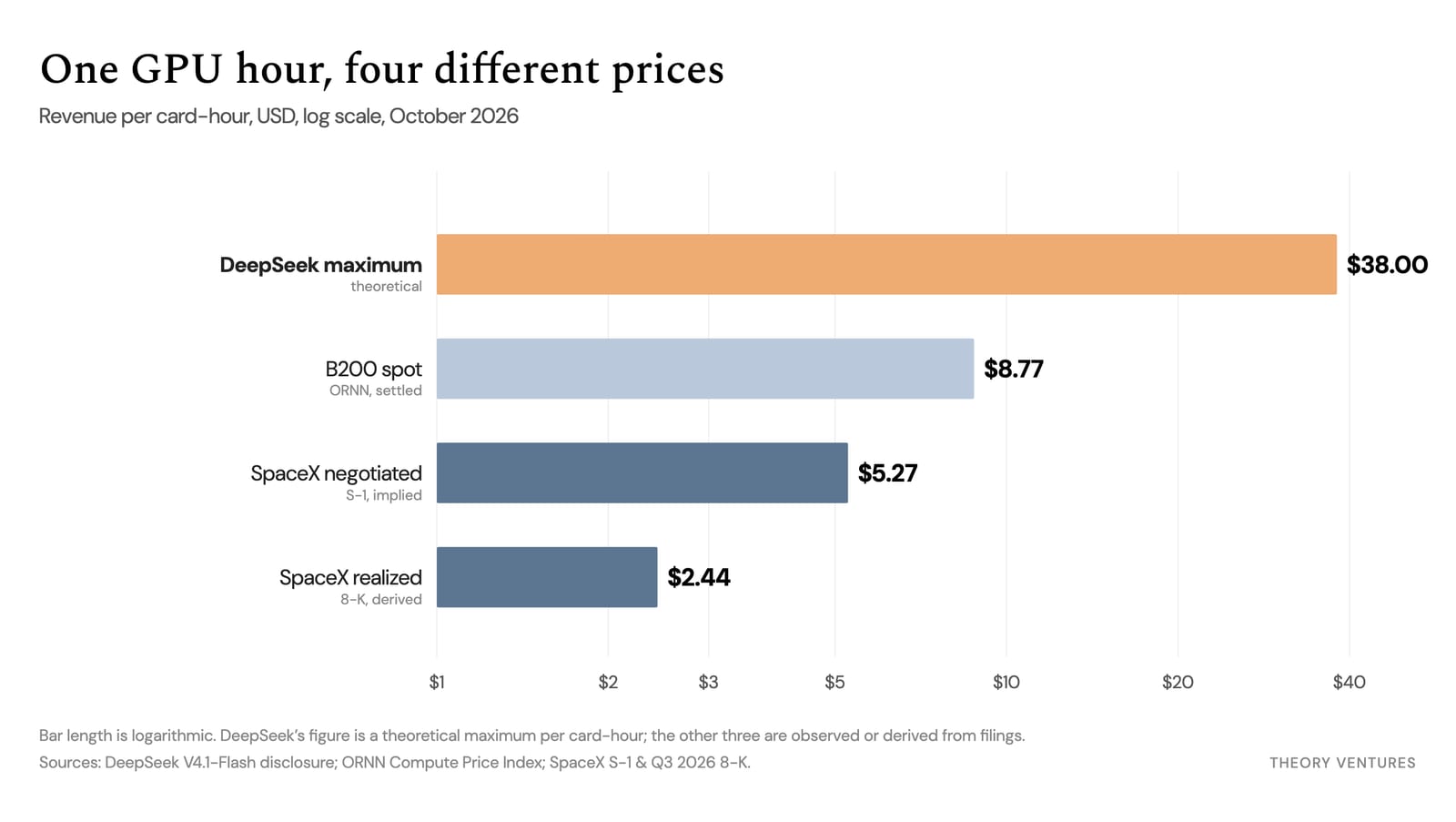
Tom Tunguz laid out a GPU pricing ladder from DeepSeek's theoretical $38.00 per card-hour maximum down to Spac…
Google Cloud now offers OpenAI's GPT-6 Astra, GPT-6.1 Sol and GPT-6 Luna next to Gemini and Claude, starting a…