
Snowflake's Observe tool uses a three-layer architecture—unified telemetry storage, a context graph modeling system relationships, and an AI SRE agent—to accelerate incident investigation.
Analysis of over 3,100 conversations from late 2025 found productivity gains of 3x–10x, with the largest improvements in investigations requiring rapid synthesis across multiple data sources.
The approach contrasts with most AI SRE offerings, which layer an AI chat interface onto siloed tools without deep platform integration, often leaving investigators with incomplete information.
What happened
Snowflake introduced Observe, an AI site reliability engineering (AI SRE) tool designed to speed incident investigation. It combines unified telemetry storage, a context graph that models relationships between infrastructure and services, and an AI layer built to work together. Testing on 3,163 AI SRE conversation spans from October to November 2025 showed productivity gains in the 3x–10x range, with 30% of interactions showing more than 5x improvement and 5% exceeding 10x improvement.
Why it matters
Incident investigations currently consume enormous engineering capacity—a complex incident takes 10 minutes to detect, 120 minutes to investigate, 15 minutes to remediate, and 370 minutes for root cause analysis, with only 30% completion. Most AI SRE tools bolt an AI layer onto platforms not designed to support it, resulting in missing data and slow responses. Observe's architecture—where the AI sits on top of unified data and semantic relationships rather than disconnected tools—lets teams troubleshoot faster and empowers non-expert engineers to resolve issues independently.
What to watch
Snowflake highlighted three customer wins: a location intelligence company that said Observe's AI SRE and MCP Server could transform incident investigation, a sports and entertainment operator that achieved proactive reliability improvements, and an automotive SaaS provider that reduced incident investigation time from over three hours to minutes, cutting escalations and manual review time.
Ask the AI about this article →
The core challenge Observe addresses is structural: the exponential growth of telemetry from modern distributed systems has outpaced the abilities of legacy observability platforms and fragmented tool ecosystems. Data volume, system complexity from microservices, concentration of root cause expertise in a few engineers, and the tedious manual work of tracing dependencies across services have made incident investigation slower despite the availability of more data than ever. Most organizations have responded by layering an AI component onto their existing observability stack—what Snowflake calls the "rush to meet reliability demands"—but this approach fails because the AI layer is only as good as the data foundation beneath it.
Snowflake's Observe takes a different path: it redesigns the entire stack from the ground up with the AI layer in mind. The unified telemetry storage eliminates data silos, the context graph adds semantic understanding of how services and infrastructure relate, and the AI SRE is optimized to exploit both. This architectural choice matters because it determines whether the AI has complete information and fast, efficient access to it—the two factors Snowflake claims separate tools that genuinely accelerate investigation from those that merely chat over incomplete telemetry. The 3x–10x productivity gains reported across 3,163 real conversations suggest that this unified, agent-first design delivers measurable results, particularly for investigations requiring rapid synthesis across multiple sources.
AI-summarized, only the topics you pick — one digest a day via Email, Slack, or Discord.
Free · takes 30 seconds · unsubscribe anytime
Ask AI anything about this article. Q&As are published on this page for other readers too.
AT&T is deploying open-source AI models to reduce its reliance on Anthropic's commercial services and lower it…
Charles Schwab is establishing a global capability center in Hyderabad, India, starting with 500 employees and…
Bristol Myers Squibb announced a strategic collaboration with Chai Discovery, a 2024-founded AI company, to in…

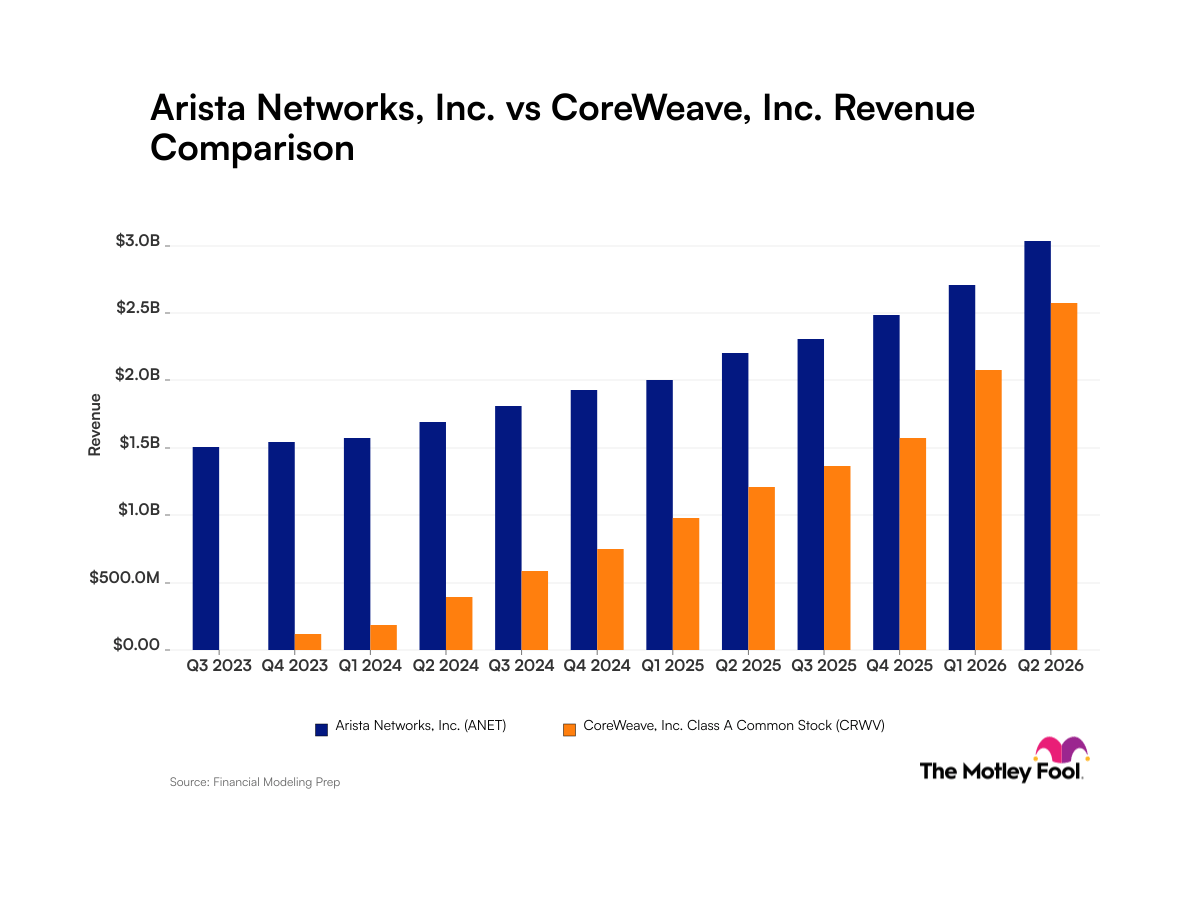
Arista Networks reported Q2 2026 revenue of $3.0 billion (quarter ended June 30, 2026), while CoreWeave posted…
Bristol Myers Squibb (BMS) has partnered with Chai Discovery, an AI company, to use artificial intelligence fo…
U.S. software jobs have risen over the past year, and the 12-month moving average of workers in computer and m…