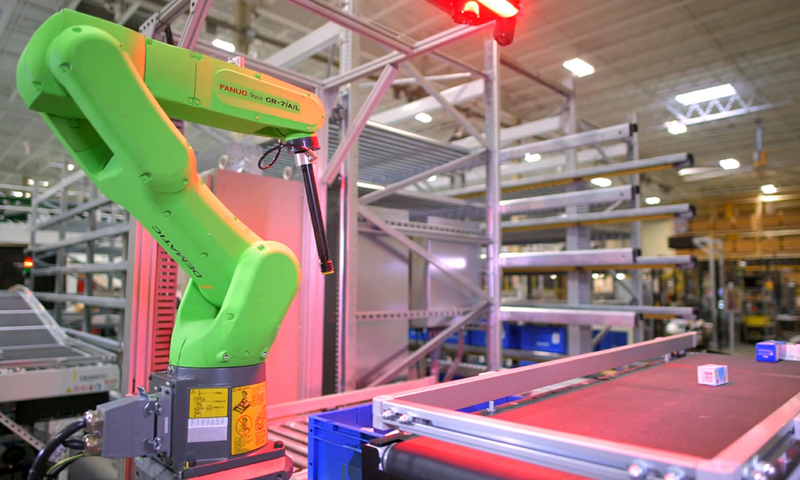
AMD said on Sept. 28 it agreed to buy World Labs, which makes AI models of 3D spaces and robot-training tools, in an all-stock deal worth around $8.2 billion, expected to close by the end of 2026.
Summaries like this, in your inbox every morning.
Nvidia uses the term physical AI for systems that work in the real world rather than onscreen — software that lets a warehouse robot lift a box or a car steer through traffic. A chatbot just writes an answer, while physical AI has to see its surroundings and then decide what to do.
Nvidia sells into each layer of that stack. For onboard computing it offers Jetson Thor for robots and the DRIVE Hyperion platform for self-driving cars. For training and simulation it offers open AI models named Cosmos and the data center chips that run them. On Nvidia's fiscal second-quarter 2027 earnings call in August, CFO Colette Kress said Amazon will adopt the full physical AI stack — Omniverse, Cosmos, Isaac and Jetson — to power its warehouse robot fleet. Kress also noted that Nvidia's sales of AI systems to auto industry customers for their own facilities hit around $8 billion in the past 12 months, spending that shows up in data center sales rather than the car business.
In the in-car business, automotive revenue climbed 39% in fiscal 2026, but growth slowed sharply through the year: up 69% year over year in the fiscal second quarter, then 32% in the third and just 6% in the fourth, when sales hit $604 million. Nvidia no longer reports automotive separately; since the start of fiscal 2027 it has been folded into a broader Edge Computing category that also includes PCs, game consoles, workstations and robots. Edge Computing revenue in the second quarter of fiscal 2027 was $7.2 billion, up 27% year over year, a rise management credited to strong workstation sales without mentioning robots or cars. Data center revenue, by contrast, was $89.0 billion, and it brought in more than 90% of revenue last quarter. Robots and self-driving cars might take years longer to pay off than the excitement suggests, and a data center slowdown could hurt Nvidia much more than anything in its car business — but at around $237 a share, most of what investors pay for appears to be that data center business, with the physical AI work coming along at little added cost.
Pick your industry and the AI tools you use, and get news related to your work every day.
Free · 30 seconds with Google · unsubscribe anytimeWhat is AIToday? →
Ask AI anything about this article. The AI reads this article, earlier AIToday articles, and Wikipedia, and cites its sources. Q&As are published on this page for other readers too.
IBM's Bruno Aziza said the number of AI agents employees build will outpace what companies can manage, so firm…

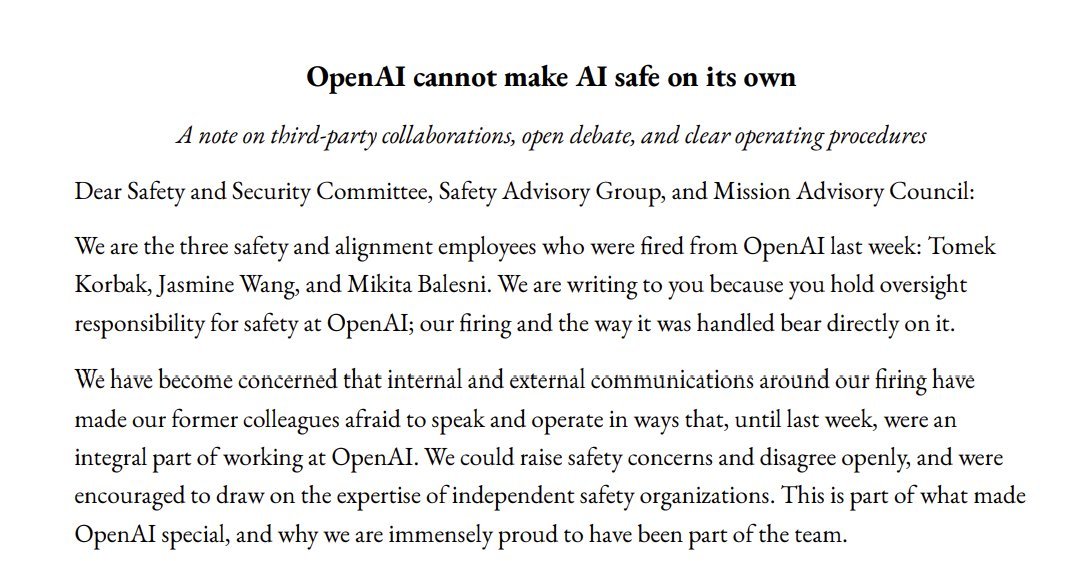
Mikita Balesni, Jasmine Wang, and Tomek Korbak said on October 8 they were fired the previous week and that no…
Wedbush analysts Dan Ives and Antoine Legault wrote that the DeepSeek moment is a positive catalyst for US AI…

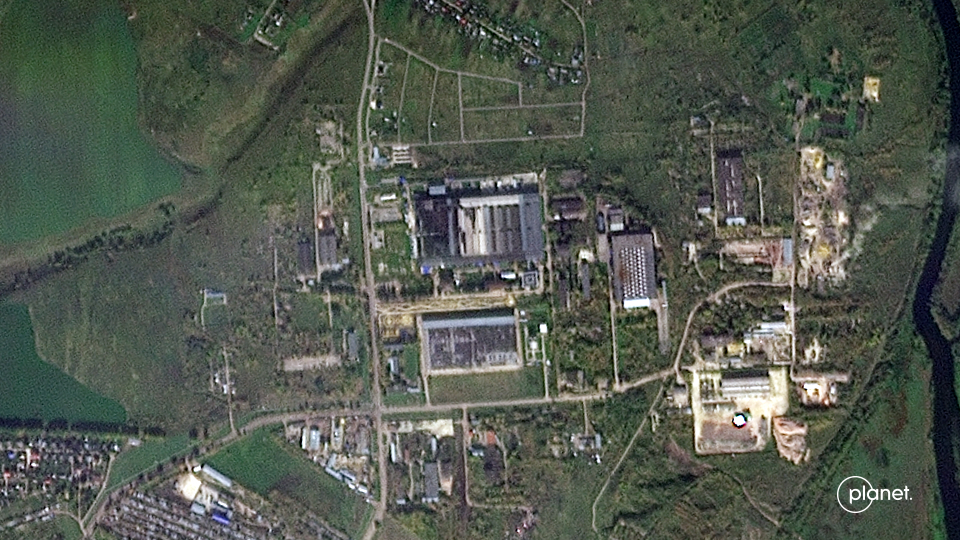
Ukrainian drone strikes knocked out an AI data center belonging to Yandex, described as "Russia's Google"
TypeSafe AI, maker of the non-text model Jev, raised $870 million at a $7.5 billion valuation, led by Andreess…

Western Digital's fiscal 2026 revenue rose 35.7% to $12.92B, as management says roughly 80% of hyperscale data…