What happened
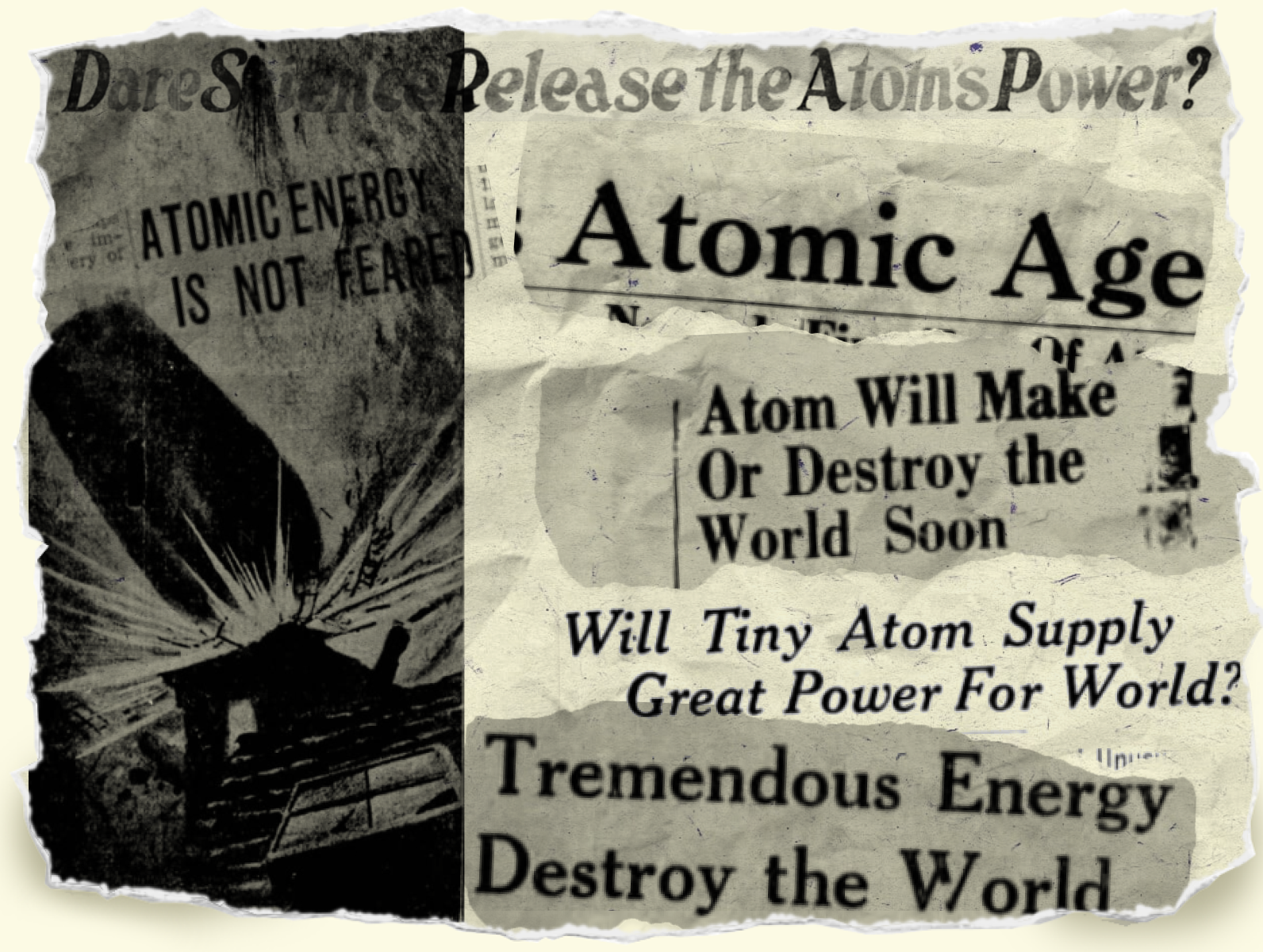
A review of newspaper archives from 1919 to 1945 found striking parallels between early atomic-energy debates and today's AI extinction fears, including Arthur H. Compton's 1941 Omaha, Nebraska lecture on sub-atomic energy.
Why it matters
The archives suggest today's debate follows a familiar societal cycle of excitement, anxiety and dread, and that nuclear regulation only arrived after Hiroshima and Nagasaki killed an estimated 200,000 people — a warning that consensus shouldn't require mass destruction.
What to watch
Nuclear policy expert Ankit Panda noted limits to the analogy, since AI compute is far harder to count and control than fissile material, and it's unclear whether AI will have its own 'Hiroshima moment.' Watch whether New START's February expiry leaves the two largest nuclear powers without binding limits for the first time since 1972.
WHO IT HITSPolicymakers and AI executives weighing regulation will find the historical parallel instructive, since the archives show governance for atomic energy only coalesced after Hiroshima and Nagasaki.
Summaries like this, in your inbox every morning.
The early atomic-energy debate unfolded against a backdrop of major scientific optimism that a world-changing breakthrough was near. In 1919, Sir Oliver Lodge told a British scientific society there was 'enough atomic energy in an ounce of matter to destroy a continent,' the same year Ernest Rutherford first split the atom. H.G. Wells had coined the term 'atomic bomb' in his 1914 novel The World Set Free. By 1925, a syndicated Sunday feature asked 'Dare Science Release the Atom's Power?' while noting atomic energy held enough power in a drop of water to run 500 locomotives for an hour. Six years later, Compton announced he was studying the release of atomic energy, which he said could bring 'radical change in civilization.'
These debates took place amid a broader sense of scientific optimism and a cycle of excitement, anxiety, and dread that echoes today's AI discourse. In 1939, scientists sought to calm a public anxious about nuclear fission, blaming Wells for instilling doomerism and insisting atomic energy could only be released 'by direct intent, in the laboratory.' After 1945, President Harry Truman called the atomic bomb a monster that could wipe out civilization, and media archives showed a mix of public reassurance, worry, and debate over international nuclear governance. One historian told a Rotary Club in Missouri the world might be destroyed 'by a small group with nazi ideals or by an accident,' proposing all atomic information be placed under UN control.
The most worrying lesson from the archives is that serious discussions around governance and regulation for atomic energy did not happen until it was used to bomb Japan and kill an estimated 200,000 people. Even today, nuclear weapons remain only patchily governed: various treaties exist, but major players often can't agree on terms, and the last treaty limiting US and Russian strategic arsenals, New START, expired in February, leaving the world's two largest nuclear powers without binding limits for the first time since 1972. Whether AI follows a similar trajectory — or, as some experts suggest, comes to resemble electricity or aviation with effects shaping geopolitics over a more protracted period — remains an open question.
For example, today's edition would include:
AI-summarized, only the topics you pick — one digest a day via Email, Slack, or Discord.
Free · 30 seconds with Google · unsubscribe anytimeWhat is AIToday? →
Ask AI anything about this article. Q&As are published on this page for other readers too.
Sam Altman and Elon Musk backed Dario Amodei's call for a slowdown in model releases, while Marc Benioff at Dr…
In the first posts from the new DeepMind Institute, researchers Rohin Shah and Anca Dragan argue visible chain…
The New York Times and other publishers filed a joint summary judgment brief citing internal OpenAI and Micros…

Anthropic CEO Dario Amodei wrote that "we still understand a tiny fraction of what goes on inside those models…

Hacktron AI exploited a libheif memory bug and a Discourse flaw to seize OpenAI employee ChatGPT and Codex acc…

Apple researchers introduced Dynamically Scaled Activation Steering (DSAS), which adaptively modulates the str…