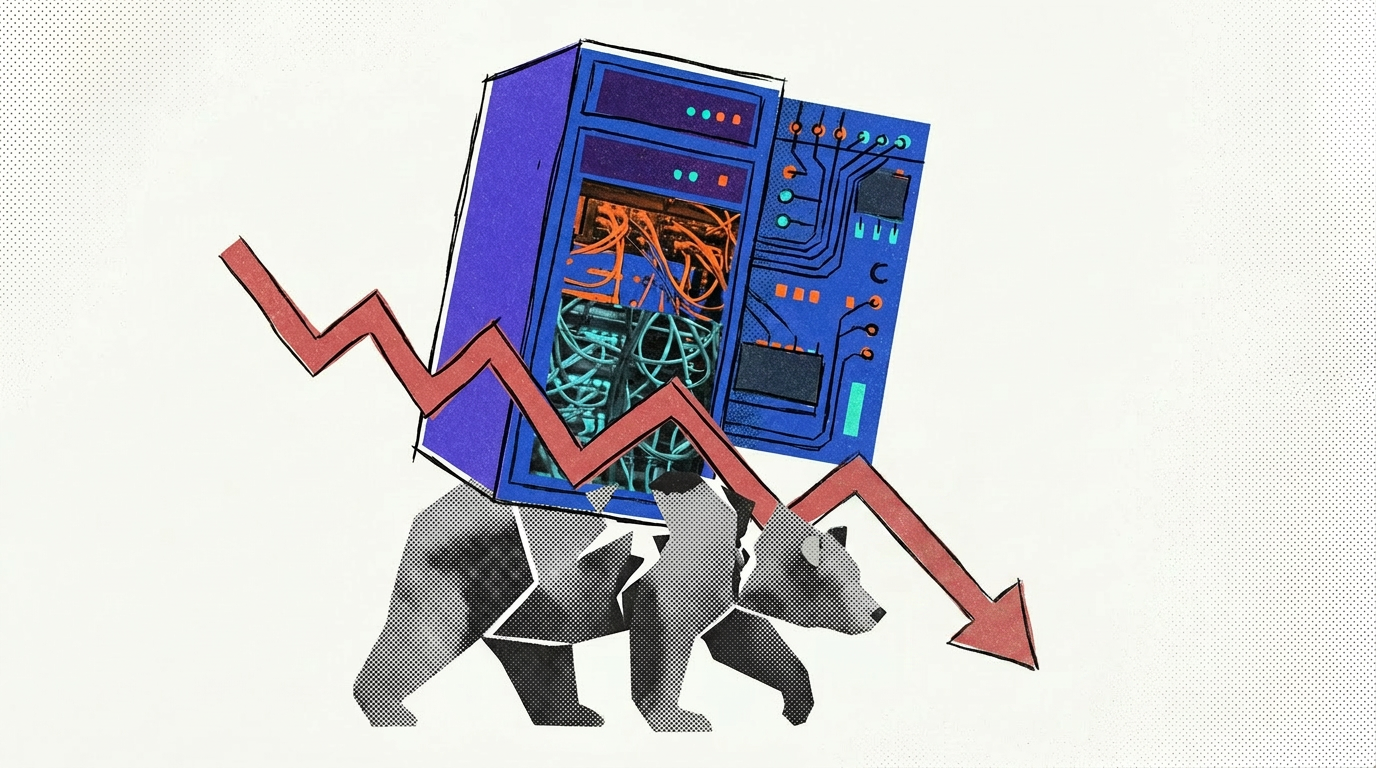
Leopold Aschenbrenner's AI hedge fund Situational Awareness was forced to sell its entire publicly traded stock portfolio to Citadel after steep losses, despite reporting a 439 percent return for the first half of the year just days before.
While Aschenbrenner's thesis that AI growth would drive massive buildouts of infrastructure has proven correct, heavy leverage on borrowed money amplified his losses and triggered forced sales before some stocks bounced back.
What happened
Leopold Aschenbrenner's Situational Awareness hedge fund, which peaked at $45 billion in assets, was forced into an emergency sell-off of its publicly traded stock portfolio to Citadel after reporting a 439 percent return for the first half of the year just days earlier. Falling AI stocks like SK Hynix and margin calls from banks triggered the liquidation, and his bet against software stocks like Adobe also backfired.
Why it matters
Aschenbrenner's core thesis — that AI growth would drive massive buildouts of chips, memory, data centers, and power infrastructure — has proven correct and that buildout is happening. However, the enormous spending and rising financing costs made investors question returns, and the leverage Aschenbrenner used amplified losses and forced sales at the worst moment, demonstrating how correct market timing can still fail under debt pressure.
What to watch
Aschenbrenner is keeping his private holdings, including a stake in Anthropic, suggesting he retains conviction in the AI buildout thesis despite the fund's collapse. The fund had just eight employees, four of them on the investment side.
Leopold Aschenbrenner, now in his mid-20s, arrived at AI investing via an unconventional path. He started working for the FTX Future Fund in February 2022, the philanthropic arm of Sam Bankman-Fried's crypto exchange, but left before the firm's collapse. In 2023, he joined OpenAI's "Superalignment" team, tasked with AI safety research, but was terminated in April 2024 over an alleged information leak. Aschenbrenner disputed the account, stating he had only shared a largely harmless document with three outside researchers and had previously flagged security gaps at OpenAI.
That same year, Aschenbrenner published his essay "Situational Awareness," which predicted rapid AI growth and predicted the infrastructure buildouts that would follow. The essay gained him a large following. In 2024, he launched a hedge fund under the same name. According to CNBC, Situational Awareness peaked at $45 billion in assets despite having just eight employees, four of them on the investment side—an extraordinarily lean operation for such a large fund.
The fund's trajectory in 2024 was dramatic. As recently as last Friday, Aschenbrenner reported a 439 percent return for the first half of the year, according to the Financial Times, and called on investors to commit fresh capital by August 1. Days later, the fund faced a crisis. Falling AI stocks like SK Hynix triggered margin calls from banks, and his heavily leveraged position could not withstand the drawdown. A bet against software stocks like Adobe also backfired. These pressures forced an emergency liquidation of nearly the entire publicly traded stock portfolio to Ken Griffin's firm Citadel.
The underlying thesis proved sound: Aschenbrenner's prediction that increasingly powerful AI would drive massive buildouts of chips, memory, data centers, and power infrastructure is becoming reality. The problem was execution and leverage. The enormous spending by companies building that infrastructure, combined with rising financing costs, made investors question the returns on those buildouts, triggering a sell-off in AI stocks. For a fund betting on those stocks with borrowed money, the leverage amplified losses and forced sales at the worst moment—before some stocks recovered. Aschenbrenner retained his conviction in the thesis by keeping his private holdings, including a stake in Anthropic, even as the fund collapsed.
Leopold Aschenbrenner's trajectory reveals a stark gap between thesis correctness and execution skill. His "Situational Awareness" essay, which gained him a large following in 2024, identified a real trend: the need for massive infrastructure buildouts to support AI growth. That prediction has borne out in reality—the buildout is indeed happening. However, Aschenbrenner lacked the trading experience and risk management discipline to translate that insight into sustained returns. At mid-20s with no prior trading background, he deployed extreme leverage to amplify what he believed would be outsized gains. This strategy worked spectacularly in the first half of 2024, generating a 439 percent return, but it left the fund with zero margin for error. When AI stock valuations faced pressure due to investor concerns about financing costs and returns, and when his directional bet against software stocks backfired, the leverage mechanism inverted: borrowed money that had magnified gains now magnified losses, forcing fire-sale liquidation at the worst possible moment—days before some of those same stocks recovered.
AI-summarized, only the topics you pick — one digest a day via Email, Slack, or Discord.
Free · takes 30 seconds · unsubscribe anytime
Amazon's stock rallied Friday following a strong second-quarter earnings report

ASE Technology Holding has raised its 2026 capital expenditure budget to a record US$10.5 billion, the second…
Apple became the world's most valuable company this month, surpassing Nvidia, which had briefly held the $5 tr…
Amazon shares jumped more than 12% before the bell on Friday after AWS posted 37% revenue growth to $42.2 bill…
Tokyo Electron raised its operating profit outlook for April–September 2026 on July 30, citing continued inves…
Pegatron chairman Tzu-hsien Tung stated he remains optimistic about the long-term outlook for artificial intel…

The AI news that matters, in one minute each morning.
Sign up free