
What happened
OpenAI said its upcoming cyber model flagged 2,308 candidates, reproduced 1,724, and produced candidate patches for 948 distinct privilege-escalation flaws in one run costing $1,213,430.
Why it matters
The 948 are patch proposals awaiting maintainer review, not merged fixes, and the same capability could shorten the path from disclosure to exploit, per OpenAI.
WHO IT HITSSecurity teams running Linux servers and distributions may face faster vulnerability disclosure and patching cadence, while maintainers absorb a much larger volume of candidate patches to review.
Summaries like this, every morning.
OpenAI's post, published on November 4, 2026, under the title "A thousand fewer paths to root," describes a five-stage workflow that analysts can group into three: find suspicious code, verify it by actually running exploits, then write candidate patches for human review. The run targeted the latest Linux kernel mainline branch as of mid-October. Of 2,308 candidates, 1,724 were reproduced and 1,169 working exploits were executed, which after grouping required 948 distinct patches.
The body highlights a review step that resists full automation. Early in the run, 20 of 200 reported "successes" actually reached root through a different unknown flaw than the one assigned, which OpenAI uses to argue that the path to a result must be checked, not just the result. Early patches also suffered from excess code, slowdowns, style violations, and missed related flaws, while in some cases the AI caught problems in human experts' fixes.
The economics cut both ways. OpenAI estimated that paying bug-bounty rates of $20,000 to $70,000 per flaw across the 948 would total $18.9 million to $66.3 million, about 16 to 55 times the run's cost, and described a separate kernelCTF-oriented run costing about $33,000 against roughly $1.5 million in potential bounties as profitable. It also said the AI used at least 10 attack techniques unknown to experts, withheld for safety. OpenAI has not said when, to whom, or under what conditions the upcoming cyber model will be available.
Pick your industry and the AI tools you use, and get news related to your work every day.
Free · 30 seconds with Google · unsubscribe anytimeWhat is AIToday? →
Ask AI anything about this article. The AI reads this article, earlier AIToday articles, and Wikipedia, and cites its sources. Q&As are published on this page for other readers too.
UC Berkeley and NVIDIA released open-source tools, including Graph-as-Policy and the VABAR benchmark of six in…
The suit alleges Emma Doe was routed from Google Search into AI Mode on her school Chromebook, discussed suici…

Journalist 原貫太 said on November 9 that a YouTube video appears to reproduce his voice with AI, even though he…

Notion Labs said unauthorized access at contractor Fireworks.ai may have exposed chat logs from Notion AI's In…

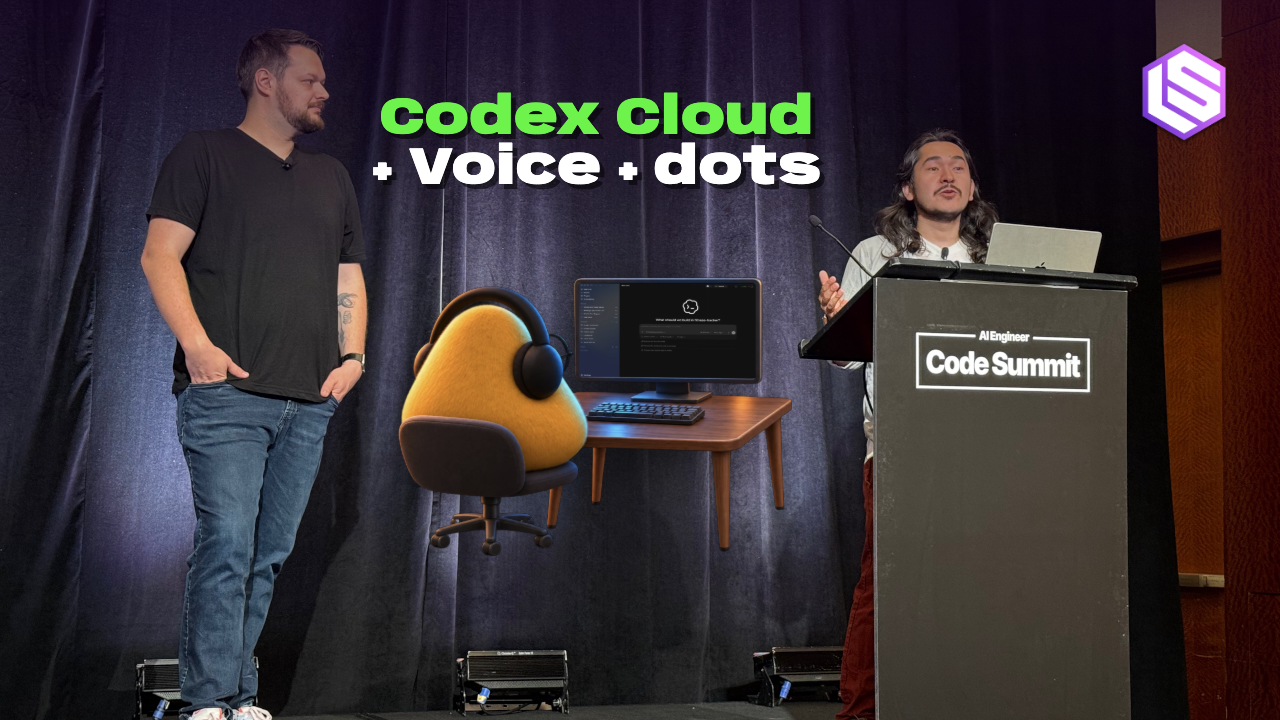
At the AI Engineer Code Summit, OpenAI's Dominik Kundel and Charlie Guo demonstrated asking Codex to push a br…
The guide walks through SHAP (which distributes each feature's contribution to a prediction using game-theory…