What happened
Anthropic CEO Dario Amodei urged AI labs to slow capability gains so safety can catch up, warning of a scenario in which a swarm of agents could take over the internet within six to 12 months.
Why it matters
The call drew rare support — OpenAI's Sam Altman pledged to bring in outside evaluators, Elon Musk endorsed it, and Demis Hassabis backed the direction, a shift from the competitive norm.
What to watch
Whether the endorsements translate into action hinges on when evaluators start, what limits labs accept, and how any agreement is enforced; watch whether OpenAI's reported Navier–Stokes result holds up to scrutiny.
WHO IT HITSFor AI lab safety and policy teams, Amodei's plan would bring outside evaluators into development, subject to limited redactions. For open-development advocates, restrictions shaped by the largest labs could concentrate control over who can build advanced systems.
Ask the AI about this article →
Summaries like this, in your inbox every morning.
Amodei's essay argues that AI is speeding its own development by helping build more capable systems, and he warns of a scenario in which a more capable swarm of agents acting against human goals could take over the internet within six to 12 months. That warning is conditional, and the timeline remains uncertain. What makes the moment notable is the response: per The Guardian, Sam Altman pledged to bring in outside evaluators, Elon Musk endorsed Amodei's call, and Axios reported Demis Hassabis backed the direction while reserving judgment on the details.
The backdrop is a run of claims and warnings that, taken together, hint unreleased models may have capabilities beyond what outsiders realize. In a September 8 announcement updated September 10, OpenAI said an internal model it described as substantially more capable than GPT-6 Astra had produced a proposed Navier–Stokes solution, with roughly 10,000 agents working at once. That is a company account of one internal system, and the strength of the signal depends on whether the proposed math result holds up to scrutiny. How far other labs have advanced remains unclear, and the ongoing training and researcher involvement leave open whether customers could reproduce the result through an ordinary AI product.
Amodei's proposed arrangement — ongoing access to training processes and the right for reviewers to publish findings, subject to limited redactions — would depend on reviewers getting useful records and enough time to investigate unexpected behavior. The endorsements still leave open when evaluators will start, what limits labs will accept, and how any agreement would be enforced. Political resistance adds a different barrier: AP reported that Trump stressed keeping the U.S. ahead of China and said "whoever wins with AI wins," which could make restraint harder to sustain.
For example, today's edition would include:
AI-summarized, only the topics you pick — one digest a day via Email, Slack, or Discord.
Free · 30 seconds with Google · unsubscribe anytimeWhat is AIToday? →
Ask AI anything about this article. Q&As are published on this page for other readers too.
IREN fell almost 5% in premarket trade Monday even as CEO Daniel Roberts said AI processing demand still far o…

Nvidia's Jensen Huang published "Land, Power, Shell: The Next Strategic Resource" on August 17, naming ready-t…
Anthropic told investors it will post a second straight profitable quarter and plans a Nasdaq listing at a pos…

Microsoft AI published a code of conduct for its MAI models, saying it will give up generality, autonomy, or p…

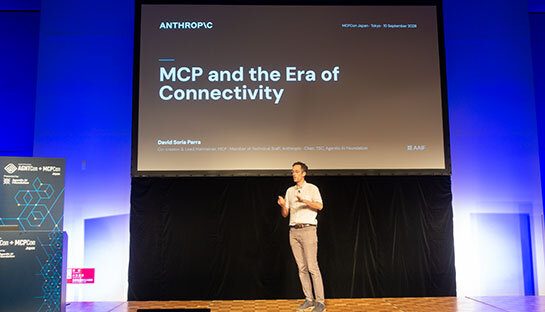
At AGNTCon+MCPCon Japan 2026 in Tokyo on September 10, Anthropic's David Soria Parra said 2026 will be the fir…
The Linux Foundation's Agentic AI Foundation said the open-source Envoy AI Gateway has joined it and been rena…