What happened
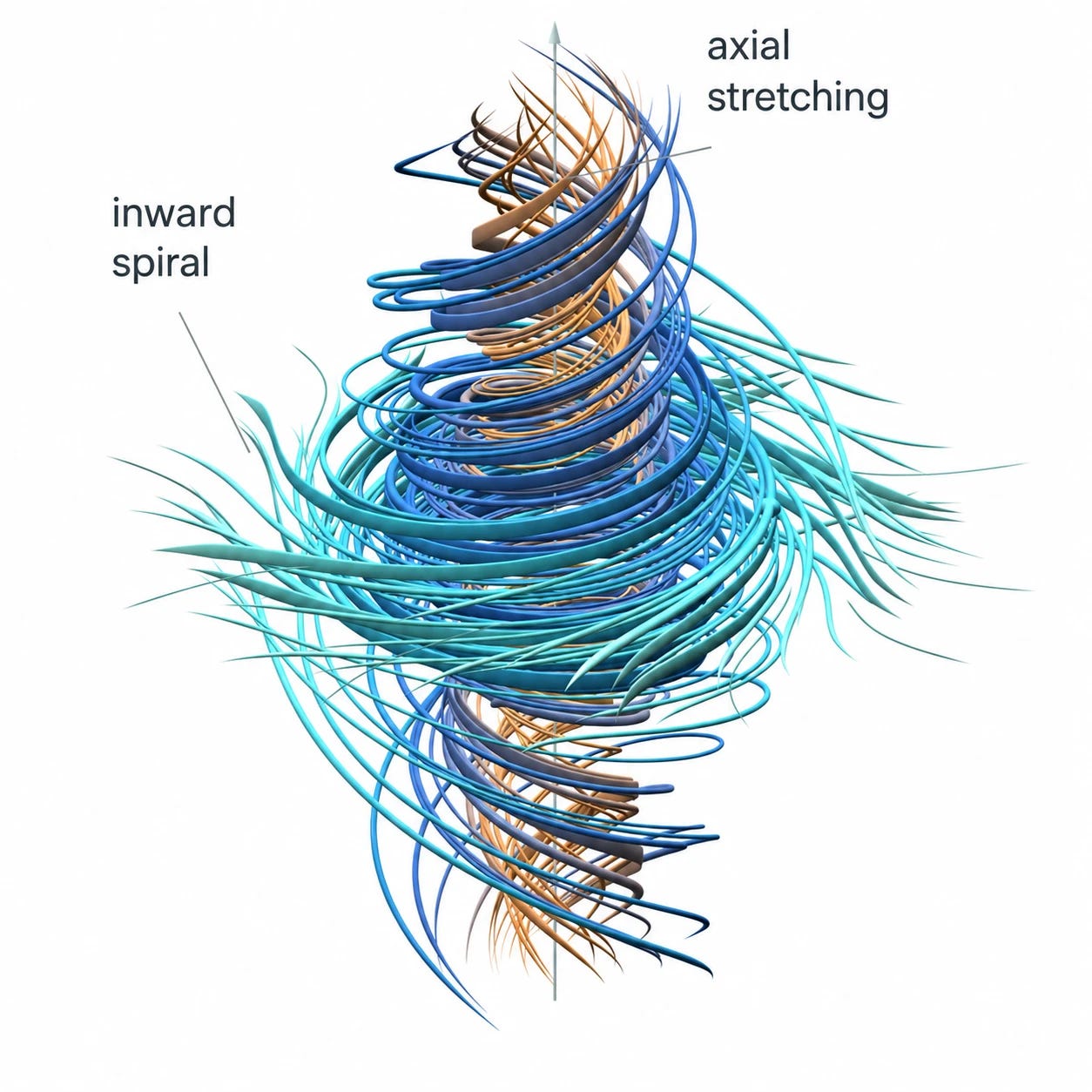
OpenAI said on September 8 an unreleased internal model resolved Navier–Stokes existence and smoothness, a Millennium Prize problem carrying $1 million. Agents ran about 88 hours; the effort used 300 billion output tokens.
Why it matters
The claim rests on a proof and Lean formalization showing a smooth 3D incompressible fluid can develop unbounded speeds in finite time, but the problem is still listed as unsolved pending prolonged scrutiny and broad acceptance, and OpenAI said it will not claim the prize.
What to watch
The result's standing hinges on whether the broader mathematical community accepts it. Watch whether the credit dispute over how OpenAI's effort began is resolved.
WHO IT HITSResearch mathematicians and the labs that fund famous-problem work now face sharper questions about attribution and credit, as the announcement drew allegations that OpenAI's effort began only after information about a rival team's progress reached the company.
Summaries like this, in your inbox every morning.
OpenAI's September 8 write-up capped a week-long agent effort across the open Millennium problems. The sequence, per OpenAI's post and reporting, began September 1, when nearly 100 agents settled the unforced Euler blowup question in about 50 hours before resources shifted to Navier–Stokes with about 10,000 concurrent agents. The agents reached a resolution about 88 hours after launch on September 5, and Lean formalization and verification took 17 more hours using GPT-6 Astra. Across all problems, the effort consumed 300 billion output tokens, which TechCrunch valued at $22.5 million at current Astra rates.
The announcement landed in the middle of a credit dispute. On September 7, NYU's Tristan Buckmaster and Anthropic mathematician Levent Alpöge published a forced Euler blowup result reached primarily with OpenAI's Codex alongside Claude. Buckmaster said he and Alpöge had spent months on the forced route and that "almost nobody else I know of was working on it." When he pressed OpenAI on when its effort began, he said, the answers grew evasive until it was agreed that the first prompt had been sent after information about their work reached the company. Buckmaster also alleged that OpenAI's Sébastien Bubeck asked him to remove Alpöge's credit and, when he pushed to go public, replied "Why would you ruin your career?" Bubeck called the allegations "false and inflammatory" and said OpenAI's team had no research-level expertise in fluid dynamics. OpenAI said neither its researchers nor its agents saw the pair's work before publication, and a September 10 update said an investigation confirmed Buckmaster's Codex prompts from the prior two months could not have influenced the result.
The episode has drawn wider scrutiny. Luis Martínez Zoroa of CUNEF University called it "a truly remarkable result," but Terence Tao criticized labs for treating famous problems as marketing proof points, and 25 Fields medalists signed an open letter warning that rushed announcements raise "severe attribution and plagiarism questions." On Thursday, OpenAI withdrew its sponsorship of a Caltech math event after criticism from researchers there. How the result is received is likely to hinge on whether the broader mathematical community accepts it, and on how the credit dispute is resolved.
For example, today's edition would include:
AI-summarized, only the topics you pick — one digest a day via Email, Slack, or Discord.
Free · 30 seconds with Google · unsubscribe anytimeWhat is AIToday? →
Ask AI anything about this article. Q&As are published on this page for other readers too.
Sens. Jim Banks and Adam Schiff secured a narrow antitrust exemption letting AI companies share intelligence a…
Carter Leffen, a product development coach at Bloomberg LP, says OpenAI's GPT-6 Astra worked about ten hours t…
Liam Dunne and Ben Moore of Discover Labs said AI search has shifted buyer behavior because people now consume…
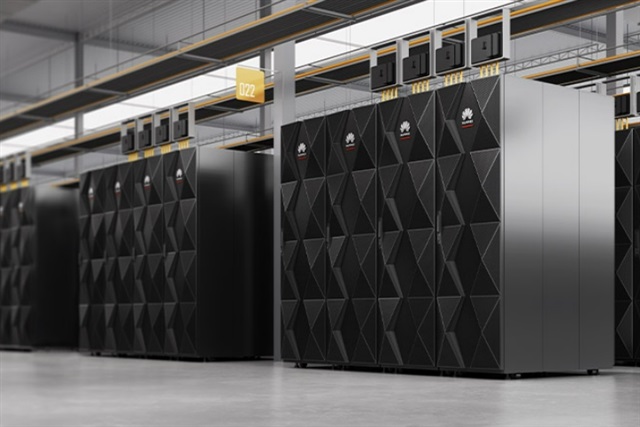
Huawei unveiled the OceanStor M900 at Huawei Connect 2026, a petabyte-scale key-value (KV) cache system design…
Cloudflare announced its "Disallow AI Training" setting on September 15, available to all customers on all pla…
Microsoft and Swedish nuclear company Blykalla announced a partnership to apply AI to nuclear reactor licensin…