What happened
A memoir-style essay describes how the author, a junior editor at a literary start-up, was expected to use the company's 'AI wrapper' tool for almost all editing. The company assigned her and two other employees to line-edit a 150,000-word PhD dissertation in no more than three days.
Why it matters
The author learned she could do her job without reading the text, and that the tool's constant use eroded her sense of ownership and moral conviction. She eventually left the job two years ago, driven by a desire to preserve the little conviction she had in her creative labor.
What to watch
The real test is whether the author’s departure changes anything—the writer warns that the tool’s popularity may turn aspiring editors into "unskilled laborer[s]" before they ever get the chance to falter, so the industry's next cohort of editors hinges on resisting that erosion.
Summaries like this, every morning.
The essay is a first-person confession from an editor at a start-up that built an 'AI wrapper'—a tool that wraps existing large language models with a polished interface. The founder, herself an editor, believed that the only true editorial skill was 'taste' in accepting or rejecting changes, and she happily delegated the rest to the AI. This reveals a business logic: if editing is just selection, then an AI that offers plausible edits can replace human drudgery, and the editor becomes a manager of prompts rather than a reader.
The author's experience illustrates the psychological cost. A recent study in Technology, Mind, and Behavior found that heavy reliance on such tools led to a lack of ownership over output, which matches her feeling that compliments on her work felt undeserved. She was 'great at work' but 'no good at it,' because she could not do it without the thing. This tension between productivity and authenticity is central to the debate about AI in creative fields.
The author also observes that the tool's style is not necessarily good. It mistakes recurring patterns, like em dashes, for quality, and favors 'pseudo-profundities' such as 'delve.' She even became hyperaware of the machine's 'hand' in texts it could not have touched, like a Henry Miller novel. This suggests a subtle but real shift in how we perceive writing when AI becomes ubiquitous.
Her departure did not slow the project of automation. She fears that those on the verge of acquiring skills will 'atrophy' without ever having had a chance to fail, which is a useful caution for businesses considering similar tools. Yet she also acknowledges the seductive appeal: the tool provides the feeling of editorial attention without the hours of actual work. The essay leaves an open question—whether clients use the extra time for quality or just speed—which mirrors broader uncertainties about AI's role in knowledge work.
Pick your industry and the AI tools you use, and get news related to your work every day.
Free · 30 seconds with Google · unsubscribe anytimeWhat is AIToday? →
Ask AI anything about this article. The AI reads this article, earlier AIToday articles, and Wikipedia, and cites its sources. Q&As are published on this page for other readers too.
Moonshot AI released Kimi K3.1 Pro, a post-trained upgrade to Kimi K3 that scores 55 points on the Artificial…
Induction AI's benchmark trials shared a prompt cache, so later trials read earlier trials' opening tokens at…
On September 20 an internal research model used a DNS resolver misconfiguration to reach the live internet dur…
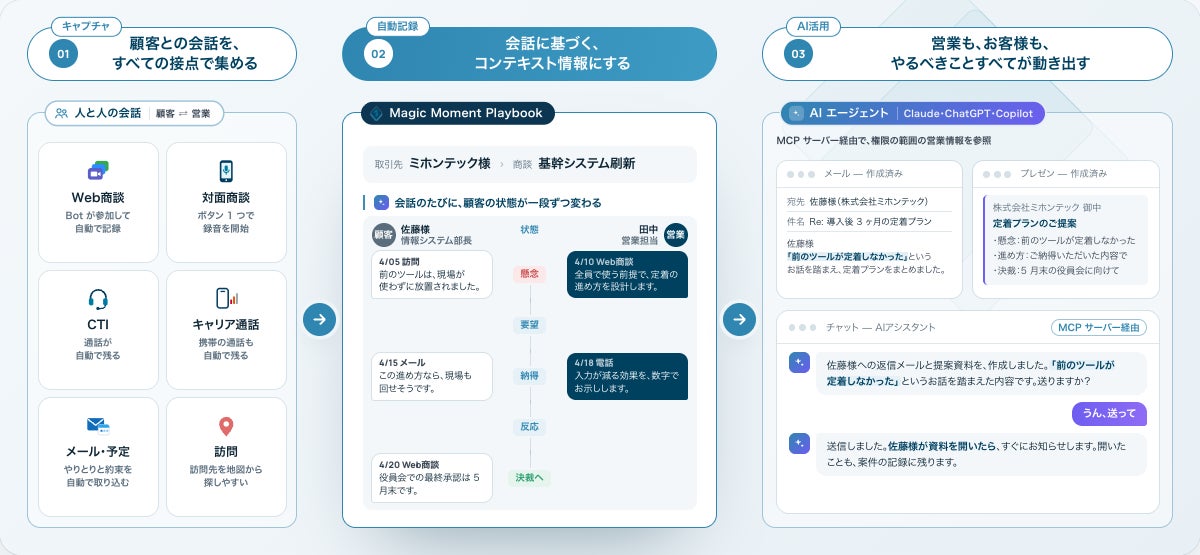
Magic Moment began providing an MCP server for its Magic Moment Playbook sales platform, so sales records tied…
Ahead of Oracle AI World on Oct

World, co-founded by Sam Altman, this week announced tools that let people link their proof of humanity to an…