Tim O'Reilly, a prominent tech publisher and venture capitalist, is arguing that the major AI labs are making a strategic mistake by building proprietary systems that lock in users, when the real future lies in open-source AI that lets people customize and switch between models.
He contends that while companies like OpenAI and Anthropic are focused on building the biggest frontier models, ordinary users actually need smaller, widely available models they can control—and that open-source will ultimately win out, just as the web did in the 1990s when nobody was paying attention to it.
What happened
Tim O'Reilly, the publisher and tech pioneer, is promoting open-source AI—not just open-weight models, but the entire stack—to give users and designers control over AI systems rather than locking them into proprietary products from hyperscalers like OpenAI and Anthropic.
Why it matters
O'Reilly argues that today's frontier AI models are optimizing for use cases big labs want, not what ordinary people need, and that the real innovation will happen in widely distributed lower-level models, not in the few companies dominating the frontier. He sees the concentration of AI capital as a failed venture-capital model that chokes out alternative paths, much like Uber and Lyft did in transportation.
What to watch
O'Reilly is working on an open-memory consortium through his nonprofit, the AI Disclosures Project, as a counterweight to Mark Zuckerberg's vision of locking users into Meta's AI. He predicts frontier models may become like mainframes—useful for hard problems but not what gets diffused through society.
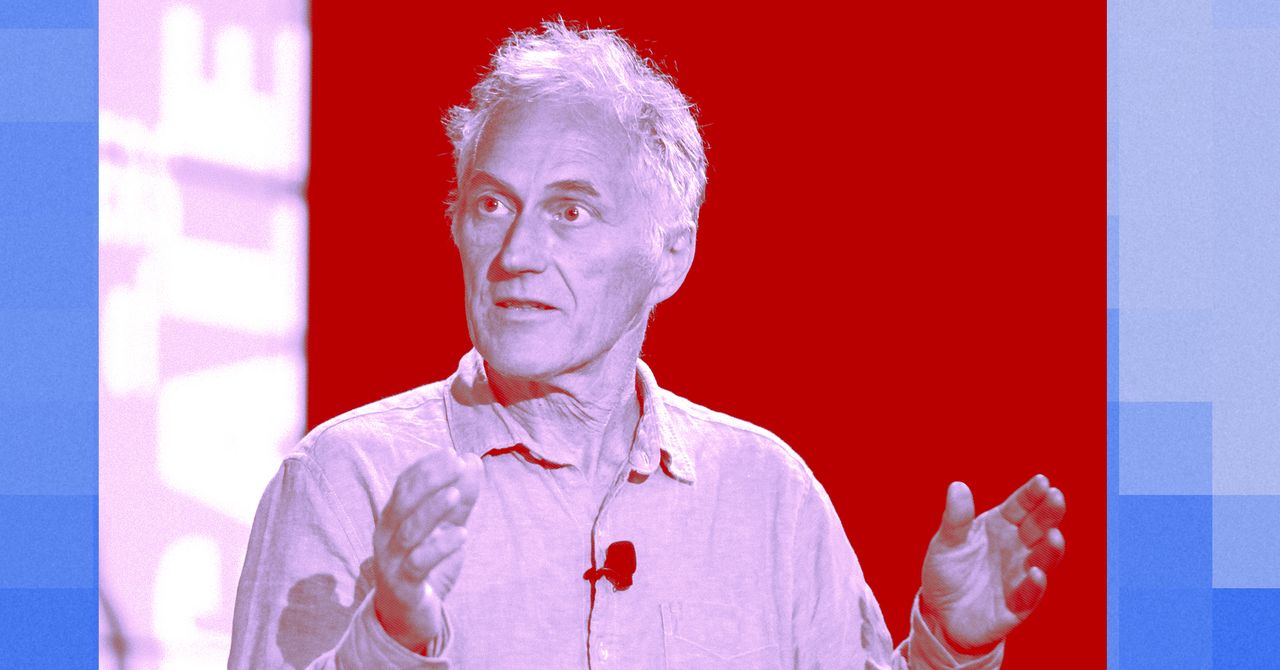
Tim O'Reilly, the longtime publisher, internet pioneer, and venture capitalist known for championing openness in tech, is making an urgent case that the artificial intelligence industry is heading in the wrong direction. In an interview with Steven Levy for Wired, O'Reilly explained his vision for open-source AI—going far beyond simply releasing model weights, but instead opening up the entire architecture of AI systems so that users and designers can innovate freely.
O'Reilly's core argument is that the major AI labs—OpenAI, Anthropic, and other hyperscalers—are repeating the mistakes of Microsoft in the 1990s by building what he calls an "architecture of control" designed to lock users into their products. "Big models like Claude are optimizing for particular use cases, but they aren't necessarily the use cases that people want," he said. "The most important thing is having a clean separation between the model, the harness, and the application." The big labs, he contends, have deliberately avoided that separation so they can track users and maintain lock-in. While he acknowledges this strategy serves their business interests, he argues it's the wrong strategic decision for the industry as a whole.
When asked why the breakthroughs in frontier AI aren't the answer, O'Reilly pointed to a striking observation: newer large models like Fable and Sol are actually worse writers than lower-level models. He argues that the push toward bigger and bigger frontier models is driving the technology away from what ordinary people need. Instead, he sketches an alternative future where frontier models end up like mainframes or supercomputers—useful for specific, extremely hard problems but not the tool that gets broadly diffused through society. The real action, in his view, will be in lower-level models spread widely and openly, allowing people to "paint outside the lines" and innovate freely. "We could win frontier AI here in the US, and China will kick our ass because they have lower-level models diffused widely through society," he warned.
O'Reilly is backing this vision with concrete efforts. At his nonprofit, the AI Disclosures Project, he is working on an open-memory consortium—a system that would let people maintain their personal AI context while switching between different models and providers. This directly counters Mark Zuckerberg's thesis that Meta will lock users in by providing "the AI that knows you best." For O'Reilly, the open-source vision must reject that lock-in and give people portability and control.
He situates AI within a broader critique of Silicon Valley's shift toward what he calls "anti-capitalist" behavior. In a recent piece in the Economist, he argued that tech leaders have so much power that their personal desires, rather than market forces, determine strategy. He cited Uber and Lyft as the template: venture capitalists, armed with billions in capital, literally subsidized rides to pick winners and choke out alternative paths. Now, in AI, the same dynamic is playing out—all the capital is funneling into a few companies pursuing frontier models. Yet O'Reilly believes this is a failed model. He predicts that just as the web emerged unexpectedly in the 1990s while everyone fought over the PC, open-source AI ferment—funded not by venture capital but by communities—will be where the real future lies.
The interview also touched on O'Reilly's own business challenge. His publishing company's book business has declined from a peak of about $70 million to $30 million over 25 years. As book revenue shrank, O'Reilly had to find new ways to compensate people for sharing their knowledge. Now AI has arrived and "hoovers everything up," he said. The question for his company is whether it can build tools that help people—writers, experts, knowledge workers—in this new environment. For O'Reilly himself, AI is a powerful creative medium. He uses it extensively and writes about his conversations with it on a blog. When it comes to his own editorial work, he uses AI for brainstorming and functional writing—turning hour-long interviews into drafts he can work from—but not for the main editorial content, which remains human-written. Asked whether he worries AI will eventually replace human writing, he rejected the premise. "AI is literally a medium," he said, comparing it to paint, music, or the written word. "There will be people who are masters at expressing their ideas by summoning words from LLMs," much as Michelangelo and Van Gogh got different things from paint. "People used to ride horses. Now, few do. We're in the early days."
O'Reilly's critique centers on a fundamental mismatch between what the major AI labs are building and what markets actually need. He argues that because a handful of companies control the capital and resources for frontier AI, they have the power to shape the technology in ways that reflect their business interests—keeping users locked in—rather than what customers want. This echoes his longstanding philosophy that value creation should be measured by what you give away, not what you capture.
He draws a parallel to the venture-capital model that took over Silicon Valley after 2010, when firms like Uber and Lyft used massive funding to subsidize their way to dominance, effectively choosing winners rather than letting markets do so. In AI, he sees the same pattern: all the capital is funneling into a few companies pursuing frontier models, which he believes is a strategically flawed bet. His comparison to the 1990s PC wars is telling—while everyone focused on who would dominate personal computers, the web emerged from outside that battle and ultimately changed everything. O'Reilly suggests open-source AI, supported not by venture capital but by communities and smaller innovators, will be that unexpected disruption.
AI-summarized, only the topics you pick — one digest a day via Email, Slack, or Discord.
Free · takes 30 seconds · unsubscribe anytime
Ask AI anything about this article. Q&As are published on this page for other readers too.
OpenAI is previewing Ultrafast mode, powered by Cerebras infrastructure from a ten-billion-dollar partnership…

Snowflake's Observe announced general availability of a redesigned MCP server and new CLI tool that give AI ag…

Kog, a French startup founded by Gaël Delalleau, is using deep GPU-level software optimization to accelerate A…

Meta released Glimmer, an open-weight AI model anyone can download and run on their own hardware, this week

AWS published a technical guide demonstrating how to build multi-agent systems that combine models hosted on A…

IBM announced a partnership with OpenAI and a multi-year US$240 million agreement with Together AI to deploy N…

The AI news that matters, in one minute each morning.
Sign up free