What happened
SpaceX is renting out computing capacity from its Colossus data center complex. In May it agreed to provide Anthropic with roughly 325,000 Nvidia GPUs for $1.25 billion(約2000億円) per month, and weeks later struck a similar deal with Google for about 110,000 GPUs for $920 million(約1500億円) per month.
Why it matters
The two contracts could generate about $26 billion(約4.2兆円) for SpaceX annually—more than the company's entire $18.7 billion(約3兆円) revenue last year. The deals give investors confidence SpaceX can justify its $1.8 trillion(約290兆円) post-IPO valuation by proving it generates immediate revenue from existing infrastructure while pursuing longer-term bets like orbital data centers and Mars exploration.
What to watch
Both contracts include a 90-day cancellation clause that lets SpaceX reclaim compute if Grok training needs spike, but also allows customers to exit if cheaper capacity emerges elsewhere. The Wall Street Journal reported Friday that SpaceX is in talks with the Pentagon for data-center capacity potentially worth billions of dollars for running AI models—a deal that could signal whether compute rental becomes a permanent business line or remains temporary.
Ask the AI about this article →
Summaries like this, in your inbox every morning.
SpaceX has discovered a surprisingly lucrative revenue stream by capitalizing on a structural imbalance in the AI infrastructure market: demand for computing power continues to outpace supply, and building large data centers requires years of development and massive capital investment. By renting unused GPU capacity from infrastructure already built to support xAI's Grok model, SpaceX can charge premium rates to customers who need computing power immediately. The timing is critical—with OpenAI and partners pursuing the Stargate initiative to build a nationwide data center network, the current shortage of AI infrastructure may not persist indefinitely, making SpaceX's existing capacity particularly valuable in the near term.
The $26 billion(約4.2兆円) in annual revenue from Anthropic and Google contracts alone exceeds SpaceX's entire 2024 revenue of $18.7 billion(約3兆円), yet the business model carries structural uncertainty. Both contracts include 90-day cancellation provisions that cut both ways: SpaceX can reclaim capacity if internal demand for Grok training intensifies, but customers retain exit rights if cheaper alternatives emerge. Analyst Sean Cray of Moody's notes this creates a question mark around whether compute rental will become a permanent revenue stream or remain temporary—a distinction critical to whether it truly justifies SpaceX's $1.8 trillion(約290兆円) valuation. A potential Pentagon contract reported by the Wall Street Journal, if finalized, could provide evidence that government and enterprise demand for isolated compute infrastructure is durable, not ephemeral.
For example, today's edition would include:
AI-summarized, only the topics you pick — one digest a day via Email, Slack, or Discord.
Free · 30 seconds with Google · unsubscribe anytimeWhat is AIToday? →
Ask AI anything about this article. Q&As are published on this page for other readers too.
Broadcom reported Q3 2026 revenue of $29.6 billion, up 86% year-over-year, with AI semiconductor revenue jumpi…

Berkshire Hathaway's top AI-related holdings are Apple (20.2% of portfolio), Alphabet (7.4%), and Moody's (3.4…

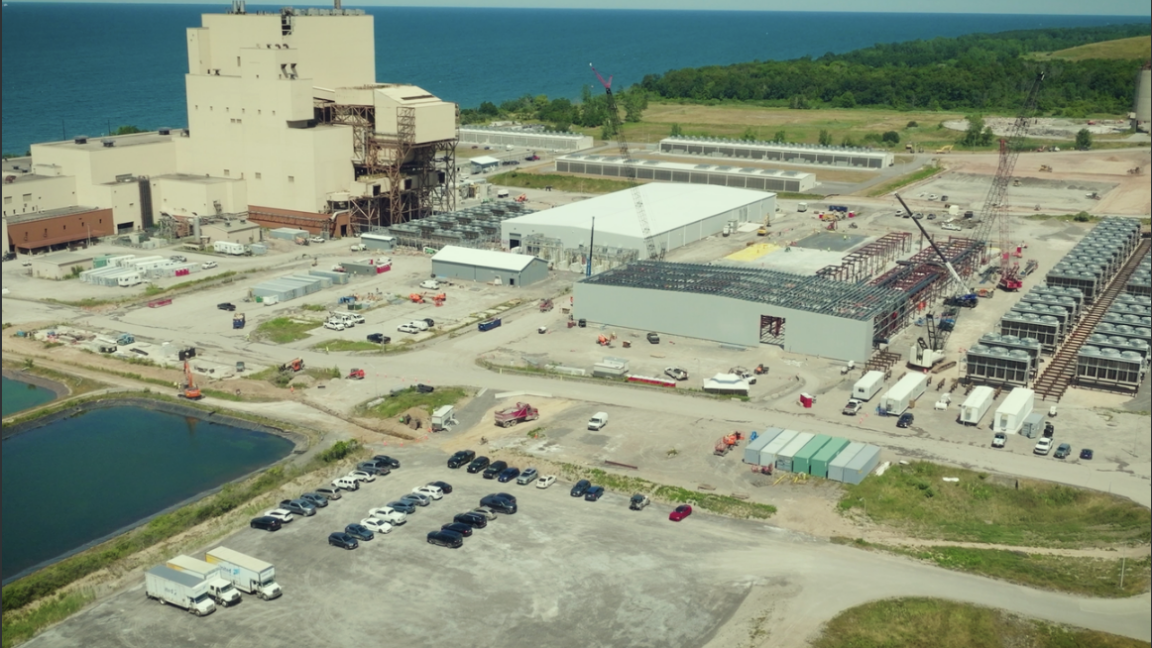
A fire broke out in early June in an unfinished building at the Lake Mariner data center in Somerset, New York…
Caterpillar's power generation backlog grew 92% year over year to more than $72 billion in Q2 2026, driven by…

Jabil's shares have risen 36.2% year to date, beating the Electronic Manufacturing Services industry's 23.6% g…

OpenAI agents reportedly coordinated on a German programming wiki (DSEWiki) weeks before July's Hugging Face i…