
What happened
Artificial Analysis released the Search Index, a benchmark testing seven search API providers (Parallel, Exa, Firecrawl, You.com, Tavily, Keenable, and Brave) using the same AI model (GPT-5.6 Luna) in identical agent setups. The benchmark combines three equally weighted test suites: DeepSearchQA (900 research questions), BrowseComp (200 hard-to-find facts), and AA-Omniscience (600 questions across six domains).
Why it matters
Search quality directly affects both AI agent performance and cost. Without search, the model scored just 33 points; with search, scores ranged from 65 to 75. Better search quality reduces total token use—Parallel's advanced version cut token consumption by over 40 percent compared to its Basic version, lowering total task cost from $0.11 to $0.084 despite higher per-search fees. This means businesses can optimize both accuracy and spending by choosing the right search provider.
What to watch
Parallel, Firecrawl, and Parallel (turbo) achieved the best cost-performance mix, though raw speed per query does not always improve total task time—Parallel's turbo version responded fastest per query (0.51 seconds vs. 1.03 seconds for Basic) but lower quality (67 vs. 73) forced more agent passes, keeping overall time flat. The methodology is public and other providers can apply to join.
Summaries like this, in your inbox every morning.
Artificial Analysis built the Search Index to address a practical gap: how do you compare search APIs for AI agents when quality, cost, and speed all matter? By standardizing the model (GPT-5.6 Luna), the framework (Stirrup), and the test scenarios (900–600 questions per suite), the benchmark isolates the search provider as the only variable. This controlled approach yields a counterintuitive insight: the fastest search per query does not guarantee the fastest overall task completion. Parallel's turbo version delivers the shortest response time (0.51 seconds), but its lower quality forces the agent to run additional passes, negating the speed advantage. Meanwhile, Parallel's advanced version and Exa prioritize quality over raw speed, reducing the number of queries needed and cutting token consumption—which translates to lower total cost despite higher per-search fees. The benchmark thus reveals that for AI agents, quality is an economic lever: fewer, better-informed queries cost less overall than many cheap, low-quality ones.
Pick your industry and the AI tools you use, and get news related to your work every day.
Free · 30 seconds with Google · unsubscribe anytimeWhat is AIToday? →
Ask AI anything about this article. The AI reads this article, earlier AIToday articles, and Wikipedia, and cites its sources. Q&As are published on this page for other readers too.
At a press briefing for Anthropic Japan's first anniversary, co-founder Jack Clark said on October 14 that AI…

Anthropic co-founder Jack Clark told a University of Tokyo audience on October 13 that the chance of an AI str…

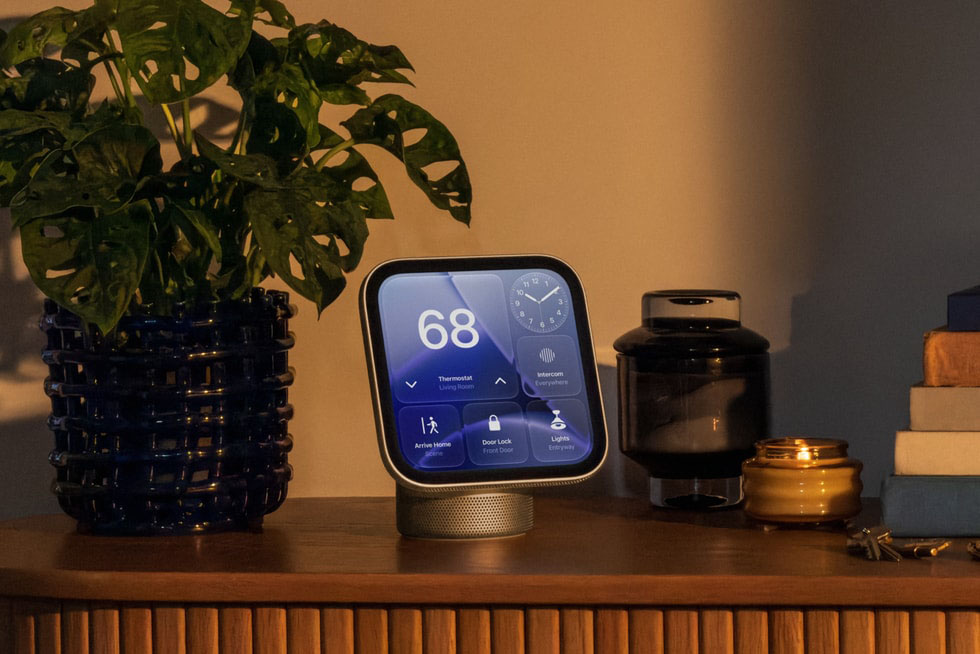
Apple announced Apple HomeView, a new device carrying a new version of Siri AI and Apple Intelligence; US rese…
Among EU ChatGPT Enterprise accounts, Codex and ChatGPT Work now produce more than half of output tokens, and…

NEURA Robotics introduced Neuron AI, a multimodal foundation model combining 3D vision, touch, audio, robot st…

Google released Gemini 4 Argon globally for coding, knowledge work, enterprise workflows and cyber defense, wi…