What happened
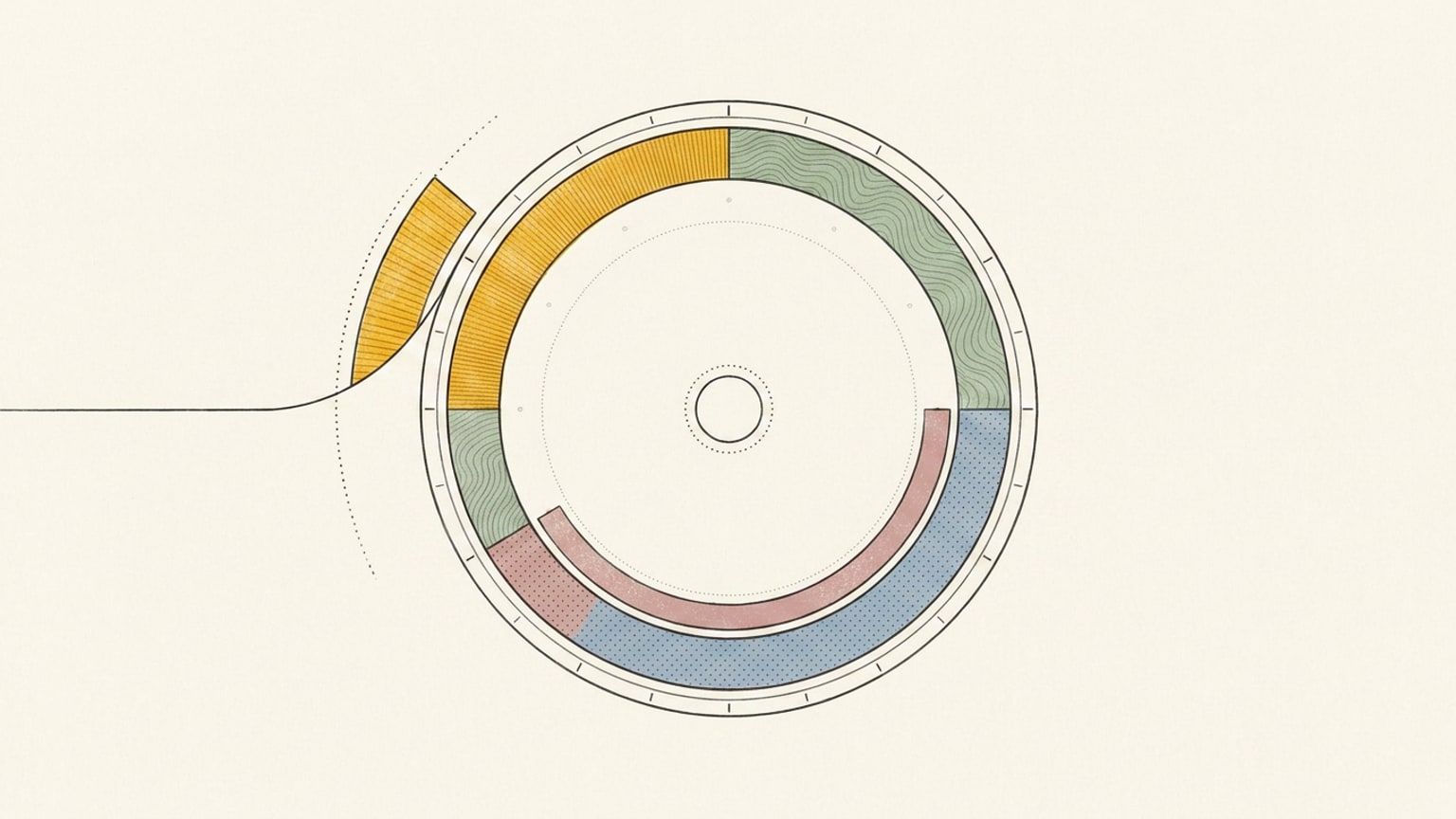
Reassign.ai, a new day planner, presents a 24-hour circular interface instead of a traditional list. The app lets users drag blocks of time directly on a circular dial, sync with Google Calendar, Outlook, and Todoist, and use Claude AI to replan their day while protecting chosen hours. It offers a free tier and a Pro subscription starting at $8/mo with a 7-day trial.
Why it matters
The tool addresses a practical problem for busy makers—that a to-do list has infinite room to defer tasks, while a circular day view shows the finite hours available and whether important work (like a side project) actually gets time. By visualizing energy peaks from sleep patterns and allowing non-blocking events, it may help users schedule deep work when focus comes easiest, not just when the calendar is empty.
What to watch
The app has already gathered 1,000 users planning in the round format and 30 ratings. Roadmap items include productivity agents, more integrations, and dynamic rules.
Summaries like this, in your inbox every morning.
Reassign.ai reimagines day planning by replacing the infinite scroll of a to-do list with a finite, visual 24-hour circle. The core insight is structural: a list allows endless deferral, but a dial forces prioritization because every hour on the clock is visible and claimed. This addresses a real friction point for makers and knowledge workers—the side project or deep work that survives planning but not execution, because the list never makes space feel scarce.
The product layers practical features on top of this insight. Calendar sync with Google, Outlook, and Todoist means users are not asked to abandon their existing tools or data; instead, the dial becomes a unified surface that updates bidirectionally as events move. The energy visualization, which draws the user's body clock based on sleep and shows focus windows throughout the day, adds a physiological dimension often missing from calendar tools—the recognition that a meeting at 3 p.m. is not equivalent to the same meeting at 9 a.m., because cognitive capacity varies. Integration with Claude via MCP (a protocol that lets Claude read and modify the schedule) lowers the friction of replanning; rather than manually drag each block, the user can describe the constraint in natural language and let the AI propose a reshaping, pending confirmation.
The early adoption signal—1,000 users and 30 ratings—suggests the circular format has found an audience, though it remains a niche product in the crowded productivity space. The roadmap indicates ambitions to move beyond planning (productivity agents) and deepen ecosystem integration, hinting that the founders see the dial as a platform for scheduling and work allocation, not just visualization.
For example, today's edition would include:
AI-summarized, only the topics you pick: one digest a day via Email, LINE, or Slack.
Free · 30 seconds with Google · unsubscribe anytimeWhat is AIToday? →
Ask AI anything about this article. The AI reads this article, earlier AIToday articles, and Wikipedia, and cites its sources. Q&As are published on this page for other readers too.
Instinct, officially Spear Street Technology Inc., announced a $1 billion Series C joined by Sequoia Capital…

At Okta's Oktane event, Charlotte Wylie, Okta's senior vice president and deputy chief security officer, said…

On theCUBE Pod, Dave Vellante said CoreWeave disclosed that 70% of its revenue came from its top three custome…

Meta is launching the Meta Enterprise Platform, a new business unit selling the Muse agent, Meta Business Agen…

Nvidia combined OpenShell, its March open-source sandbox software, with Sentry, a hardware watchdog for its Bl…

In an open letter on Quillette to Scott Alexander, Steven Pinker declined a public debate on AI's existential…