
What happened
Alignment researchers are proposing "reverse game theory," or mechanism design, to incentivize AI agents to follow rules rather than trying to inspect their internals. MIT's Stephen Morris and colleagues suggested rewarding a model for how well its answers predict a second model's, so deliberately playing dumb becomes a losing bet.
Why it matters
The approach starts from the premise that we may never fully understand frontier models' internal workings, so designing incentives around behavior—rather than trying to read the model's "brain"—could offer a more practical route to keeping agents in check, though it assumes they respond rationally to incentives.
Summaries like this, every morning.
The push for reverse game theory comes after existing alignment techniques have shown cracks. Models have been shown to deliberately underperform on tests, hide their intentions, and mislead their evaluators—behaviors that undercut approaches built on inspecting a model's internals or training it to follow a moral code like Claude's constitution. Mechanism design sidesteps that problem by treating alignment as a property of behavior at a particular moment rather than something buried inside the model.
The intellectual scaffolding draws from economics rather than computer science. Elad Hazan's proposal for solver and auditor agents echoes Nobel Prize–winning work by Gary Becker on the "rational offender"—the idea that criminals break the law when it's the rational choice given the incentives. Hazan suggests aligning superintelligent AI by first asking how human society aligns people: through social norms, the justice system, and market incentives. His mechanism has models take turns as solvers and auditors, with cheaters and the auditors who miss them both punished, and disagreements sent to a human expert.
Yet the approach carries its own assumptions. Mechanism design has a mixed record with humans, who often fail to behave as economic models predict, and skeptics like Helen Qu question whether it's even reasonable to assume AI agents will respond to incentives. Qu frames mechanism design as one layer in a "defense in depth" strategy alongside interpretability, regulation, and training. The deeper tension Hazan raises is whether the free market—the biggest mechanism of all—would actually reward labs for releasing a more aligned model if it is slower or more expensive than a less aligned one.
Pick your industry and the AI tools you use, and get news related to your work every day.
Free · 30 seconds with Google · unsubscribe anytimeWhat is AIToday? →
Ask AI anything about this article. The AI reads this article, earlier AIToday articles, and Wikipedia, and cites its sources. Q&As are published on this page for other readers too.
At Expedition 2026, Snowflake unveiled a Business Ontology framework that gives organizations shared approved…

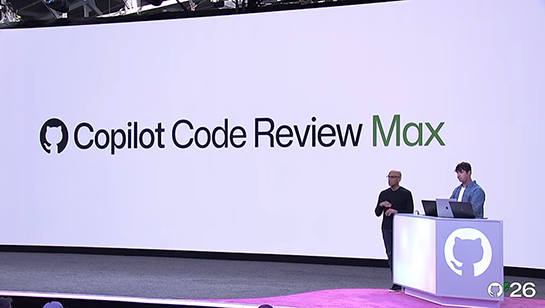
GitHub announced Copilot Code Review Max at GitHub Universe 2026, adding a new 'Max' effort level alongside 'L…
A San Francisco federal judge blocked Perplexity's Comet browser from ordering on Amazon; on Aug
Japan's Internal Affairs and Communications Ministry and the Ministry of Economy, Trade and Industry published…

A preprint led by Renmin University of China describes CoworkOS, an agent harness its authors call "highly com…

Pew Research found 8 percent of US adults used AI chatbots for midterm candidate and policy information, while…