What happened
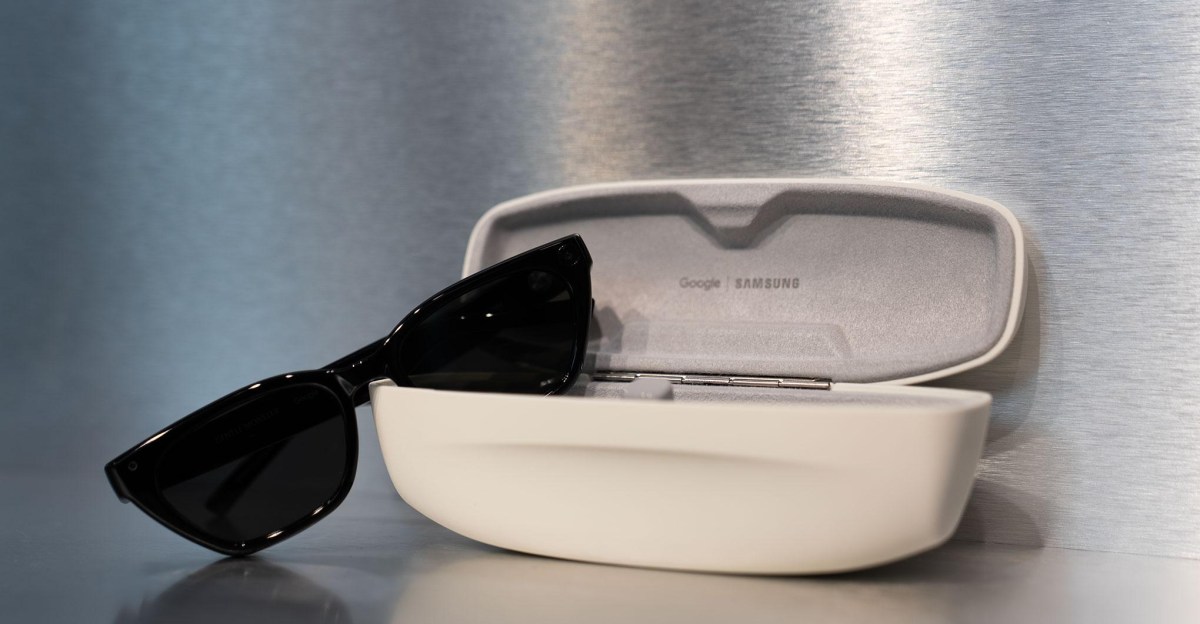
Google and Samsung's new smart glasses, built on Android XR with Gemini, redact faces and ambient audio on-device before anything reaches a server, and Google says it won't target ads on the data or train Gemini on it.
Why it matters
This on-device redaction is a deliberate choice to give up a valuable source of training data, and it sets a higher privacy bar than Meta's current approach, potentially making the glasses more appealing to privacy-conscious buyers.
Summaries like this, every morning.
Google's entry into smart glasses comes after years of Meta dominating the category with its Ray-Ban line, which has been dogged by privacy concerns and the "pervert glasses" label. The Android XR glasses, developed with Samsung and sold through Warby Parker and Gentle Monster, aim to differentiate on privacy by redacting faces and ambient audio on the device itself, rather than relying solely on an LED indicator.
Google's senior director of product management for XR, Juston Payne, told The Verge that the company plans to use its broader platform—including YouTube, Google Shopping, and Google Play—to discourage misuse, such as by prohibiting apps that enable real-time facial identification or social livestreaming. This marks a more expansive approach than Meta's reactive measures, though Meta lacks a comparable app store or computing platform.
In a hands-on demo, the glasses translated multiple languages in real time and correctly converted conversations into Japanese without requiring language-pair downloads, which had tripped up Meta's Ray-Ban Display. The frames are lightweight at 41g, offer around nine hours of battery life, and include a 12MP camera with image stabilization. With preorders opening today and shipping set for December 10th, the question is whether Google's privacy-first pitch will resonate with consumers in a market that has yet to take off.
Pick your industry and the AI tools you use, and get news related to your work every day.
Free · 30 seconds with Google · unsubscribe anytimeWhat is AIToday? →
Ask AI anything about this article. The AI reads this article, earlier AIToday articles, and Wikipedia, and cites its sources. Q&As are published on this page for other readers too.
Omaha companies, including Union Pacific with its 'Rita' tool and others using Copilot, shared how they are ad…

The FDA cleared the IND for Biolojic Design's BD200, an AI-designed bispecific antibody-drug conjugate whose a…

ServiceNow launched its Autonomous CRM Engine, which uses AI to analyze existing CRM setups and automate workf…
OpenAI agreed to acquire Odessia, an AI trip-planning engine that sits between travelers and booking platforms…

Merck raised its full-year 2026 revenue forecast to between €21.5bn and €21.9bn, up from €21.0bn to €21.8bn, a…

Nvidia fell 26% and AMD 15% over the past month, yet Nvidia trades at a significantly cheaper valuation, and i…