
What happened
Storage vendors including Supermicro, Hammerspace, Cloudian, and Seagate are addressing the challenge of managing unstructured data for AI. Industry estimates cited by theCUBE Research indicate that more than 80% of enterprise data is unstructured, yet remains largely inaccessible, unmanaged, or underutilized.
Why it matters
Unstructured data — documents, videos, logs, emails, and more — could significantly improve AI-generated results, but the challenge lies in discovering, governing, and moving it for AI use. Hammerspace's Presley noted that managing this data for AI is "much more challenging" than in the past, involving unifying and efficiently automating data movement.
What to watch
Supermicro has introduced Context Memory storage servers to support offloading and sharing of large language model key-value caches. These are co-engineered with partners like Hammerspace, Cloudian, and Seagate, with Cloudian serving as the S3 data lake and Seagate providing storage at the end of the data lifecycle.
Summaries like this, in your inbox every morning.
The discussion at the Supermicro Open Storage Summit highlights a shift in how storage vendors view unstructured data. Previously, managing such data focused on archiving and backup, but now the goal is actively preparing it for AI consumption. This involves not just storing data, but also curating it, describing it, and automating its movement to where it is needed for model training and inference.
The companies present are approaching this from different angles. Supermicro provides high-density hardware platforms and Context Memory servers for KV cache tiers. Cloudian offers S3-native object storage with a strong emphasis on governance and security. Hammerspace focuses on creating a unified global namespace and data orchestration, including a new Model Context Protocol (MCP) layer to help AI systems understand distributed data. Seagate contributes hard drives for the later stages of the data lifecycle.
A key takeaway from the executives is the need to identify the value of data to determine the right infrastructure balance. Seagate's El-Batal advised to "value your data and don't go cheap on your infrastructure, while at the same time being efficient at it." The goal is to prepare data not only for training but also for compliance audits, debugging, and understanding AI outputs, making data preparation a critical step for effective AI deployments.
Pick your industry and the AI tools you use, and get news related to your work every day.
Free · 30 seconds with Google · unsubscribe anytimeWhat is AIToday? →
Ask AI anything about this article. The AI reads this article, earlier AIToday articles, and Wikipedia, and cites its sources. Q&As are published on this page for other readers too.
The US imposed sanctions on five Chinese entities tied to former Google engineer Linwei Ding, after his convic…

Nvidia is reportedly in talks to invest hundreds of millions of dollars in Firmus, and Maas Group — which owns…

Pigment closed a $250 million Series E at a $2.3 billion valuation, led by Scaleup Europe Fund managed by EQT…

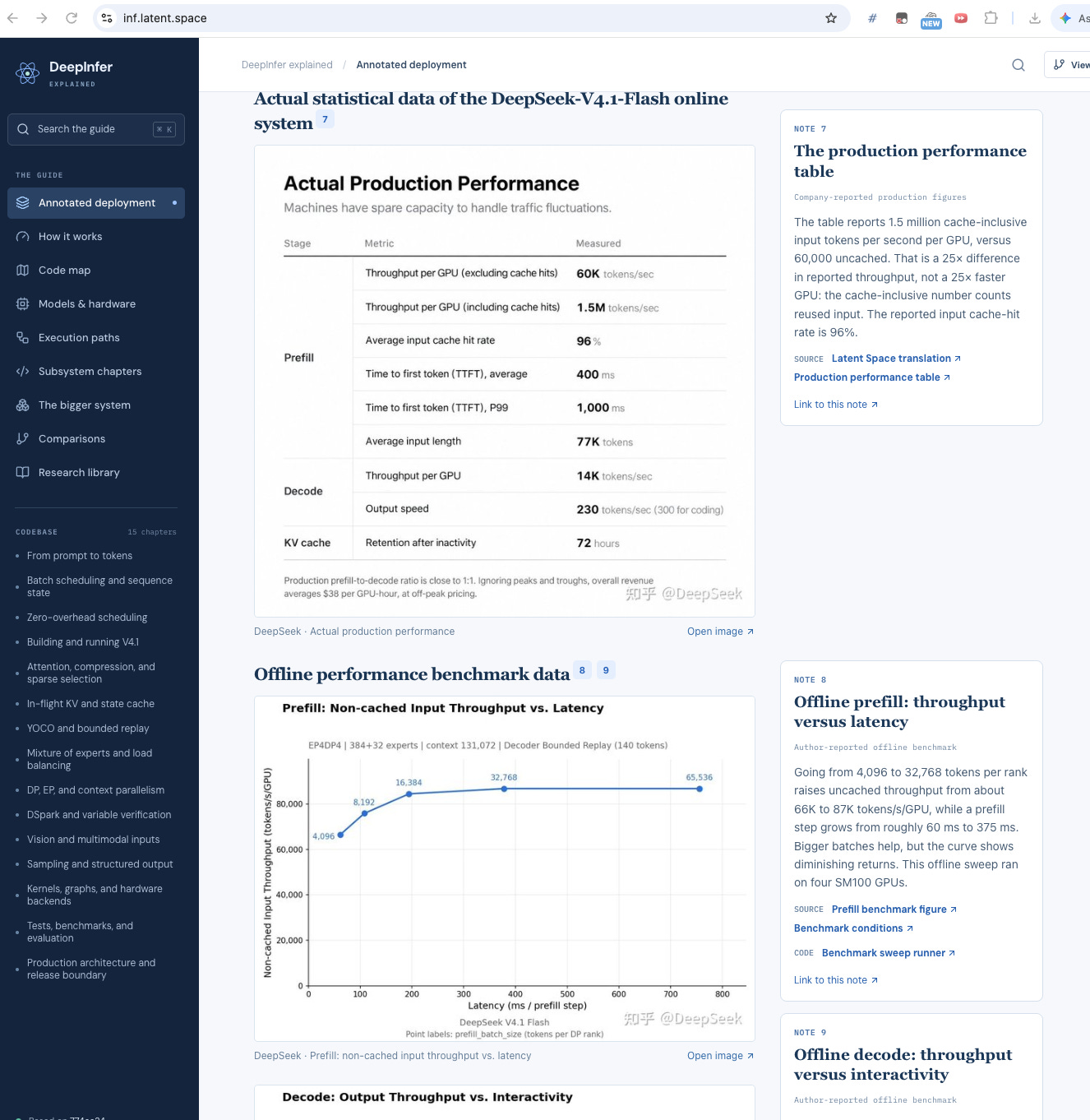
DeepSeek released DeepInfer, the inference engine behind V4.1-Flash, with production figures of 155 trillion t…
OpenAI acquired Orchestra Bio on October 20 and is integrating its team and drug-development coordination tech…

Hitachi unveiled a prototype GPU cold plate whose "U字トンネル流路" sends coolant straight at the GPU's hot spots, wi…