What happened
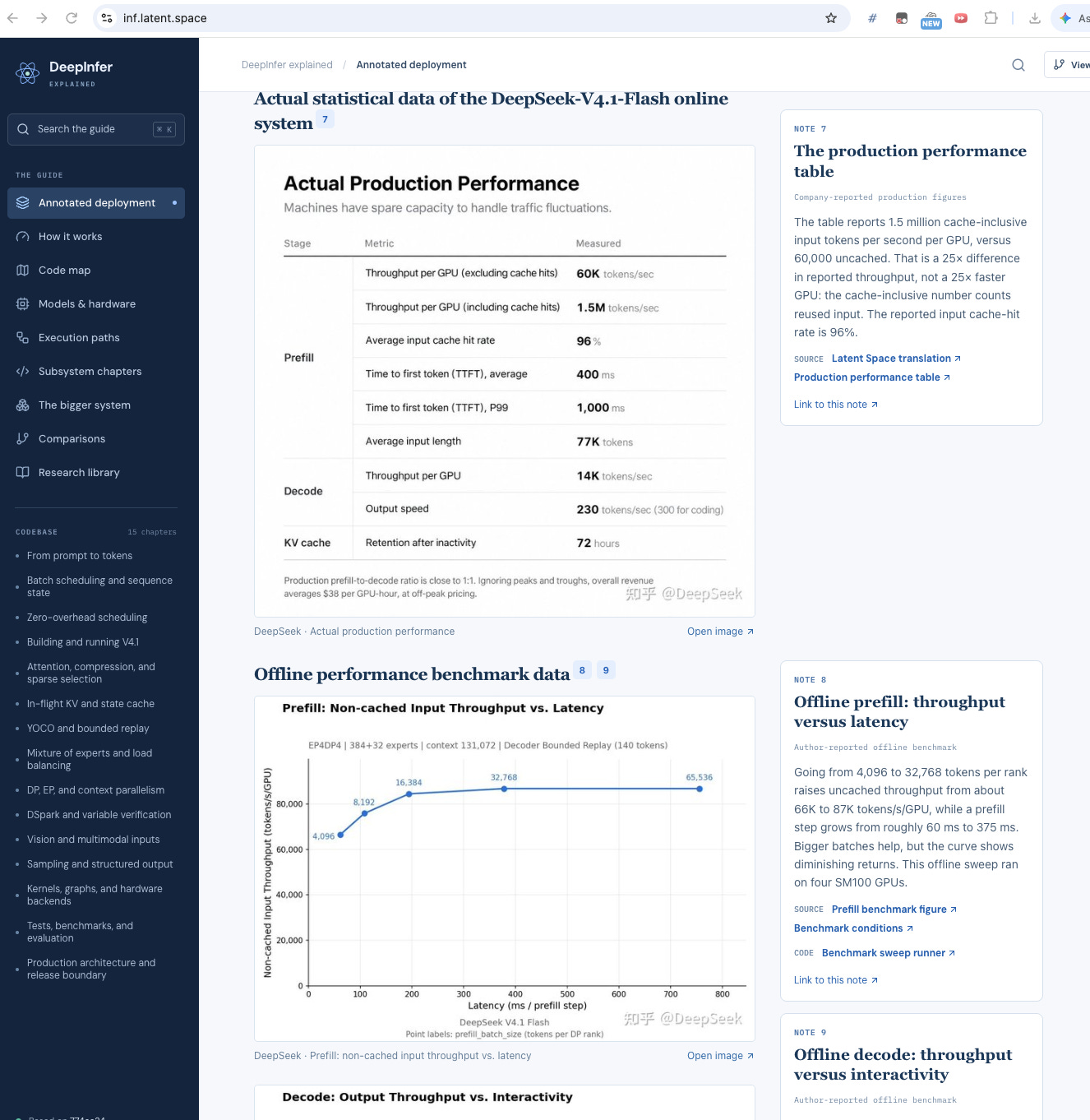
DeepSeek released DeepInfer, the inference engine behind V4.1-Flash, with production figures of 155 trillion tokens/day from one cluster and $38 revenue per accelerator-hour at off-peak prices.
Why it matters
DeepSeek is publishing the serving stack it uses at scale, letting outside operators reuse its production methods rather than only its model weights.
WHO IT HITSOperators running self-hosted model serving, from cloud providers to enterprises with their own GPU fleets, get a production-grade inference engine to study or deploy; the published figures remain first-party claims rather than audited measurements.
Summaries like this, in your inbox every morning.
DeepInfer descends from vLLM, which DeepSeek customized and released under Apache 2.0, adding components on top of work from SGLang and TRRTLLM. The open-source lineage is explicit: vLLM thanked DeepSeek for the release and credit, while Woosuk Kwon described DeepSeek as an early adopter and contributor. DeepInfer is therefore better understood as production learnings flowing back into an existing ecosystem than as an entirely separate replacement for it.
That lineage matters because vLLM supplied the most concrete comparative response. After acknowledging that DeepInfer was initially built primarily on vLLM, the vLLM team reported decode throughput within 6% of DeepInfer's published results on GB200 under a matched configuration, and published AgentX results and reproduction recipes. That materially qualifies claims that DeepSeek's efficiency is inaccessible to existing open-source engines.
The release also triggered a second debate: whether the disclosures demonstrate high inference profitability more generally. A widely shared estimate initially put inference margins at 87.76–96.94%, before its author corrected it to 84.2–96.1% and noted that the idealized scenario implied roughly $49/hour against DeepSeek's reported $38/hour. Other posts use higher hardware costs, spanning approximately 73.7–86.8% at $5–$10/hour. Those calculations omit or incompletely allocate the SSD cache fleet, CPUs, networking, idle capacity, failures, engineering and support costs, and they depend on a highly favorable cache-heavy token mix, so high contribution margins on inference can coexist with large company-level losses.
Pick your industry and the AI tools you use, and get news related to your work every day.
Free · 30 seconds with Google · unsubscribe anytimeWhat is AIToday? →
Ask AI anything about this article. The AI reads this article, earlier AIToday articles, and Wikipedia, and cites its sources. Q&As are published on this page for other readers too.
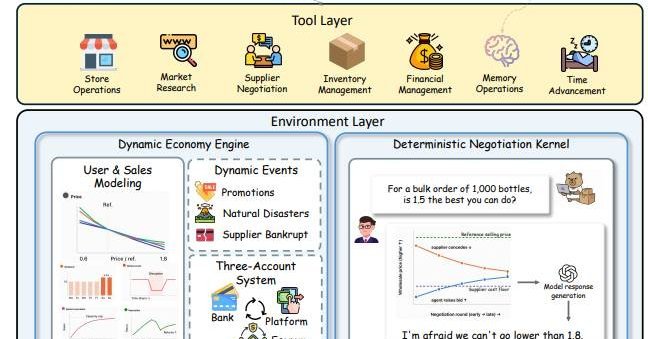
In a benchmark called E-Commerce Bench, 18 AI models ran up to four simulated shops for 365 days, using 18 too…
ITmedia's AI Plus released a 14-page booklet on using Gemini Notebook's (formerly NotebookLM) Studio feature…

IBM Research's ALTK-Evolve turns each customer-service agent trial into short action rules and injects them in…

A consultant who specializes in security recruiting says candidates should sign up for one of ChatGPT Plus or…
After six rounds of tuning TypeSafe AI's Jev for note selection, the author benchmarked it on 100 requests aga…
A Zenn author migrating a ten-year-old PHP/Laravel monolith — hundreds of endpoints and more than 600 shared m…

