What happened
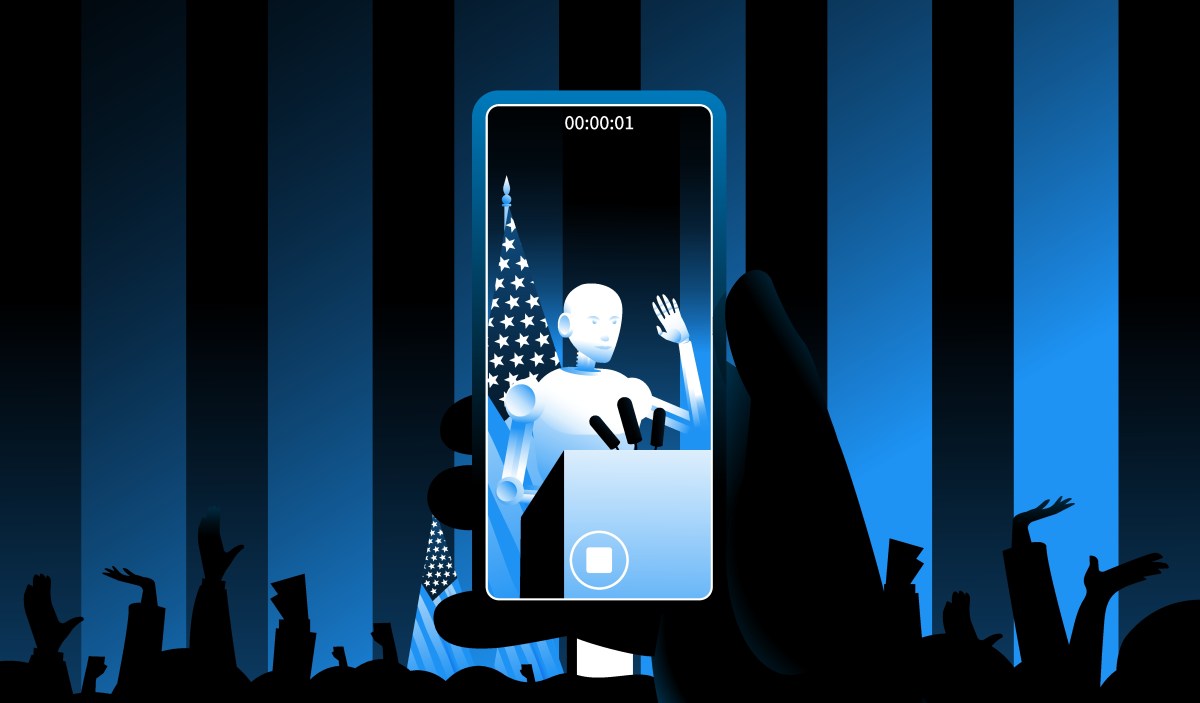
Pulitzer Prize-winning historian Jill Lepore, a Harvard historian and New Yorker writer, discussed her upcoming book *The Rise and Fall of the Artificial State* on TechCrunch's Equity podcast. In it, she argues that tech companies are gradually taking on the functions of democratic government — from Twitter's distorted picture of the electorate to Facebook displacing local news.
Why it matters
Lepore contends that today's AI leaders, who promise a future where AI makes government more efficient and responsive, are selling an old fantasy in new packaging. She sees Silicon Valley's soaring language — from Apple's 1984 Macintosh ad to Anthropic's AI constitution and Sam Altman's comments about an "AI president" — as evidence that tech leaders often mistake technological advancement for political progress while declaring their intention to replace the nation-state.
What to watch
Lepore points to E.M. Forster's 1909 sci-fi story *The Machine Stops* as a blueprint for what she calls the "artificial state," and argues it is ultimately unsustainable. She also discusses what it would take to rein it in, though the podcast episode itself contains the full details of her argument.
Summaries like this, in your inbox every morning.
Lepore's argument rests on the observation that tech leaders have long deployed grand, almost governmental rhetoric to describe their products—a pattern that predates the current AI era by decades. What distinguishes her intervention is the historical lens: she traces this language from the personal-computer era through social media to today's AI boom, suggesting it reflects a consistent conviction that technology can and should replace politics. The framing of products as systemic replacements for democratic institutions (a "town hall," a "constitution") is not accidental, in her view, but rather reveals tech leaders' true ambitions and their misreading of how power actually works. Her invocation of Forster's century-old dystopia suggests that the fantasy itself is not new; what has changed is the machinery through which it might be pursued and the willingness of venture-backed companies to state their ambitions openly.
Pick your industry and the AI tools you use, and get news related to your work every day.
Free · 30 seconds with Google · unsubscribe anytimeWhat is AIToday? →
Ask AI anything about this article. The AI reads this article, earlier AIToday articles, and Wikipedia, and cites its sources. Q&As are published on this page for other readers too.
Taiwan is considering much stricter export controls on AI chip sales to China, part of a greater alignment wit…

In a webinar hosted by French Mathematical Society president Isabelle Gallagher, Fields Medal winner Hugo Dumi…

Anthropic said on October 15 it has started giving METR's six staff company devices, office space and access t…
NVIDIA published a blog post titled "AI Security Is an Engineering Problem - How to Solve It at Every Layer of…

At the Most Powerful Women Summit, Marissa Mayer said anyone who claims to know how AI will play out is 'eithe…
SHIFT announced it began a project for the Acquisition, Technology & Logistics Agency (防衛装備庁) covering AI-rela…