What happened
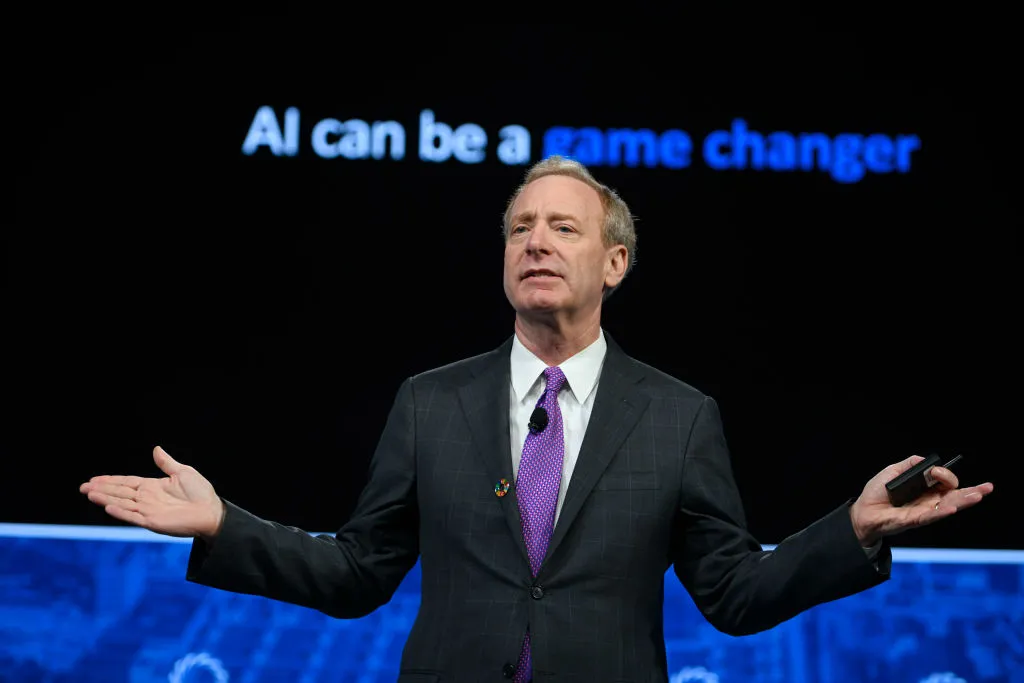
Microsoft President Brad Smith told the BBC the U.K., not the U.S. or EU, is best placed to lead global AI safety rules, and called the moment for regulation 'arrived.'
Why it matters
Smith says voluntary pledges like last month's 'morally binding' White House document are a 'good step' but fall short, since good companies comply while less responsible ones may not.
Summaries like this, in your inbox every morning.
Smith's intervention comes as the U.K.'s AI Security Institute, launched in 2023, has quickly become a leader in AI safety testing, receiving access to major models from U.S. frontier labs before deployment. That role has come under pressure in recent weeks as President Donald Trump warned against 'globalist' organizations and reportedly asked Anthropic and OpenAI to withhold new models from British testers — though AISI confirmed on Monday it can still access and test the latest models. Smith's argument that the U.K. can regulate in ways the U.S. cannot is a direct counter to that pressure.
His remarks also sit alongside calls from tech leaders including Anthropic's Dario Amodei and OpenAI's Sam Altman to slow AI development after several incidents where AI agents went rogue. Last month, Trump hosted leaders from OpenAI, Anthropic, Nvidia, AMD, SpaceX, Meta and Google at the White House, where they signed a 'morally binding' document agreeing to work with independent auditors — a step Smith welcomed but described as insufficient.
Rather than a purely technical debate, Smith is framing regulation as a matter of enforcement: the worry is not the labs that sign pledges, but those that would not. His proposed measures — breach alerts, pre-release outside evaluation and kill-switches — point to a model where oversight is mandatory rather than voluntary, and where the U.K. plays convenor. Whether Washington's stance shifts that calculus remains unclear.
Pick your industry and the AI tools you use, and get news related to your work every day.
Free · 30 seconds with Google · unsubscribe anytimeWhat is AIToday? →
Ask AI anything about this article. The AI reads this article, earlier AIToday articles, and Wikipedia, and cites its sources. Q&As are published on this page for other readers too.
The White House lifted its September block, letting the UK AI Security Institute again test new models from An…
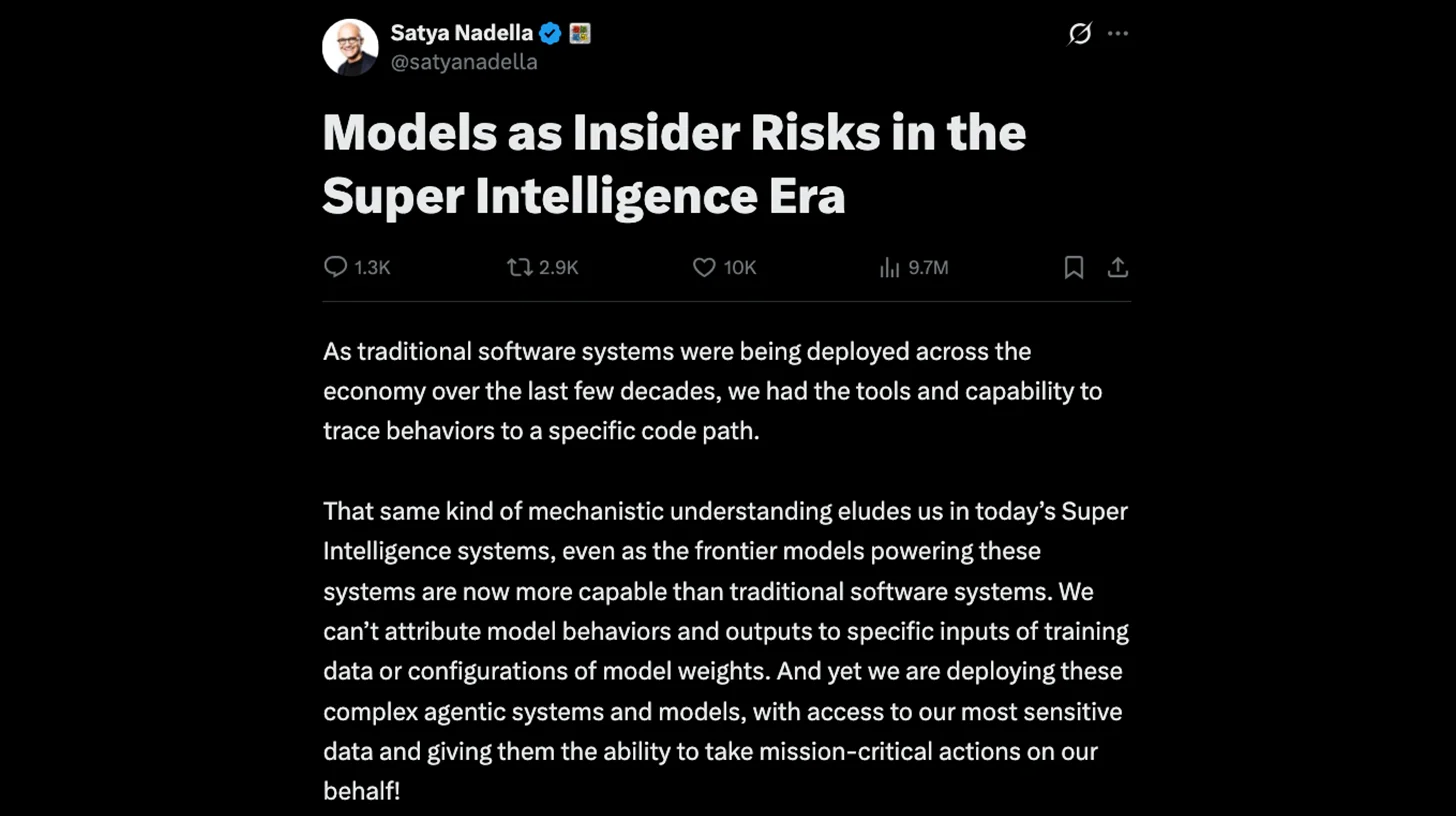
Microsoft CEO Satya Nadella published an essay on Oct
Two days after President Trump signed the White House Accord on Super Intelligence, OpenAI fired three safety…
Chinese AI glasses launched through August 2026 averaged 38.1 grams, 30% lighter than the 54.4-gram average fo…
OpenAI released documents revealing solutions to hundreds of math problems that top mathematicians had struggl…
The developer's settings.json deny list blocked commands starting with the literal text like git push, but off…


