What happened
At the Android Dev Summit, Google launched Android Studio Rabbit 2 with a 'Bring Your Own Agent' feature. Developers can run more than 40 coding agents, including Anthropic's Claude Agent and OpenAI's Codex, via the open Agent Client Protocol.
Why it matters
Developers are no longer limited to Google's own AI tools inside the IDE; they can install and run competing agents side by side. This gives teams a choice of vendor for AI-assisted Android development, which may pressure Google's own tooling to compete on capability.
What to watch
The XREAL AURA smart glasses are available to order now in the US, Canada, and South Korea for $1,099, with shipping set to begin in mid-November.
WHO IT HITSAndroid developers and development teams gain the ability to run multiple third-party AI coding agents within Android Studio, letting them pick tools from Anthropic, OpenAI, or Google rather than being locked into one vendor's assistant.
Summaries like this, every morning.
Google's Android Dev Summit announcements show the company reorganizing its developer stack around AI agents rather than around its own assistant alone. The 'Bring Your Own Agent' feature is the clearest signal: by adopting the open Agent Client Protocol, Android Studio now hosts agents from Anthropic and OpenAI alongside Google's Antigravity, turning the IDE into a neutral stage for competing tools. The accompanying terminal commands and the LeakCanary integration point in the same direction, giving agents ways to check their own work — rendering Compose previews, finding memory leaks — without booting an emulator.
Beyond the IDE, Google is pushing agents into the phone itself. Gemini Nano 4 powers an alpha Agentic API in ML Kit for on-device processing, while the AppFunctions API in beta and the Agent-to-UI interface let apps expose functions and interactive components to local or system-wide agents. The Connected Apps Platform preview extends that reach into Google Search and the Gemini app, where Google says over 50 partner integrations from companies like Adobe, Peloton, and Experian are already live.
On hardware, the XREAL AURA marks the first wired smart glasses running Android XR, per XR chief Shahram Izadi, with Gemini able to see both the physical room and the virtual windows. At $1,099 with shipping in mid-November, it is the most concrete consumer product in a set of updates otherwise aimed at developers.
Pick your industry and the AI tools you use, and get news related to your work every day.
Free · 30 seconds with Google · unsubscribe anytimeWhat is AIToday? →
Ask AI anything about this article. The AI reads this article, earlier AIToday articles, and Wikipedia, and cites its sources. Q&As are published on this page for other readers too.
LangChain laid out a four-level loop stack for agents — the core agent loop, a verification loop with graders…

Asked who won recent US presidential elections, Google's AI Mode gave only outside links rather than a direct…

Will Knight fed Codex research papers and had it build a harness of news-reading, results-analyzing, model-run…

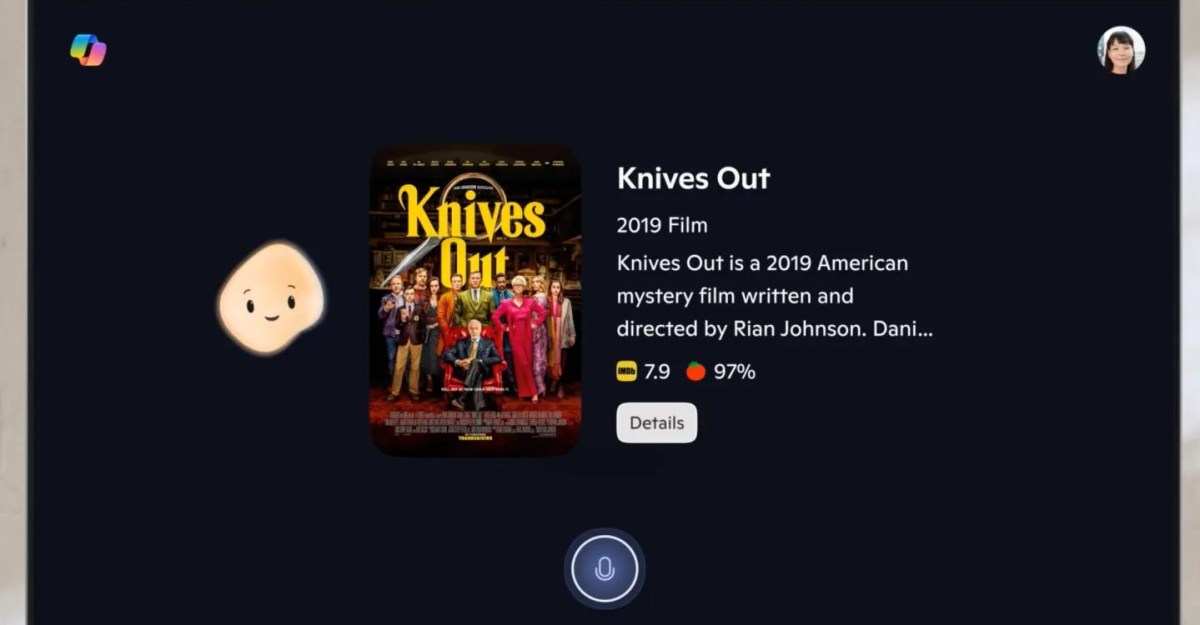
Microsoft is ending Copilot functionality on all TVs, including LG's, with the feature "scheduled for disconti…
Two OpenAI managers published an essay arguing AI will reorganize firms in three ways — a new AI labor layer b…

Jedify Inc. formally launched Data Agents, letting business teams set up autonomous AI analysts by describing…