
What happened
SpaceX reported $14.6 billion in third-quarter revenue and net income of $4.4 billion, reversing a $1 billion loss in the same quarter last year, with AI now 52% of income.
Why it matters
The quarterly profit shows the AI business is now large enough to steer overall results, even as SpaceX still posted a $413 million net loss over the first nine months of the year.
What to watch
Musk predicted annual recurring revenue by the end of 2027 will be "somewhere between $500 billion and $1 trillion."
WHO IT HITSInvestors and analysts tracking SpaceX's shift from space to AI will focus on whether the Super Intelligence unit's growth can offset heavy capital spending. Musk's revenue projection gives them a long-range benchmark to weigh against the company's full-year loss so far.
Summaries like this, in your inbox every morning.
SpaceX's third-quarter results mark a symbolic shift: a company founded to reach space now earns most of its income from AI. The renamed "Super Intelligence" line bundles the Grok bot, the recently acquired Cursor coding tool, and a neocloud business with 1.7 GW of compute. That mix helped push revenue to $14.6 billion and net income to $4.4 billion, a turnaround from last year's $1 billion loss. The top line also got a roughly $1 billion lift from bitcoin price recovery and an unspecified related-party income item.
Still, the quarter's profit sits against $19.6 billion in capital expenditures. SpaceX is building a second data center, Colossus II, and investing in Starship, the heavy-lift rocket it sees as vital for deploying a new generation of Starlink satellites and developing orbital data centers. Musk said he spends four days a week in Memphis, Tennessee, the Colossus II site, working to bring it online. He argued the constraint on deploying superintelligence is now power, cooling, and infrastructure rather than chips.
For the first nine months of the year, SpaceX still had a net loss of $413 million, so the full-year picture remains negative. Musk's prediction that annual recurring revenue will reach "somewhere between $500 billion and $1 trillion" by the end of 2027 offers a long-range target. Whether the AI unit's growth can outpace the heavy spending is likely to be the central question for investors, though the company has not detailed how it plans to close that gap.
Pick your industry and the AI tools you use, and get news related to your work every day.
Free · 30 seconds with Google · unsubscribe anytimeWhat is AIToday? →
Ask AI anything about this article. The AI reads this article, earlier AIToday articles, and Wikipedia, and cites its sources. Q&As are published on this page for other readers too.
The US imposed sanctions on five Chinese entities tied to former Google engineer Linwei Ding, after his convic…

Nvidia is reportedly in talks to invest hundreds of millions of dollars in Firmus, and Maas Group — which owns…

Pigment closed a $250 million Series E at a $2.3 billion valuation, led by Scaleup Europe Fund managed by EQT…

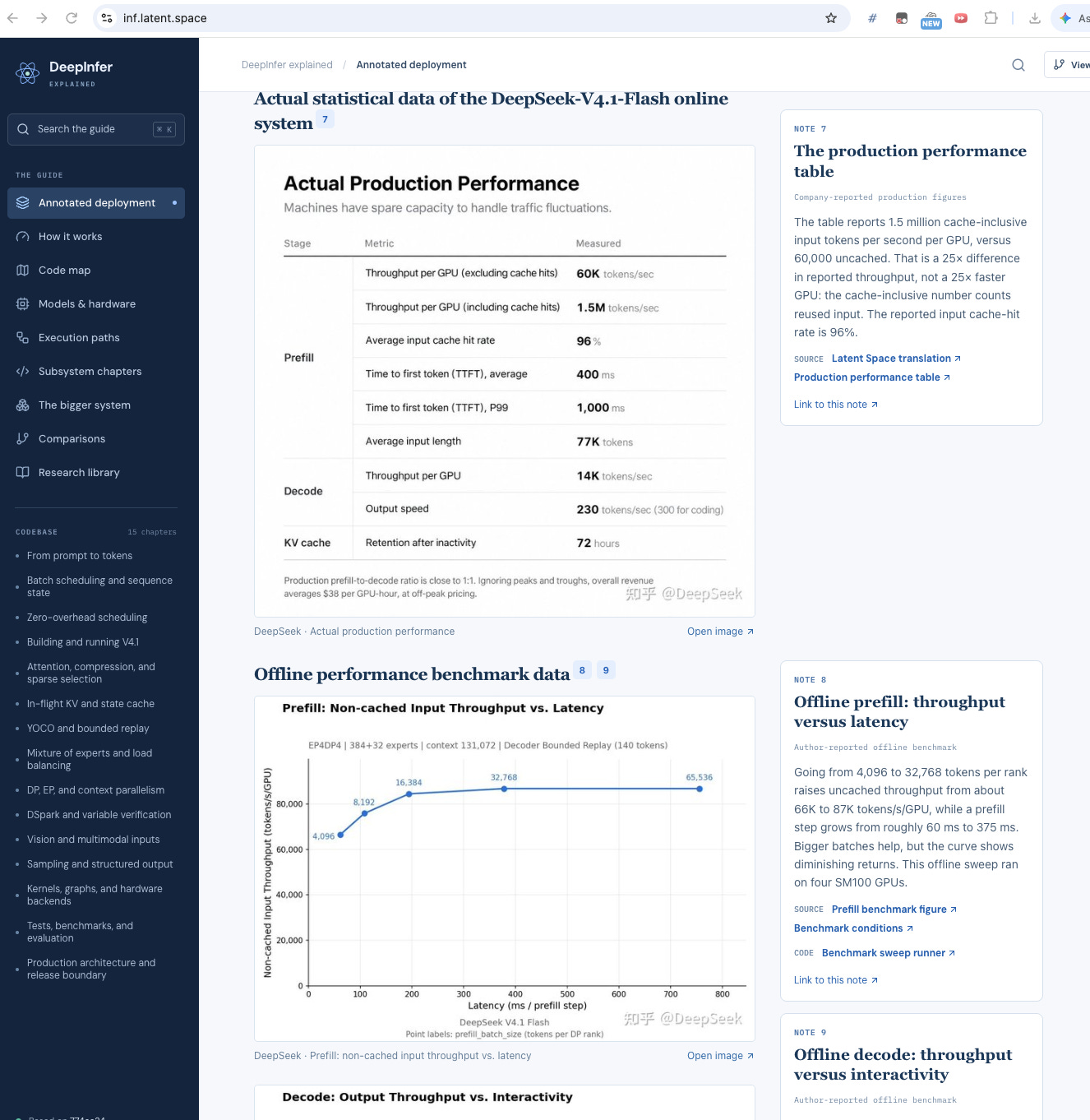
DeepSeek released DeepInfer, the inference engine behind V4.1-Flash, with production figures of 155 trillion t…
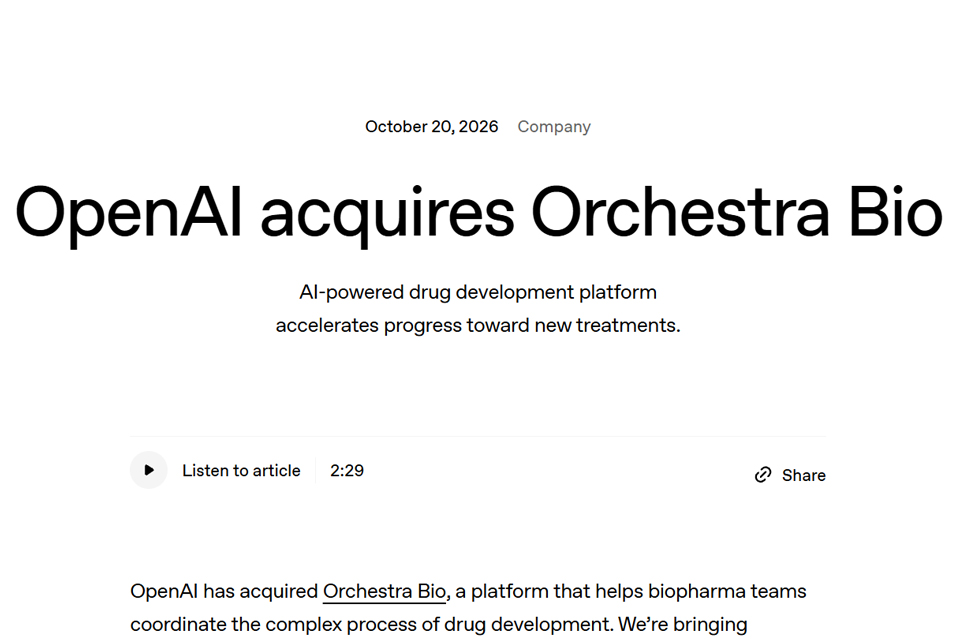
OpenAI acquired Orchestra Bio on October 20 and is integrating its team and drug-development coordination tech…
Hitachi unveiled a prototype GPU cold plate whose "U字トンネル流路" sends coolant straight at the GPU's hot spots, wi…