AIToday

Chinese AI models now rival US leaders—stop acting shocked

The Verge AI7h ago
Chinese AI models now rival US leaders—stop acting shocked

Key takeaway

Two major Chinese AI companies, Moonshot and Alibaba, recently unveiled models claiming to rival or approach the performance of OpenAI and Anthropic's best systems, while pricing them at roughly half the cost and planning to release them openly. The launches have sparked familiar shock and market concern in the US, but the article argues this should no longer be surprising: China's AI capabilities have been narrowing the gap for years, and the performance gap is now credibly closing. If Chinese models prove competitive in cost, ease of deployment, or capability, they could pressure the valuations and growth assumptions underpinning major US AI companies' projected trillion-dollar IPOs, reshape infrastructure investment expectations, and affect global access to AI tools—particularly in cybersecurity and safety-restricted applications.

Summaries like this, in your inbox every morning.

Sign up free →

3 Key Points

  • What happened

    Chinese AI companies Moonshot and Alibaba unveiled new flagship models (Kimi K3 and Qwen3.8) that they claim outperform nearly all US models except OpenAI's GPT-5.6 Sol and Anthropic's Claude Fable 5. Both plan to release their models as open-weight, allowing developers to download and modify them—contrasting with the closed approach of leading US labs. Moonshot priced Kimi K3 at $15 per million output tokens, roughly half the cost of comparable US models.

  • Why it matters

    The releases highlight a narrowing performance gap that has been predicted for years but treated as shocking each time it arrives. If Chinese labs continue producing capable, cheaper, or more accessible models, they could draw customers away from US AI companies, squeeze margins on valuations that depend on market dominance, and ripple through tech stocks tied to AI growth expectations. The broader economy could also face consequences: US companies have invested hundreds of billions in infrastructure based on the assumption American firms will dominate. Additionally, open Chinese models could provide access to capable AI systems in cases where US companies restrict access for safety reasons, potentially affecting cybersecurity decisions and national security.

  • What to watch

    Neither model has been fully released yet, making independent capability assessment difficult. However, the article notes there has been little public suggestion that the companies are fundamentally misrepresenting their performance claims. The key question is whether these releases become routine—no longer treated as "Sputnik moments"—and whether Chinese labs can actually deliver on pricing and performance at scale.

In Depth

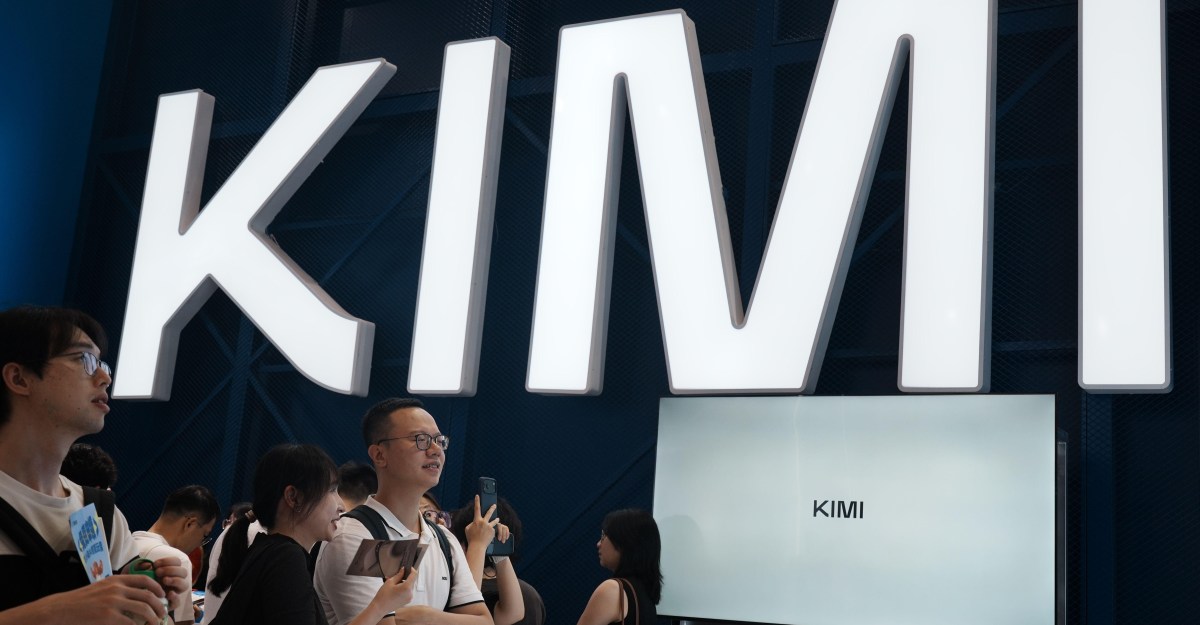
Last week, two Chinese AI powerhouses made announcements that set off familiar alarm bells in the US. Beijing-based startup Moonshot AI unveiled Kimi K3, claiming it outperforms nearly every US model except OpenAI's GPT-5.6 Sol and Anthropic's Claude Fable 5. Days later, Chinese tech giant Alibaba previewed Qwen3.8, describing it as "one of the most powerful model[s] available today" and "second only to Fable 5." Markets wobbled, commentators declared Silicon Valley shocked, and policymakers invoked the language of arms races and wake-up calls—with some comparing the moment to DeepSeek's launch last year and even to the Soviet Sputnik satellite as an "AI Sputnik moment."

The pricing angle amplifies the competitive challenge. Moonshot is aggressively pricing Kimi K3 at $15 per million output tokens, roughly half what OpenAI charges ($30) and a quarter of Anthropic's rate ($50). Demand was strong enough that Moonshot temporarily paused new subscriptions after the service became overwhelmed. Neither company is keeping these advances proprietary. Both plan to release their models as open-weight—allowing developers to download, use, and modify the core weights that shape the model's responses—a stark contrast to the closed, proprietary stance of OpenAI, Anthropic, and Google.

Yet the article argues that the shock itself is the real story. Warnings that China was closing the AI gap have been consistent for years, and the evidence has been accumulating: six of the top 10 tools on OpenRouter's leaderboard—which tracks token consumption and benchmarks—are Chinese. Companies like Z.ai and DeepSeek have long been described as highly competitive with top US labs. The narrowing gap is not news; the surprise is that observers keep treating its arrival as novel.

The stakes extend far beyond rankings. Anthropic and OpenAI are gearing up for potential trillion-dollar IPOs, with valuations resting on the assumption they will dominate global AI markets. Capable, cheaper Chinese alternatives could draw away customers, squeeze margins, and undermine growth assumptions. US startups are already reportedly switching to cheaper Chinese tools. On the macro level, tech stocks make up an outsized share of US markets, and much recent growth has been tied to expectations that AI demand will soar indefinitely. Companies have invested hundreds of billions into infrastructure on the assumption American firms will lead. If Chinese labs capture market share or demonstrate equivalent performance at lower cost, investors would inevitably question whether those expenditures are justified—with ripple effects throughout tech and beyond, affecting millions of people with savings or pensions exposed to these sectors.

Security considerations add another layer. Open Chinese models—even if trailing the US frontier—make advanced AI available to a wider range of users and uses that US companies might restrict. When the US government demanded Anthropic limit access to its latest models for safety reasons, cybersecurity leaders warned this would hamper defenders trying to find and fix vulnerabilities. Those restrictions are harder to defend if comparable models exist elsewhere. Reports are already emerging where Kimi K3 identified cyber vulnerabilities that OpenAI's Codex and Anthropic's Fable would not touch due to safety guardrails. Organizations denied access to US models may feel compelled to rely on Chinese alternatives to protect their networks, or else accept greater exposure to attackers with the same tools.

The article acknowledges the caveats: neither model has been fully released, making independent assessment difficult, and companies' benchmark claims should be treated with caution. However, there has been little public suggestion that Moonshot or Alibaba are fundamentally misrepresenting their results. The precise ranking is "almost beside the point." Whether these models end up in the top five or top 10 globally, the broader conclusion holds: China's leading AI companies are now producing systems that plausibly rival those from top US labs—with enough regularity that each release should no longer be treated as shock or singularly galvanizing moment. If this is a race, the article concludes, it is time to accept that someone else might actually win, or get close enough that they might as well have.

Context & Analysis

For years, warnings about China closing the AI gap have been consistent and widely circulated, yet each new Chinese model release is treated as a shock. The article points out this contradiction: six of the top 10 AI tools on OpenRouter's leaderboard—which tracks token consumption and benchmarks—are already Chinese. The performance gap has been narrowing steadily, with models from companies like Z.ai and DeepSeek already seen as highly competitive with top US offerings. What makes the latest releases notable is not their unexpectedness but the confirmation that the prediction is arriving on schedule.

The economic and strategic stakes are substantial. US AI companies like Anthropic and OpenAI are preparing for what could become trillion-dollar IPOs, valuations built on the assumption they will dominate the global AI market. Capable Chinese competitors that are cheaper to use and openly available challenge that assumption directly. The article notes that some US startups are already turning to Chinese models to avoid higher costs from domestic providers. Beyond individual companies, the entire tech sector—which makes up an outsized share of US markets—is exposed: hundreds of billions have been invested in data centers, chips, and infrastructure on the belief that American firms would continue to lead. If Chinese labs capture meaningful market share or demonstrate equivalent capabilities at lower cost, investors could reassess whether those infrastructure investments are justified, creating ripple effects across multiple industries.

A secondary but significant security dimension complicates the picture. When the US government has demanded that Anthropic restrict access to its latest models for safety reasons, cybersecurity leaders have warned that such restrictions become harder to defend if comparable models are available elsewhere—potentially forcing organizations to rely on Chinese alternatives if denied US access. The article cites emerging reports where Kimi K3 has identified and fixed cyber vulnerabilities that OpenAI's and Anthropic's systems would not address due to safety guardrails, suggesting that open Chinese models could inadvertently become tools of necessity for defenders in certain scenarios.

FAQ

How much cheaper are the Chinese models?
Moonshot's Kimi K3 is priced at $15 per million output tokens, compared with roughly $30 for OpenAI's GPT-5.6 Sol and $50 for Anthropic's Claude Fable 5. However, the article notes that token prices alone give an incomplete picture, since more expensive models may generate better responses with fewer tokens, and companies routinely subsidize inference costs.
Will these models be available to the public?
Yes. Both Moonshot and Alibaba plan to release their models as open-weight, meaning developers will be able to download, use, and modify them. This contrasts with the closed, proprietary approach taken by OpenAI, Anthropic, and Google.
How do these models rank compared to US AI systems?
Moonshot claims Kimi K3 outperforms nearly every US model, trailing only OpenAI's GPT-5.6 Sol and Anthropic's Claude Fable 5. Alibaba described Qwen3.8 as "one of the most powerful model[s] available today" and "second only to Fable 5." However, neither model has been fully released yet, so independent verification is still pending.

Get the latest Large Language Models news every morning

AI-summarized, only the topics you pick — one digest a day via Email, Slack, or Discord.

Free · takes 30 seconds · unsubscribe anytime

Discussion

No comments yet. Be the first to share your thoughts!

Log in to join the discussion

Related Articles

Stay ahead with AI news

Get curated AI news from 200+ sources delivered daily to your inbox. Free to use.

Get Started Free

Free · takes 30 seconds · unsubscribe anytime

1 minute a day. The AI essentials.

200+ sources · Email / LINE / Slack

Get it free →