What happened
Apollo's Torsten Sløk told clients the AI spending race depends on hyperscaler operating cash flow more than tripling, from $600 billion in 2025 to roughly $2 trillion by 2030.
Why it matters
Sløk wrote that if the cash flow does not arrive, the AI trade could weaken, credit spreads widening, capex plans getting cut and ultimately US GDP growth slowing.
What to watch
The concern is how concentrated the market is: thirty S&P 500 stocks touched 52-week lows on Monday versus only seven hitting 52-week highs, and Alphabet reported its first quarter of negative free cash flow since going public.
WHO IT HITSThis lands on investors holding Big Tech and AI-linked equities, and on credit investors watching the $250 billion in global investment-grade debt the hyperscalers are expected to issue by the end of 2026.
Summaries like this, in your inbox every morning.
The AI spending boom has become a major part of the US growth story. So far in 2026, investments tied to the AI build-out have been responsible for roughly one-fifth of US economic growth, per the body. The four leading hyperscalers — Alphabet, Amazon, Meta, and Microsoft — are expected to spend roughly $800 billion in capital expenditures this year, ten times their 2019 spend, according to Goldman Sachs.
That spending has been financed increasingly from the debt market. The hyperscalers are expected to issue $250 billion in global investment-grade debt by the end of 2026. Pushing them there is a shortage of cash: in July, Alphabet reported its first quarter of negative free cash flow since going public as Google in 2004. Wall Street consensus now expects operating cash flow to grow from $600 billion in 2025 to roughly $2 trillion in 2030, per data compiled by Apollo Global. Sløk wrote that if this does not happen, the AI trade could weaken, with credit spreads widening, capex plans getting cut and ultimately US GDP growth slowing.
The market's reliance on the AI trade showed in Monday's trading. The Nasdaq Composite surged 2.3% to close at an all-time high, while the S&P 500 gained 1.5%, yet thirty S&P 500 stocks touched 52-week lows versus only seven reaching 52-week highs. Morgan Stanley analysts led by Michael Wilson wrote on Monday that the outlook for AI capex is strong, citing robust compute demand, adopters seeing evidence of spending benefits, rising computer lease rates, and potential "material benefits to human welfare." Whether the cash flow materializes as expected — and whether market breadth widens beyond the AI trade — seems likely to shape how long the rally holds.
For example, today's edition would include:
AI-summarized, only the topics you pick — one digest a day via Email, LINE, or Slack.
Free · 30 seconds with Google · unsubscribe anytimeWhat is AIToday? →
Ask AI anything about this article. Q&As are published on this page for other readers too.
In a 46-minute interview on CBS, Nvidia CEO Jensen Huang pushed back against apocalyptic warnings about AI and…
China's 15th Five Year Plan (2026-2030) makes embodied AI a top priority, with subsidies and humanoid training…

LG Energy's battery energy storage system (BESS) has qualified into Nvidia's AI Factory ecosystem
China's internet regulator is reportedly investigating DeepSeek and Moonshot AI over allegations they routed m…

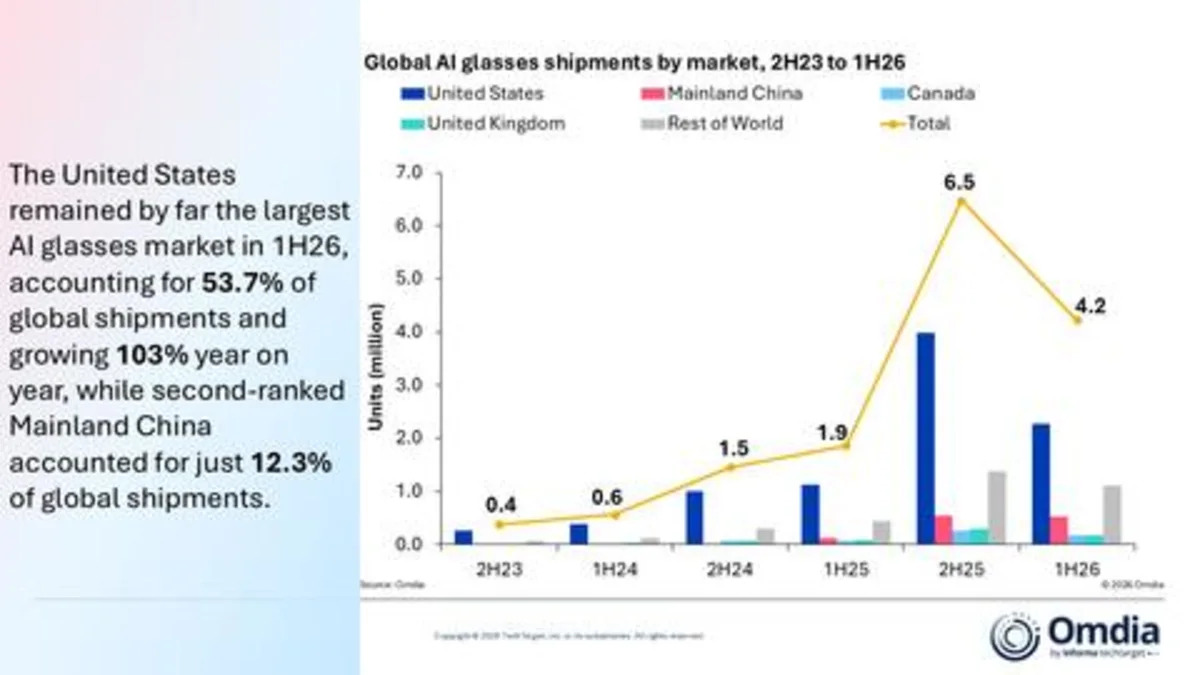
Omdia says global AI glasses shipments reached 4.2 million units in 1H26, up 127% year-on-year, with Meta ship…
AeroVironment's quarter brought confirming data — EHEL awarded, a LOCUST international sale announced, and Tit…