What happened
Tianyu Zhang, a software engineer at Walmart, describes how AI coding tools evolved from experimental to deeply integrated across her roles, including work on Shop With Friends, Modular Intelligence, and now the Ship With Walmart team.
Why it matters
AI tools like Wibey, Walmart's internal agent platform, now let engineers scaffold services, generate unit tests, and debug CI/CD pipelines with natural language prompts, dramatically accelerating productivity and lowering the barrier to development.
What to watch
The test is whether demand shifts from hands-on coding toward system architects who can orchestrate AI-driven workflows, with engineers still needed to validate generated code for company-specific logic. Zhang’s prediction hinges on how quickly AI tools become a core part of everyday development.
Ask the AI about this article →
Summaries like this, in your inbox every morning.
Tianyu Zhang's career at Walmart spans three distinct phases, showing how AI coding tools matured from experimental to essential. In her first tenure on Shop With Friends, AI tools like GenAI Playground were primarily for early model training, not production code. Later, under Modular Intelligence, tools like Cursor were considered unstable, often running out of usage quota and lacking memory for effective debugging. By her recent work with Ship With Walmart, AI has become deeply embedded, with internal platforms like Wibey enabling tasks once requiring extensive system knowledge.
Zhang's perspective underscores a key shift: AI is not replacing engineers but augmenting them. She envisions engineers becoming 'super engineers,' taking on multiple roles, while repetitive tasks shift to AI, increasing demand for system architects. However, she cautions that engineers must still validate AI-generated code, especially when business logic depends on company-specific context, noting that AI can 'overcorrect' functional logic in specific scenarios.
Walmart's heavy investment in internal AI tooling, from Code Puppy to Wibey, reflects a broader trend of enterprises developing custom AI solutions tailored to their workflows. For business readers, this highlights how large companies are leveraging AI to enhance productivity and efficiency, while also pointing to the evolving skill set required for engineering roles in the future.
For example, today's edition would include:
AI-summarized, only the topics you pick — one digest a day via Email, Slack, or Discord.
Free · 30 seconds with Google · unsubscribe anytimeWhat is AIToday? →
Ask AI anything about this article. Q&As are published on this page for other readers too.
Nvidia Corp. CEO Jensen Huang said artificial general intelligence has arrived, following OpenAI's launch of G…

Saudi Arabia's state-backed AI company HUMAIN, led by CEO Tareq Amin, is positioning itself as a neutral hub f…

Alibaba's research division released Qwen-Drive 1.0, an AI model that handles spatial perception, traffic Q&A…
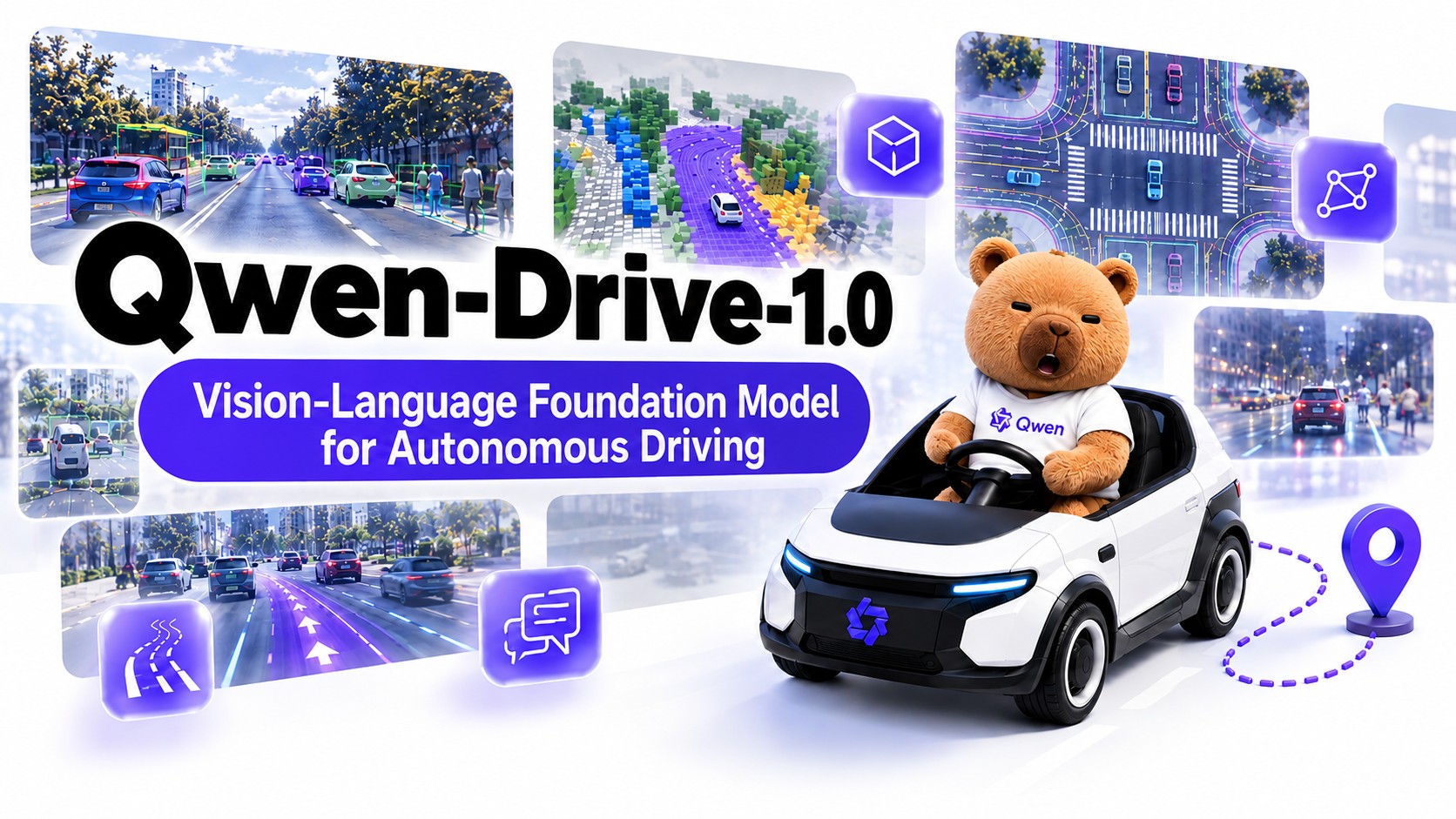
NoMac.App launched a publishing pipeline for iOS apps that runs entirely in the cloud, handling builds, TestFl…
A developer tested whether ChatGPT would judge the same remote-work scenario differently when only the subject…

Google DeepMind ran 100 autonomous LLM agents using Gemini 3.1 Pro on 71 math problems