What happened
Anthropic's new study says that if robot prices decline along past trends, it will take 40 years for robots to replace just 10% of job tasks, citing capabilities, preferences and regulations as further barriers.
Why it matters
The findings suggest blue-collar workers may have decades before automation reaches them, giving more time for collective action through private-sector and public-policy efforts.
What to watch
Apollo chief economist Torsten Sløk echoed the takeaway, writing that widespread physical labor displacement will take decades even under aggressive projections; the range of expert timelines remains the key uncertainty.
WHO IT HITSBlue-collar workers who may face automation, and the policy makers and union organizers planning around those timelines, are the ones most directly affected by the study's stretched forecast.
Summaries like this, in your inbox every morning.
The debate over humanoid robots has largely focused on safety, but the sharper disagreement is about timing. Anthropic's new study lands on the far end of that spectrum, concluding that if robot prices decline along past trends, it will take 40 years for robots to replace just 10% of job tasks. The report adds that beyond price, factors including capabilities, preferences and regulations pose further barriers to robot automation.
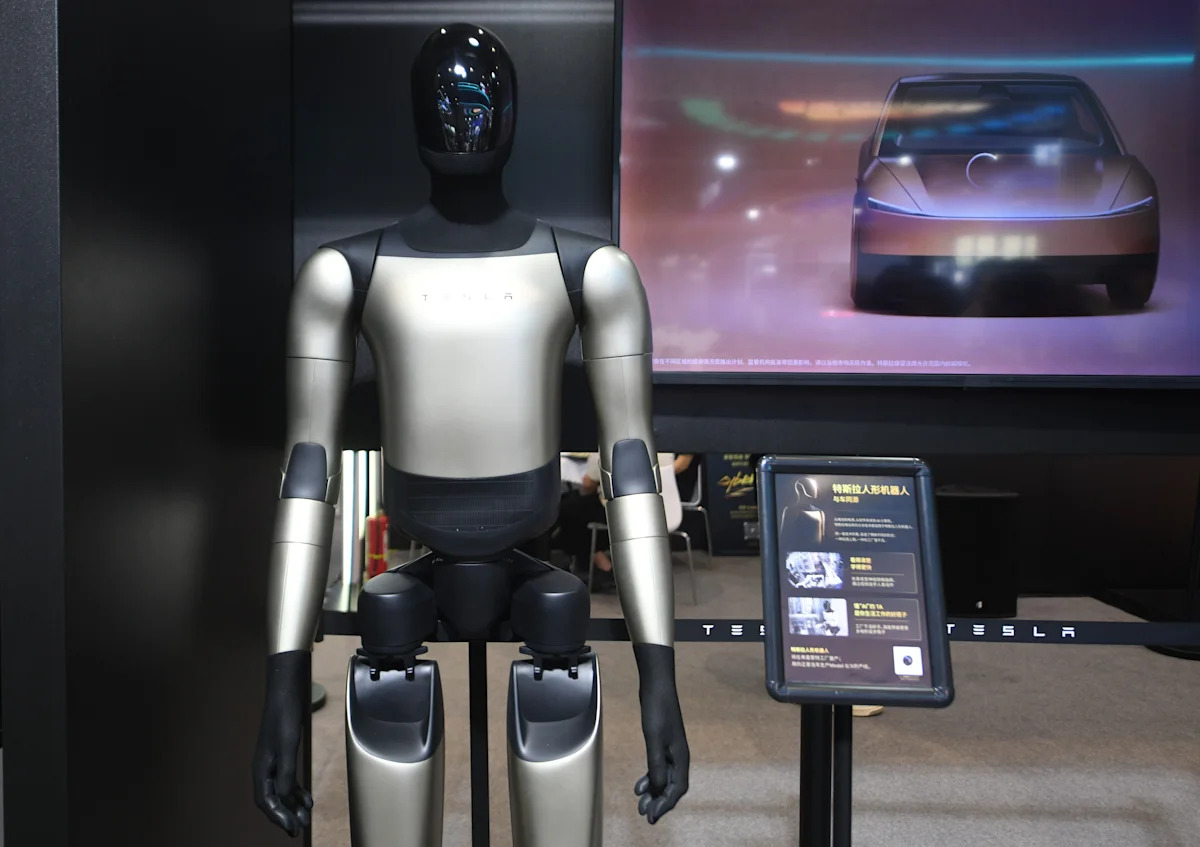
That conclusion sits in contrast to more optimistic projections. Nvidia CEO Jensen Huang predicted at CES in January 2026 a coming "ChatGPT moment" for robotics, and Tesla CEO Elon Musk has said the Optimus robot will go on sale as early as next year. A Morgan Stanley research report from 2025 forecasts the humanoid robot market could surpass $5 trillion by 2050. Other experts, such as Apollo chief economist Torsten Sløk, have echoed Anthropic's longer view, writing that widespread physical labor displacement will take decades even under aggressive projections.
The divergence reflects a broader tension between fast-moving software and slower hardware. The study's implication for workers and policy makers hinges on whether robot prices continue their historical decline, and on how quickly other barriers fall. Anthropic's findings suggest the timeline may be longer than many in the industry assume, though the wide range of expert forecasts leaves the exact pace of change an open question.
Pick your industry and the AI tools you use, and get news related to your work every day.
Free · 30 seconds with Google · unsubscribe anytimeWhat is AIToday? →
Ask AI anything about this article. The AI reads this article, earlier AIToday articles, and Wikipedia, and cites its sources. Q&As are published on this page for other readers too.
Meta will link Naver Map's walking-navigation feature to its Ray-Ban Meta and Oakley Meta AI glasses in 2026…

Flow Engineering announced a $50 million Series B at a $750 million valuation, co-led by Antonio Gracias and G…
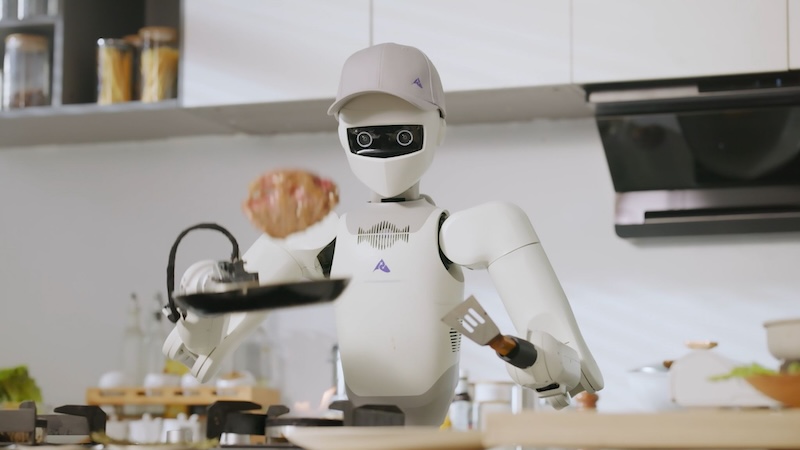
Astribot debuted its T1 humanoid to North America at IROS 2026, held September 27 to October 1 in Pittsburgh…
Ramp economist Ara Kharazian says US firms are spending less on AI even as usage rose about 50 percent from Ju…

ELYZA said it is launching "ELYZA RSI Research", and that for LLMs of 100 billion parameters or fewer it has r…

NTT AI-CIX began offering BUNTANT on October 1