What happened
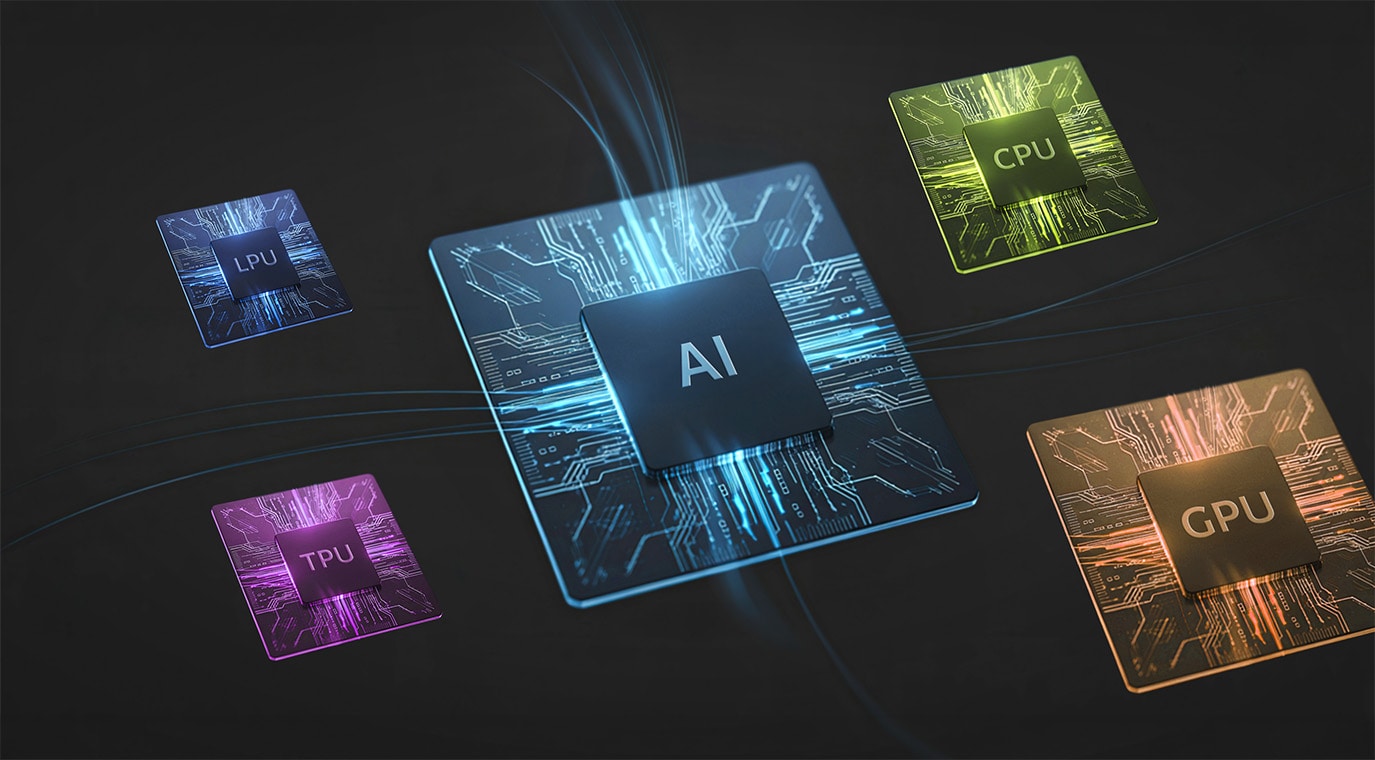
AI accelerators that once centered on GPUs now include CPUs, LPUs, and more. Companies like AMD, Google, and startups such as Cerebras and Groq are developing cloud AI chips, while EdgeCortix and SiMa.ai target edge AI.
Why it matters
As AI evolves from deep learning to generative and agentic AI, chips must handle varied tasks. CPUs suit agentic workflows, and LPUs like Groq's speed up token generation. NVIDIA's CUDA software strength keeps it leading in semiconductor sales.
What to watch
AMD's Helios with 6thGen EPYC and MI400 GPUs, paired with Cerebras's Wafer Scale Engine 3, achieved 5x faster token generation speed (Tokens/second/W). EdgeCortix's SAKURA-II offers 60TOPS at 10W, and SiMa.ai's Modalix device costs about 20万円 (Japanese yen).
Summaries like this, every morning.
The article traces AI chip evolution from 2012, when Geoffrey Hinton's lab showed GPUs cut image recognition errors, a moment NVIDIA's CEO calls the 'big bang of AI.' That breakthrough led to deep learning and later generative AI, but training took hundreds of days even with thousands of GPUs. This demand for performance drove innovation beyond NVIDIA, yet NVIDIA's lead persists partly because its CUDA software ecosystem makes its chips easier to use. Now, with agentic AI, the article argues CPUs are better suited for workflow-driven tasks, and with physical AI, edge devices need on-device generative capabilities. This diversity means no single chip type dominates. However, designing advanced AI chips at 2nm is so complex that only a few design houses may handle it. That could limit which companies can produce data-center AI chips, potentially benefiting firms like Broadcom, Marvell, MediaTek, and Japan's Socionext, possibly aiding efforts to revive Japan's semiconductor industry.
Pick your industry and the AI tools you use, and get news related to your work every day.
Free · 30 seconds with Google · unsubscribe anytimeWhat is AIToday? →
Ask AI anything about this article. The AI reads this article, earlier AIToday articles, and Wikipedia, and cites its sources. Q&As are published on this page for other readers too.
Nvidia open-sourced Flora, a data engine of three fine-tuned Qwen3.5 models that covers all three label types…
Anthropic published 'Claude-shaped science' on October 1, 2026, describing Matthew Schwartz's open-source Boot…

Authentic Brands Group filed suit against Anthropic, alleging Claude was trained on 274 Presley songs, from "A…

Jack Clark, who co-founded Anthropic, now believes recursive self-improvement could become possible as early a…

Anthropic says a single agent that loads context on demand often beats multi-agent setups on quality, cost and…

Rippling CEO Parker Conrad said OpenAI's share of its coding workload rose from 16 to 52 percent, while Anthro…