What happened
Microsoft said on October 21 that attackers tied to China's government are automating intrusions with ARTEX, an open-source AI penetration-testing tool its Chinese-speaking author published on GitHub and later pulled, citing 'learning and research' purposes.
Why it matters
ARTEX lets AI agents run an intrusion from a simple goal, so the tool turns penetration testing into a push-button attack capability, making the author's stated research purpose hard to contain.
WHO IT HITSSecurity teams at companies exposed to public-facing web services may now face automated intrusion attempts that require fewer skilled attackers, and defenders will need to watch for agent-driven attack chains rather than only known malware signatures.
Summaries like this, every morning.
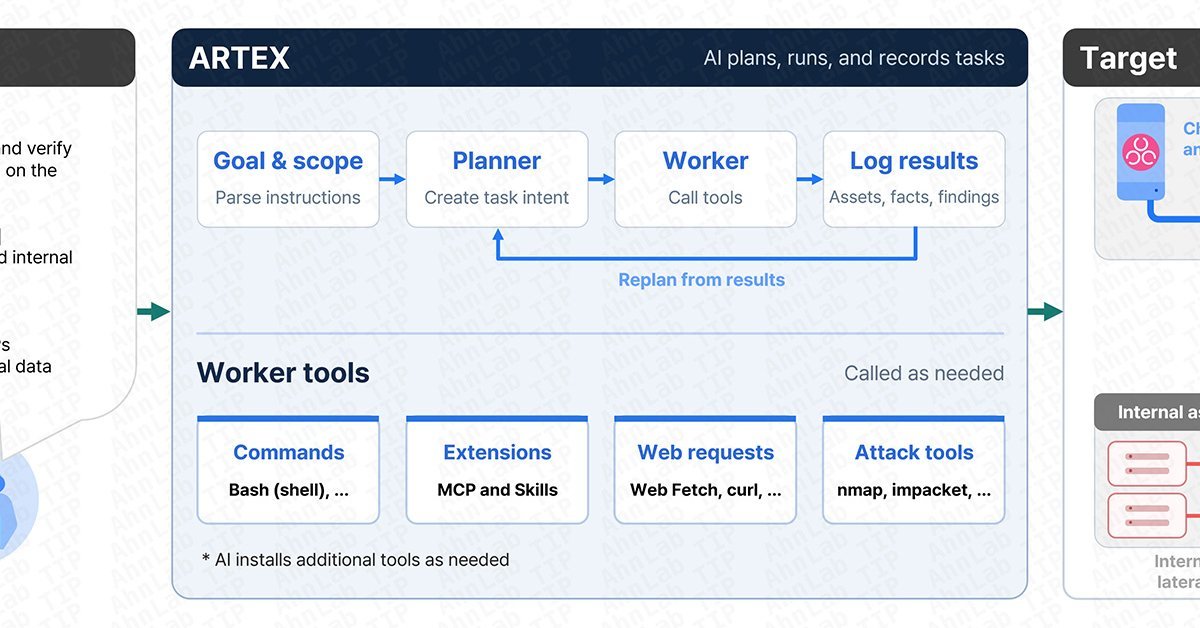
ARTEX matters less as a single tool than as a template. Its architecture splits the work among a Goals agent that organizes the objective, a Planner that decides the next task, and a Worker that executes tools, with the Planner adjusting based on what the Worker reports. That design means a user supplies only a target and an objective, and the system selects and runs the appropriate tools on its own.
AhnLab's isolated test showed the practical result: a plain instruction such as 'intrude into the attack target' was enough to reach remote command execution through a web server's file-upload function, with no human in the loop. The author's October 8 statement said the tool was built for academic research and authorized security testing and that the attacks were unrelated to him, and he stopped updating and publishing the project.
The removal did not end the story. AhnLab found that modified versions based on the code were being distributed, and it described ARTEX as something multiple operators reuse and redistribute rather than a single project. That points to a defensive challenge that outlasts any one repository: the capability is now loose in the wild, and the response AhnLab recommends is to tighten exposure, minimize privileges and catch the intrusion flow as it moves inward.
Pick your industry and the AI tools you use, and get news related to your work every day.
Free · 30 seconds with Google · unsubscribe anytimeWhat is AIToday? →
Ask AI anything about this article. The AI reads this article, earlier AIToday articles, and Wikipedia, and cites its sources. Q&As are published on this page for other readers too.
1Password unveiled 1Password for Agents, which lets an AI agent request credentials from a user's vault and, o…
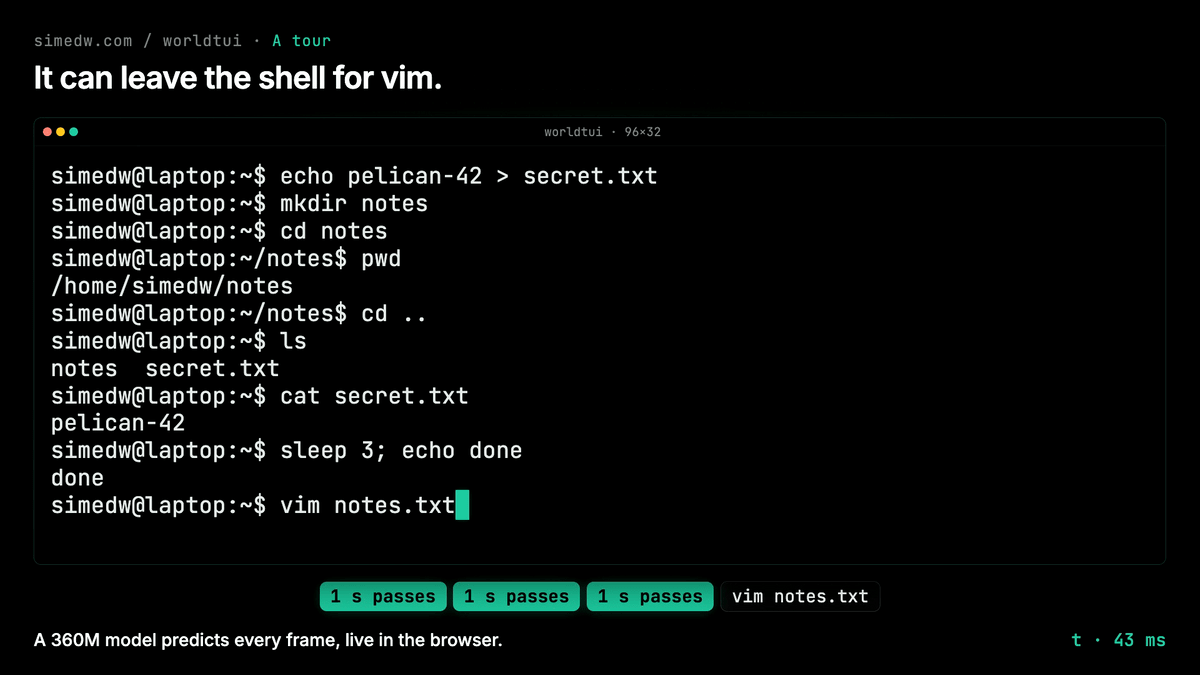
Developer Simon Edgerson published WorldTUI, which uses a roughly 360M-parameter model to predict the next ter…
A new paper found Raw-RAG—dense retrieval over raw history—ranked first in 6 of 7 benchmark-model settings on…

Nvidia has won a CPU supply order from AI startup Modal for its Vera CPU, moving beyond GPUs into general-purp…
In a Google blog post summarizing the video "The Agent Factory" on Sept 25, 2026, Ryan Lopopolo defined an age…

ModelCompare asked 12 AI models three times each for their most controversial view of humans; all 12 gave the…