What happened
KiteRa's survey of 1,206 employees at AI-agent-using companies found 13.4% had experienced policy or legal violations, or near-misses, from agents referencing old or unclear-version data; 8.0% saw company damage.
Why it matters
AI agents leaning on stale internal rules appear to pose real compliance and financial risk, not just minor errors, while about half of respondents admitted feeding internal rules or data into unapproved or unclear-permission AI tools.
What to watch
The survey was released September 3, 2026, and covered 1万1075人 in August 2026 — no further scheduled step is stated.
WHO IT HITSCompliance, legal and IT governance teams at companies rolling out AI agents are the ones who would need to verify that the rules and data those agents pull from are current. Employees using unapproved AI tools, especially at large firms with 1,001 or more staff, add a shadow-AI exposure that IT may not see.
Summaries like this, in your inbox every morning.
KiteRa, which provides internal-rules SaaS, ran the fourth volume of its GRC survey to look specifically at data governance. The finding that 13.4% of respondents had brushed against rule or law violations, and 8.0% saw damage to their company, points to where AI agents can go wrong: not in the model's reasoning, but in the documents it is allowed to read. Old internal rules and data whose latest version is unclear become the basis for everyday decisions and processing.
The survey also shows how far that data travels outside official channels. Shadow IT was reported by 44.9%, shadow AI by 38.7% and shadow data by 36.2%. Roughly half of respondents, 49.7%, had entered or shared internal rules or data with AI tools their company had not approved, or whose approval status they did not know. Among employees at companies with 1,001 or more staff, 42.6% reported doing so.
KiteRa's reading is that the accuracy and freshness of the information an AI references can affect not only routine judgment and processing but also policy and legal compliance and corporate risk. The survey also found that about 31.1% of workplaces are using or verifying AI agents, while 36.1% are not using or considering them and 27.9% do not know.
Pick your industry and the AI tools you use, and get news related to your work every day.
Free · 30 seconds with Google · unsubscribe anytimeWhat is AIToday? →
Ask AI anything about this article. The AI reads this article, earlier AIToday articles, and Wikipedia, and cites its sources. Q&As are published on this page for other readers too.
Anthropic's Frontier Red Team said models of 30B parameters or fewer could self-replicate on everyday IoT devi…
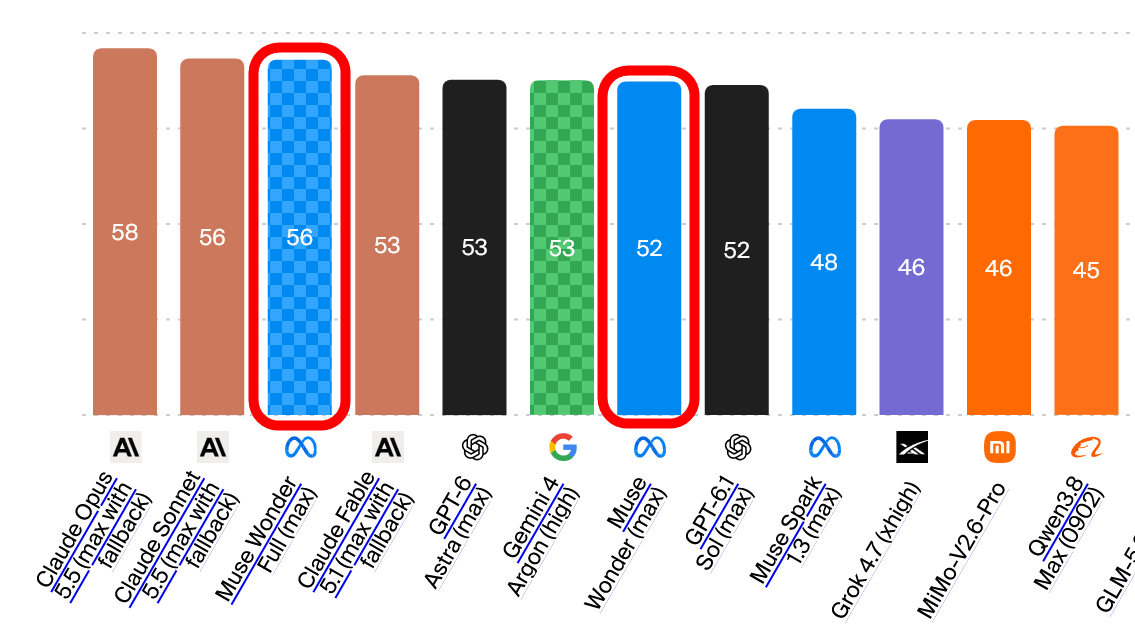
Meta announced Muse Wonder and Muse Wonder Full, its top AI models, with Muse Wonder available now via Meta Mo…

At TOKEN2049 in Singapore, Nansen CEO Alex Svanevik told Fortune that by 2028, trading with agents will be the…
Meta announced Muse Wonder and Muse Wonder Full on October 12, 2026
Dell's Helen O'Sullivan said Bay Area customers are exhausting token budgets allotted for months within a matt…

At an October 7 briefing for Japanese media, OpenAI's Chris Lehane said pausing development and pacing it must…