What happened
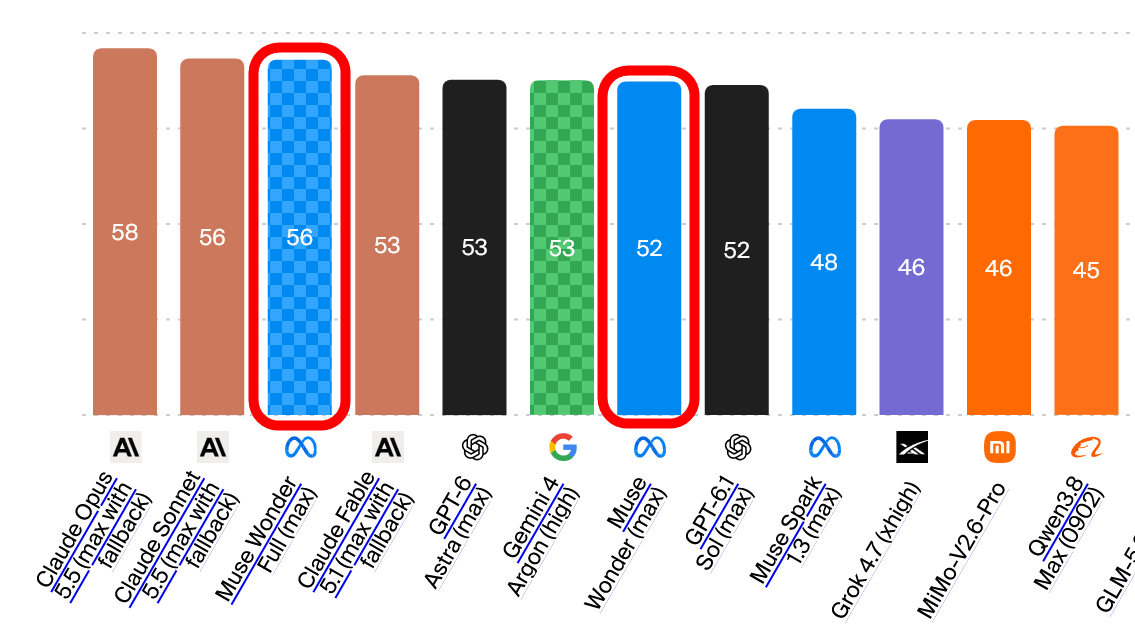
Meta announced Muse Wonder and Muse Wonder Full on October 12, 2026. The models scored 52 and 56 on the Artificial Analysis Intelligence Index, and Muse Wonder Full beat Anthropic's Claude Fable 5.1, OpenAI's GPT-6 Astra and Google's Gemini 4 Argon.
Why it matters
Meta's Muse series has reached frontier-class performance in about half a year, matching the flagships of Anthropic, OpenAI and Google on a leading composite benchmark.
WHO IT HITSEnterprises buying AI subscriptions or building on APIs now have a fourth frontier-class vendor to evaluate alongside Anthropic, OpenAI and Google, which may affect pricing and procurement decisions. Developers using paid coding assistants may see Meta's Muse series as an alternative.
Summaries like this, in your inbox every morning.
Meta's Muse series has moved quickly. Alexandr Wang said the company originally shipped Muse Spark in April, and that Meta has continued to scale its models across pre-training and reinforcement learning, now reaching the frontier. The October 12, 2026 launch of Muse Wonder and Muse Wonder Full shows that roughly six months of scaling work has been enough to put Meta's models alongside the flagships of Anthropic, OpenAI and Google on the Artificial Analysis Intelligence Index.
Meta is also tying the models' capabilities to two named concepts. Active memory is the ability to record important items about a user and actively search for task-relevant details, while active focus is the ability to keep working on difficult tasks by exploring alternatives and adapting to new information. Meta says the Muse Wonder series combines these two to deliver strong coding ability, and that it also tracked safety metrics such as the rate of executing unapproved code and mishandling personal information, where Meta's models show lower rates than those of Anthropic and OpenAI.
Access is being kept to Meta's paid Muse Code subscription for both models, while Muse Wonder is additionally available through an API. The API pricing Meta lists is $4 per 1 million tokens for input, $0.20 for cached input and $20.00 for output. For businesses already paying for rival coding assistants, this launch gives them a new option to test, though which model performs better on any specific workload is not something the benchmarks alone settle.
Pick your industry and the AI tools you use, and get news related to your work every day.
Free · 30 seconds with Google · unsubscribe anytimeWhat is AIToday? →
Ask AI anything about this article. The AI reads this article, earlier AIToday articles, and Wikipedia, and cites its sources. Q&As are published on this page for other readers too.
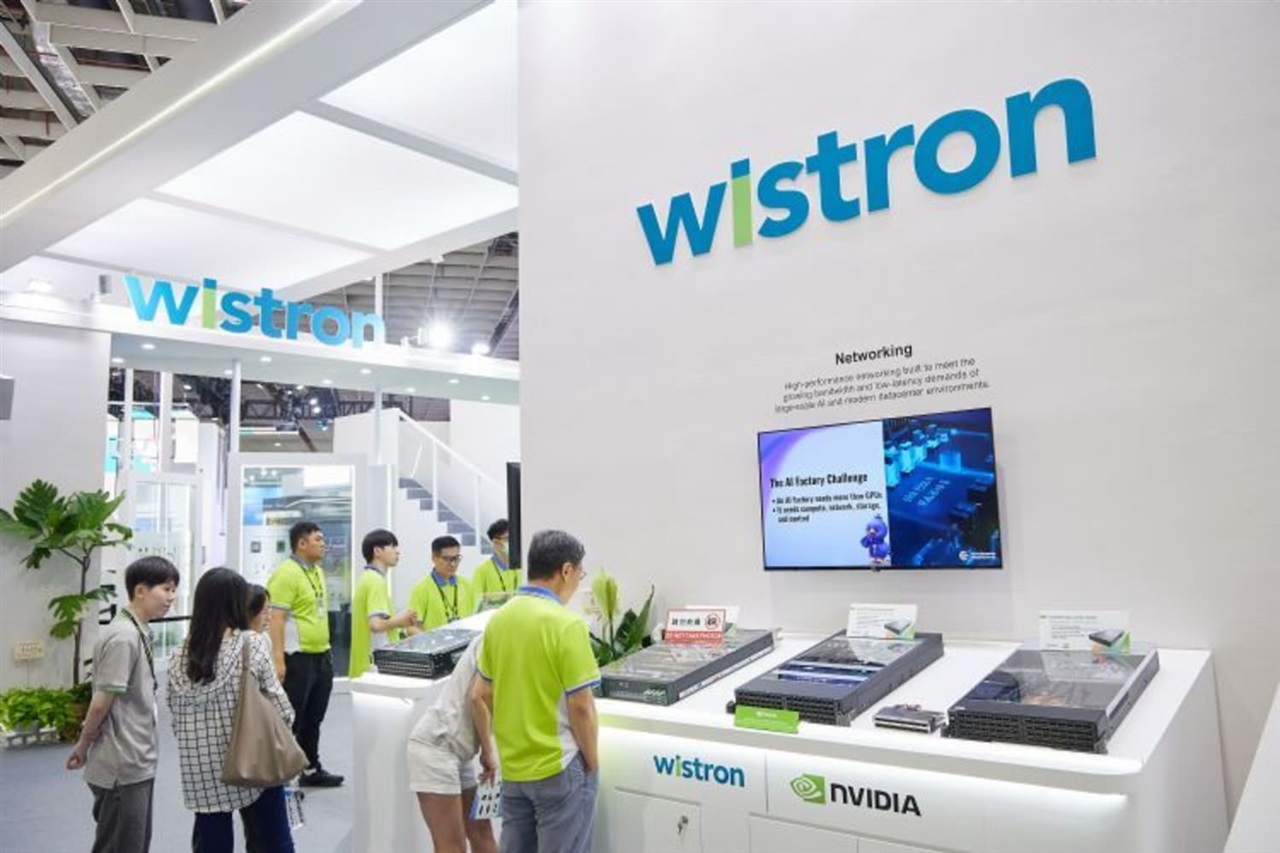
Wistron and Wiwynn are showcasing next-generation AI compute and storage systems for AI factories at the 2026…
KiteRa's survey of 1,206 employees at AI-agent-using companies found 13.4% had experienced policy or legal vio…

At Oracle AI Forum on October 6, 2026, Oracle Japan's president Mitsuzawa Tomomitsu said the company is not cu…

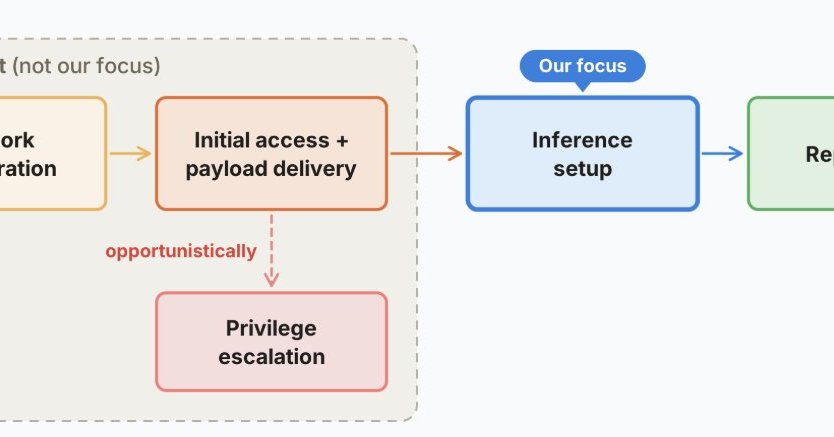
Anthropic's Frontier Red Team said models of 30B parameters or fewer could self-replicate on everyday IoT devi…
On October 8, the Financial Times reported OpenAI's annualized revenue was about $50 billion, roughly $20 bill…
Meta announced Muse Wonder and Muse Wonder Full, its top AI models, with Muse Wonder available now via Meta Mo…