What happened
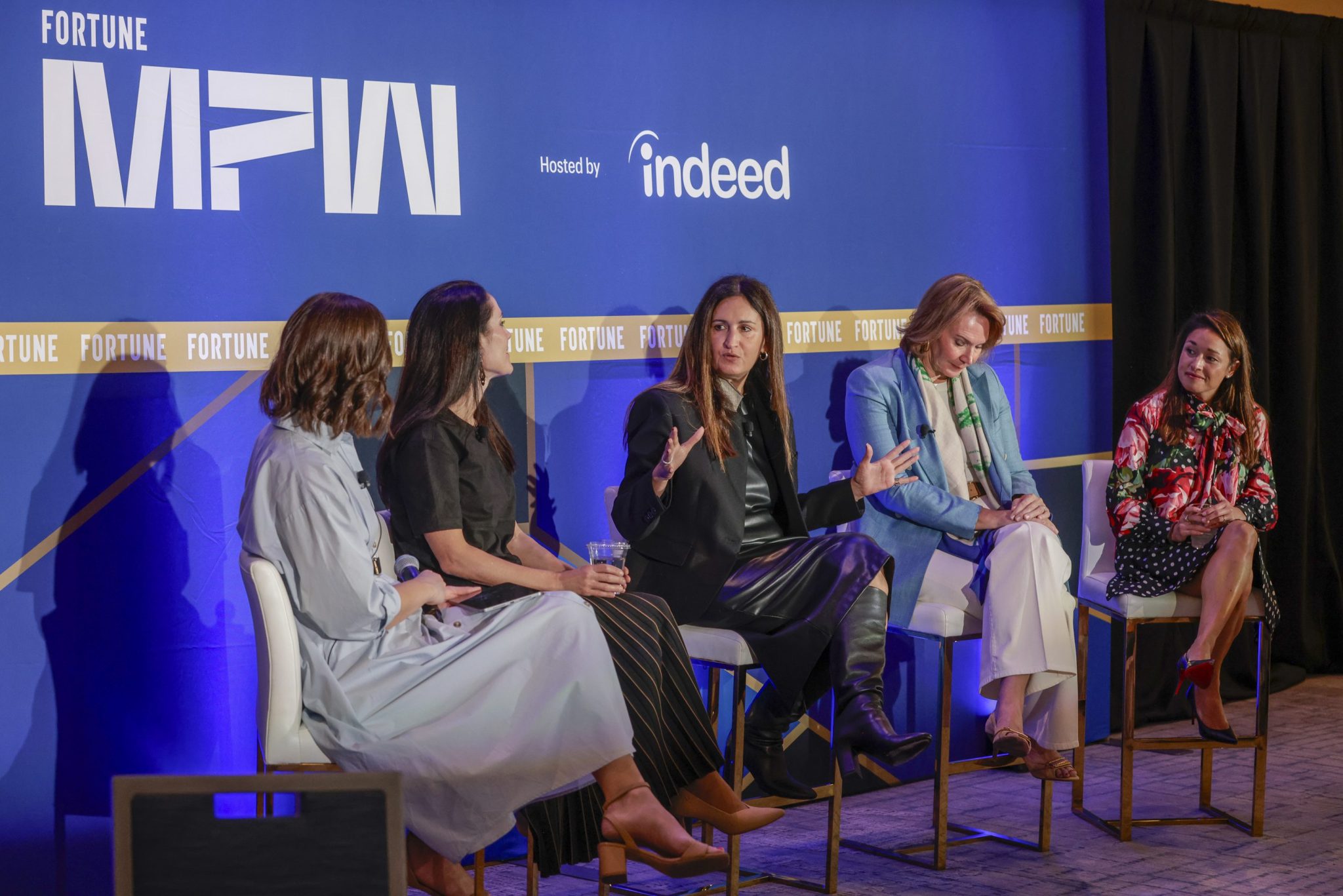
At the Fortune Most Powerful Women conference last week, leaders from PepsiCo, Indeed, Dropbox and Bristol Myers Squibb discussed rethinking AI's value beyond immediate financial returns. Bristol Myers Squibb is exploring a "well-being quotient" to split AI-driven productivity gains between the business and employees.
Why it matters
The debate signals that some executives are looking past short-term ROI and toward how AI's time savings affect workers, with PepsiCo's Athina Kanioura calling relentless ROI pressure "death by a thousand cuts."
Summaries like this, in your inbox every morning.
The discussion comes as companies race to capitalize on AI efficiency gains. Athina Kanioura of PepsiCo argued that requiring a business case for every AI application risks overlooking harder-to-quantify benefits, describing the relentless pursuit of ROI as "death by a thousand cuts." That view sits alongside data showing U.S. employees who frequently use AI report higher burnout rates than those who don't, according to 2026 Quantum Workplace data.
At Indeed, AI is already delivering measurable gains, and the company is looking to redirect the saved time toward creative work. Dropbox, meanwhile, is examining the risk of "cognitive atrophy" as workers outsource thinking to AI, introducing memory exercises and attention-span training. Bristol Myers Squibb is weighing how much of the productivity from automating "joyless" work should go back to employees to support well-being, though Poole said the company has not solved the split.
Pick your industry and the AI tools you use, and get news related to your work every day.
Free · 30 seconds with Google · unsubscribe anytimeWhat is AIToday? →
Ask AI anything about this article. The AI reads this article, earlier AIToday articles, and Wikipedia, and cites its sources. Q&As are published on this page for other readers too.
Motive launched Agents, autonomous AI that resolves compliance, maintenance and safety issues without human in…

DBS CEO Tan Su Shan said shortages in memory, chips and power will soon extend to capital, and that AI users w…
Anthropic said it would commit 5% of its shares — potentially more if it hits unspecified revenue targets — to…
Two data center and neocloud executives told The Information that only seven to ten of the hundreds of AI clou…
Anthropic plans a fund holding 5% of its shares, with possible direct payments to workers displaced by AI; CEO…

Bank of America's Savita Subramanian said the weighted average cost of capital for hyperscalers is now 10%, up…