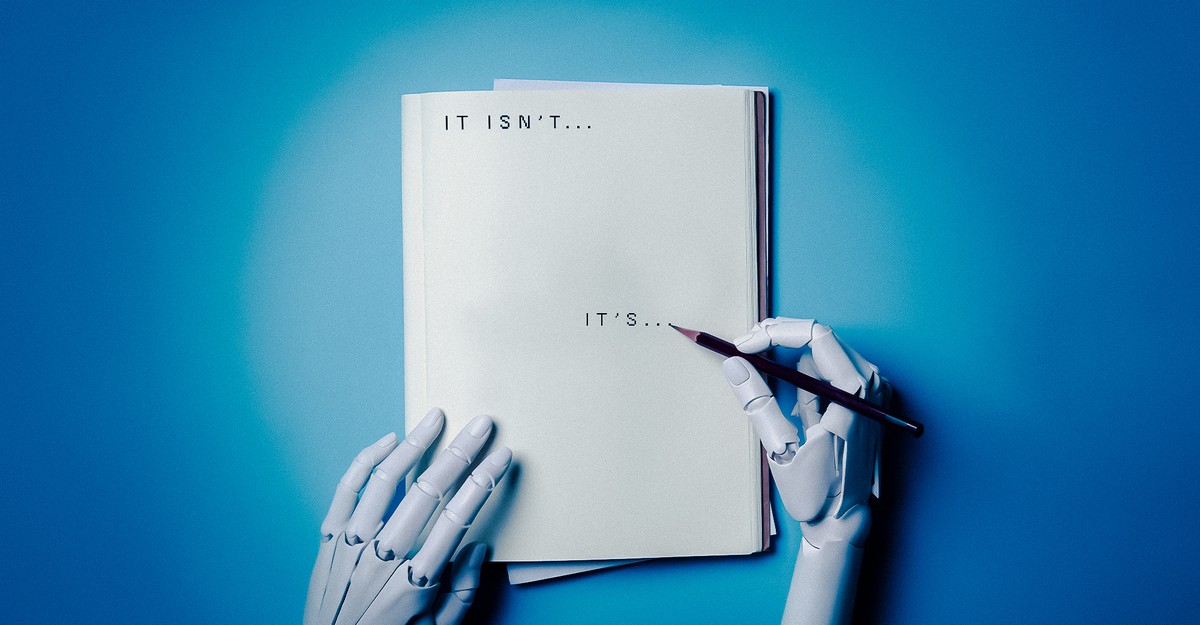
AI chatbots have developed an unmistakable writing habit—saying what something is not before saying what it is ("It's not X; it's Y")—that appears three times more often in their output than in human writing.
While researchers and companies like OpenAI recognize the pattern and acknowledge it makes text sound formulaic, they cannot explain precisely why models developed it or how to eliminate it, raising concerns that the tic may become permanently embedded as new AI systems train on older, already-infected AI text.
What happened
A rhetorical device—the "It's not X; it's Y" construction—has become the most recognizable hallmark of AI writing, appearing three times as often in AI text as in human writing. The pattern showed up in corporate communications more than quadrupled from 2023 to 2025, and all major chatbots including ChatGPT, Claude, and Gemini rely on it to varying degrees.
Why it matters
The prevalence of this single tic makes AI-generated text easier to spot, but it also signals a deeper problem: even the companies that built these models don't fully understand why the pattern is so deeply embedded or how to remove it. OpenAI's product manager acknowledged ChatGPT uses it too often, making output feel formulaic, yet fixing it may be nearly impossible because newer AI models train on text generated by older models—many of which are saturated with the construction.
What to watch
Researchers warn of potential "model collapse," where AI systems reinforce their own writing patterns so heavily that they lose connection to human-written training data. Meanwhile, humans are starting to pick up the tic in spontaneous conversation, which could eventually blur the line between AI and human writing rather than clarify it.
The construction "It's not X; it's Y" is ancient. Shakespeare deployed it repeatedly in Julius Caesar: "The fault, dear Brutus, is not in our stars, but in ourselves," "Not that I loved Caesar less, but that I loved Rome more," and "I come to bury Caesar, not to praise him." Vince Lombardi used it in the 1960s ("winning isn't everything; it's the only thing"), and DiGiorno ran it in 1990s pizza commercials ("It's not delivery. It's DiGiorno").
Yet in the age of generative AI, this rhetorical device has become inescapable—and unmistakably artificial. Barron's documented the shift: appearance of the pattern in corporate communications more than quadrupled from 2023 to 2025. Researchers at Pangram, which builds AI-detection software, estimate it appears three times as often in AI writing as in human writing. All major chatbots—ChatGPT, Claude, Gemini, and various open-source models—rely on it to varying degrees, according to Elyas Masrour, a founding engineer at Pangram. The horror novel Shy Girl, pulled by its publisher this year, drew accusations of AI authorship partly because of phrases like "No bag, no things, no armor, just me." (The author denied using AI.) The construction is now the best-known tic of AI writing, so recognizable that a tech writer observed Shakespeare might have faced similar accusations had he debuted this year.
Yet no one—not even the companies that created these models—appears to know exactly why the pattern took root or how to uproot it. Laurentia Romaniuk, a product manager for model behavior at OpenAI, confirmed that ChatGPT "turns to it too often," making output feel formulaic, and said the company is working on ways to broaden its repertoire. She suggested users try "custom instructions" as a workaround. Anthropic and Google did not respond to interview requests. The term itself has no agreed-upon name; researchers and engineers now call it "negative parallelism," though academic terms like "antithesis" and "metalinguistic negation" capture only some forms of the construction.
Three main theories explain why models became so dependent on it. The simplest: negative parallelism was present in the vast text used to train large language models—books, academic papers, patent filings, and especially the internet—so models learned the pattern. But during reinforcement learning (the process where human reviewers grade responses), reviewers may have favored responses using the construction because it gives an impression of nuance: the AI seems to reason from a subpar descriptor to a more apt one. A second, stranger theory points to how language models work. They are fundamentally text-prediction machines generating one "token" (chunk of text) at a time, seeking a balance between clever and obvious word choices. When a chatbot has begun a characterizing sentence, the path of least resistance is to say what the subject isn't (X) first, then what it is (Y). After "This is not just," the choice of X (the obvious, negated descriptor) becomes likely, setting up the final choice of Y (the punchier descriptor). This statistical pathway may make negative parallelism both more probable and safer than alternatives.
But the hardest barrier to fixing the problem may be structural. "When something gets into these models, it's very hard to pull it out," Masrour explained, because newer AI models train on text generated by older ones—many of which are saturated with negative parallelism. As an ever-growing share of the internet becomes AI-generated, that infected text enters the training data for the next generation of models. Adding to the loop, some AI labs now use AI systems instead of human reviewers in post-training. Tuhin Chakrabarty, a computer-science professor at Stony Brook studying AI writing, warned this risks "model collapse," where AI reinforces its own biases so thoroughly that it loses touch with the human data meant to ground it. "It's a very vicious loop," Chakrabarty said. "There's already negative parallelism in the text, and then AI is preferencing negative parallelism—it comes to a point where it just cannot write without that."
There is a silver lining: the prevalence of chatbot clichés makes AI writing easier to distinguish from human writing. Masrour noted that although specific markers of AI writing keep changing, Pangram's detection software hasn't found it harder to detect. Ironically, the very persistence of negative parallelism may be one reason detection remains effective. But for human writers, the cost is high. A once-potent rhetorical device is now so associated with bots that using it raises suspicions. Some writers have found themselves insisting they did not use AI—that's just how they write. A recent study by German researchers adds a troubling wrinkle: AI's writing tics are now appearing in spontaneous human conversation. If that trend continues, negative parallelism could eventually lose its status as a reliable AI-writing tell. The irony, Shakespeare might appreciate, is that we could end up talking and writing like machines, not because we chose to, but because we've been exposed to enough of it—a self-fulfilling prophecy hidden in the fault lines of language itself.
The "It's not X; it's Y" construction—now commonly called "negative parallelism"—is not new. Shakespeare used it in Julius Caesar, football coach Vince Lombardi employed it in the 1960s, and DiGiorno ran it in pizza commercials. What is new is the degree to which modern AI models have adopted it and their seeming inability to stop. Researchers at Pangram, an AI-detection company, measure it with precision: the pattern appears three times as often in AI writing as in human writing, and its presence in corporate communications quadrupled between 2023 and 2025.
The puzzle deepens when you ask the people who built these systems. OpenAI's product manager acknowledged the problem and confirmed the company is working on ways to broaden ChatGPT's stylistic repertoire, yet neither OpenAI nor Anthropic could (or would) fully explain why the pattern emerged or how to eliminate it. Multiple theories compete: that human reviewers during reinforcement learning favored responses containing the construction because it signals nuance, or that the pattern is simply a byproduct of how language models work—as text-prediction machines, they follow statistical pathways, and negative parallelism may represent a balance between originality and safety in word choice.
The most concerning explanation is structural rather than accidental. Once a tic becomes baked into a model, newer models train on its output, further embedding the pattern. As more internet text is generated by AI, that infected text becomes training data for the next generation. Some AI labs are also replacing human reviewers with AI systems in the post-training phase, creating a feedback loop in which the model reinforces its own biases. A computer-science professor studying AI writing warned this could lead to "model collapse," where the system's patterns diverge so far from human writing that the machine language becomes self-referential and harder to control.
AI-summarized, only the topics you pick — one digest a day via Email, Slack, or Discord.
Free · takes 30 seconds · unsubscribe anytime
Ask AI anything about this article. Q&As are published on this page for other readers too.
Snowflake announced general availability of a redesigned Observe MCP (model context protocol) server and new O…

A researcher released WMTrace, an open-source forensic workbench for detecting and analyzing text watermarks e…
Dynatrace has signed a definitive agreement to acquire Arize AI in a cash and stock transaction valued at $915…
BofA Global Research examined employment across 206 US industries and found almost no correlation between an i…

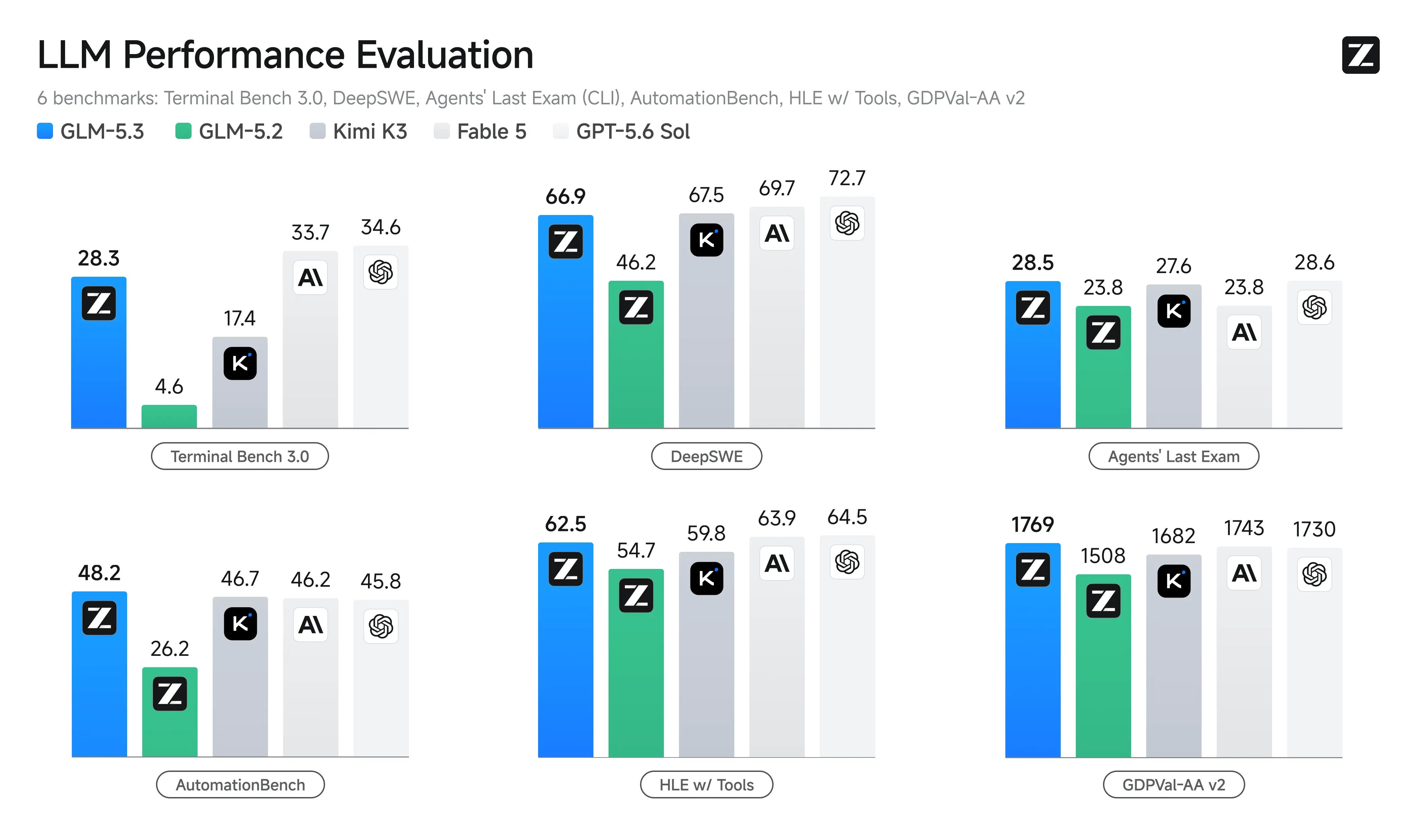
Z.ai announced GLM-5.3, a model with ~750B parameters that has surpassed Moonshot AI's Kimi K3 and matched or…
Anthropic will offer a watermark detection API allowing third-party developers to identify text created by Cla…

The AI news that matters, in one minute each morning.
Sign up free