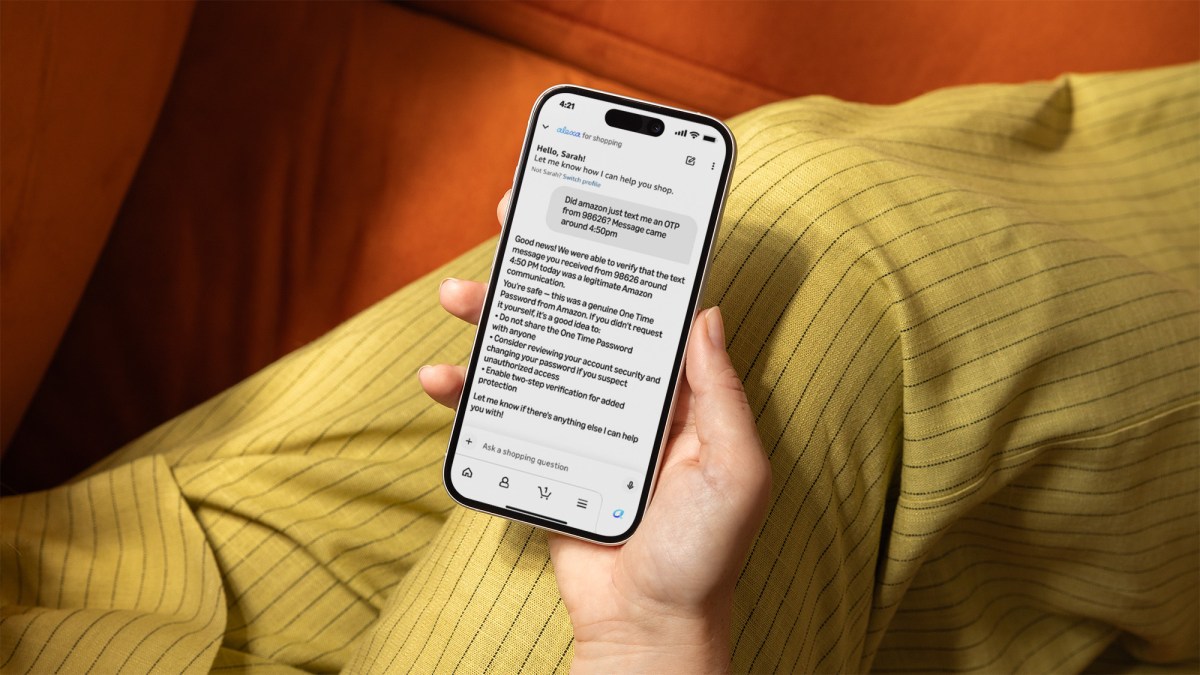
What happened
Amazon announced on Wednesday that customers can now ask its consumer AI service, Alexa for Shopping, to confirm whether a message claiming to be from Amazon is real or a scam. The AI checks the sender information, content, timing, and message metadata against the billions of messages Amazon has sent globally.
Why it matters
Every year, around 360,000 customers contact Amazon's customer service to ask if a message is genuine. The company said its AI can "definitively" confirm whether a communication originated from its own systems, and it will improve as customers report more suspicious messages, helping it spot scams more effectively in the future.
What to watch
The feature follows earlier efforts this year, such as the verify@amazon.com email address and an online form for the same purpose. Alexa for Shopping is available from both the Amazon website and mobile app, and on Tuesday Amazon also added an Alexa feature for setting alerts on new product or content releases.
Summaries like this, in your inbox every morning.
This announcement is part of Amazon's broader shift in its Alexa product strategy toward providing proactive shopping assistance. Beyond scam detection, the assistant can now source personalized deals, create shopping guides, help with reordering everyday items, offer AI product overviews, and transcribe handwritten lists. The new scam-fighting capability directly addresses a problem where roughly 360,000 customers a year contact customer service for help verifying messages, including fake order confirmations, account suspension warnings, and package delivery notifications. The system's reported ability to improve with more customer reports suggests its effectiveness will increase over time as it encounters more suspicious messages.
Pick your industry and the AI tools you use, and get news related to your work every day.
Free · 30 seconds with Google · unsubscribe anytimeWhat is AIToday? →
Ask AI anything about this article. The AI reads this article, earlier AIToday articles, and Wikipedia, and cites its sources. Q&As are published on this page for other readers too.

