What happened
LangChain CEO Harrison Chase says every agent builder he has spoken with is now thinking about proactive, always-on, goal-oriented agents, which bring new context engineering challenges that neither LangChain nor the industry has general solutions for.
Why it matters
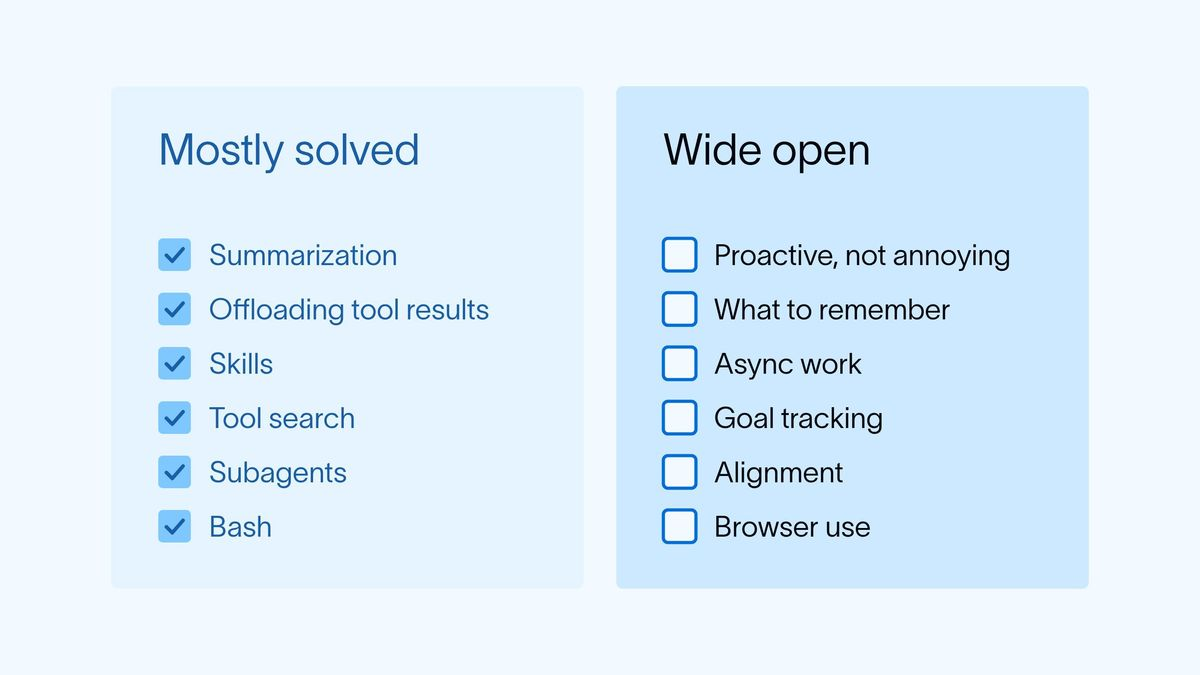
Chase identifies specific open problems — calibrating proactive notifications, deciding what to remember, coordinating async work, designing cheat-proof goals, and managing browser context — suggesting the sense that 'all the hard problems are solved' is premature.
Summaries like this, every morning.
Chase frames the current moment as a convergence: most agents now share a common architecture of an LLM running in a loop, calling tools, and operating in a sandbox, a pattern exemplified by Claude Code and LangChain's own Deep Agents. That convergence has led some engineers to feel that the core context engineering practices — summarizing long threads, offloading large tool results, progressive disclosure, tool search, subagents, and bash as a primary tool — are settled.
However, Chase sees a step function change in how agents are being used: builders are shifting toward proactive, always-on, goal-oriented agents. These agents run in the background, listen to event feeds or wake on heartbeats, and work toward broader goals rather than single tasks. That shift, he argues, reintroduces hard problems around when to push notifications, what to remember, how to coordinate asynchronous work, and how to design goals that agents cannot exploit.
The commentary stops short of offering solutions, presenting these as open questions that LangChain and the industry are still exploring. Chase's tone is enthusiastic rather than alarmed, but the implication is that the 'hard problems are solved' sentiment is premature for anyone building the next generation of agents.
Pick your industry and the AI tools you use, and get news related to your work every day.
Free · 30 seconds with Google · unsubscribe anytimeWhat is AIToday? →
Ask AI anything about this article. The AI reads this article, earlier AIToday articles, and Wikipedia, and cites its sources. Q&As are published on this page for other readers too.
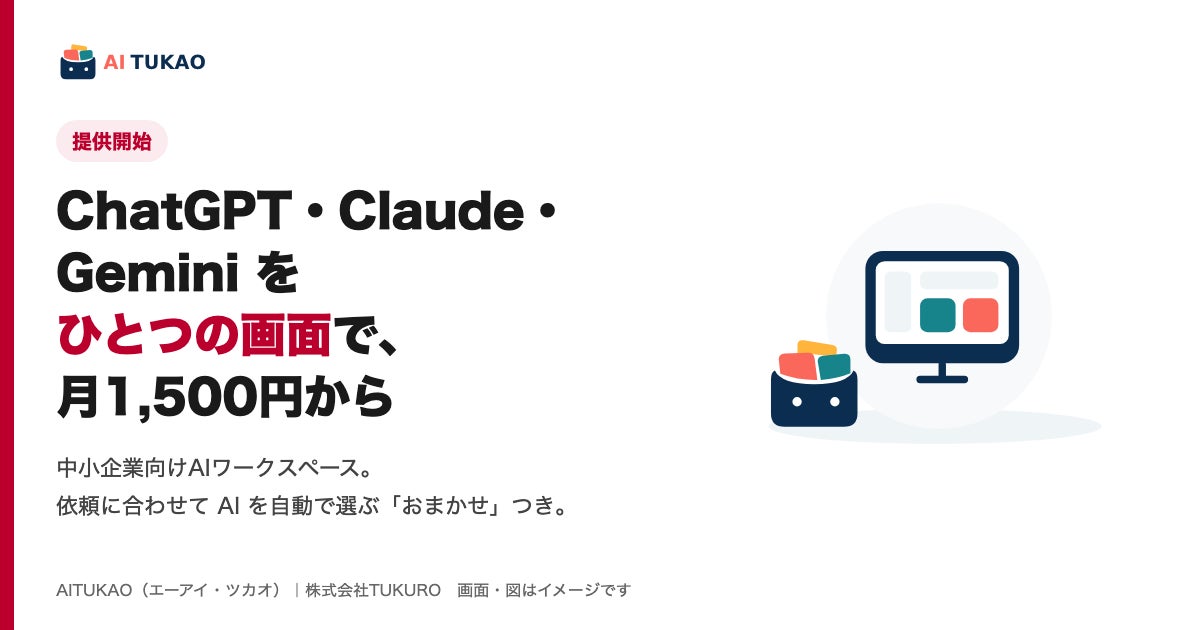
On 2026年10月25日, TUKURO began offering AITUKAO, a workspace for small and mid-sized businesses that runs ChatGP…
Anthropic PBC filed for an IPO with the SEC, while Intel fell almost 30% after earnings, Alphabet dropped more…
Super Micro stock is at $31.15, down 5% during the afternoon session, with results due November 3

OpenAI slashed its latest funding target to $20 billion from $30 billion after securing about $11 billion in c…

Klarna announced in February 2024 that within one month its OpenAI-based assistant handled two-thirds of custo…
Software engineer Addy Osmani confirmed Anthropic added two sentences to Claude Code's prompt on Opus 5.5, tel…