
What happened
OpenAI slashed its latest funding target to $20 billion from $30 billion after securing about $11 billion in commitments, less than half its original goal, sources told the Financial Times and the Wall Street Journal.
Why it matters
The shortfall shows investors are growing wary of the cash needs of AI companies, even at the most prominent private developer, making future fundraising harder and costlier.
What to watch
The sector's biggest players are expected to pour $800 billion into investments this year and more than $1 trillion next year, even as available financing tightens.
WHO IT HITSOpenAI's executives and finance teams, along with other AI developers planning large fundraising rounds, now face a tougher sales pitch to investors who have already committed less capital than hoped.
Summaries like this, every morning.
The cut in OpenAI's funding target is the clearest sign yet that the AI industry's money pipeline is narrowing. Hyperscalers have already been dealing with shortages of chips and other physical inputs, but the new constraint is financial: Wall Street is showing less appetite to fund every ambitious plan. Beyond OpenAI, credit rating agency S&P Global cut its outlook on Meta to "negative" from "stable" late Friday, citing negative cash flow and uncertainty around capital expenditure plans. Meanwhile, the head of technology, media and telecom lending at a large European bank told Bloomberg that the bank is approaching the limit of what it can lend to the sector.
The demand for capital keeps rising even as supply tightens. A handful of hyperscalers are expected to invest $800 billion this year and more than $1 trillion next year. To justify those outlays, Gartner estimates data center owners need $8.5 trillion in cumulative revenue by the end of the decade, while the data centers are expected to generate no more than $3.6 trillion in enterprise and consumer AI revenue by then. That gap helps explain why tech companies keep going back to the well: Oracle plans to raise $20 billion by issuing stocks and bonds, Elon Musk said SpaceX closed $40 billion in debt financing, Meta announced plans to raise $95 billion in equity, and Microsoft raised $25 billion in debt.
Investors may grow more selective rather than shut off entirely. Bank of America analysts said capital remains ample for investment grade firms and projects backstopped by suppliers, though such "circular" deals have drawn more scrutiny. As Apollo chief economist Torsten Slok put it, "at the moment we have a shortage of capital, and we have an abundance of good ideas that we need to invest in."
Pick your industry and the AI tools you use, and get news related to your work every day.
Free · 30 seconds with Google · unsubscribe anytimeWhat is AIToday? →
Ask AI anything about this article. The AI reads this article, earlier AIToday articles, and Wikipedia, and cites its sources. Q&As are published on this page for other readers too.
On 2026年10月25日, TUKURO began offering AITUKAO, a workspace for small and mid-sized businesses that runs ChatGP…

Anthropic PBC filed for an IPO with the SEC, while Intel fell almost 30% after earnings, Alphabet dropped more…
Super Micro stock is at $31.15, down 5% during the afternoon session, with results due November 3
Klarna announced in February 2024 that within one month its OpenAI-based assistant handled two-thirds of custo…

LangChain CEO Harrison Chase says every agent builder he has spoken with is now thinking about proactive, alwa…
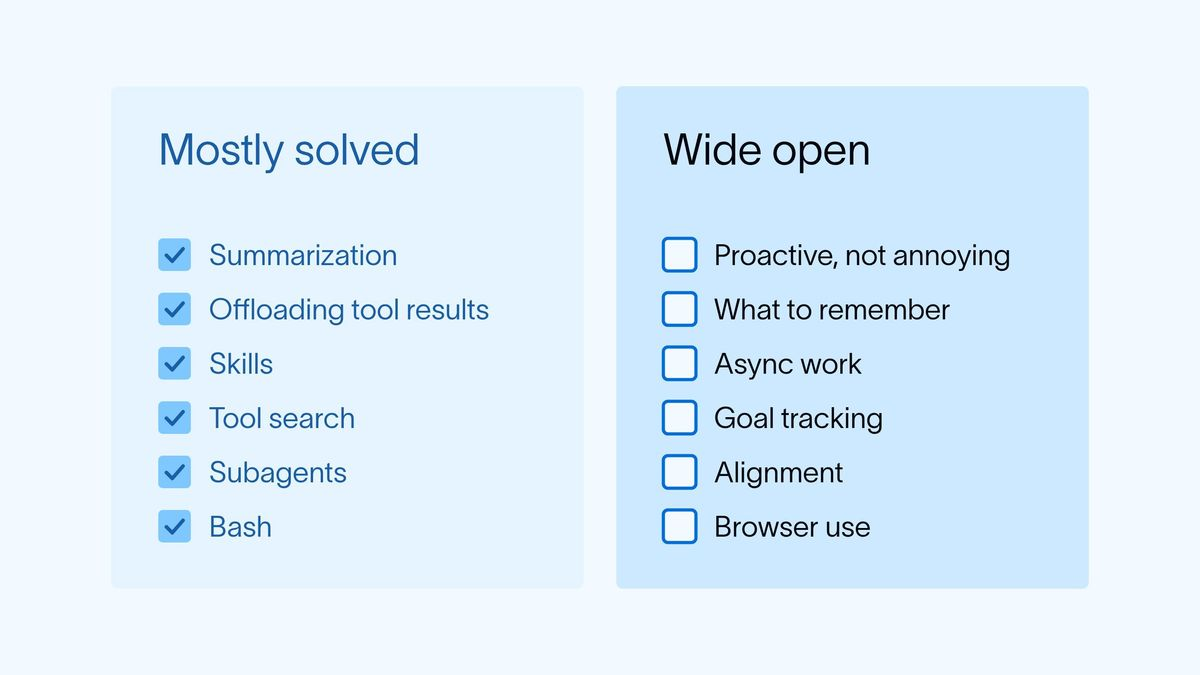
A survey report found that on average, 48% of insights generated by analytics agents lead to actions that impr…